
Northern Ghana’s School Feeding Programme Delivers More Than Meals
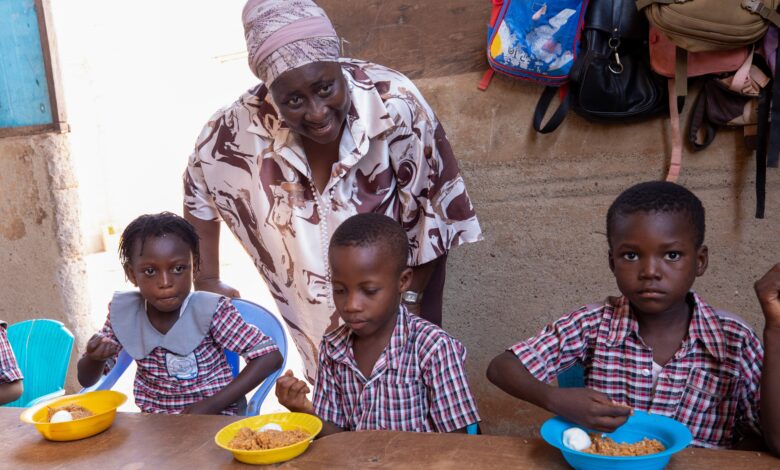
A simple school meal is increasingly proving to be far more than a nutrition intervention in parts of Northern Ghana.
For thousands of children across vulnerable communities, it is becoming a driver of school attendance, classroom participation, local economic activity and even long-term human capital development.
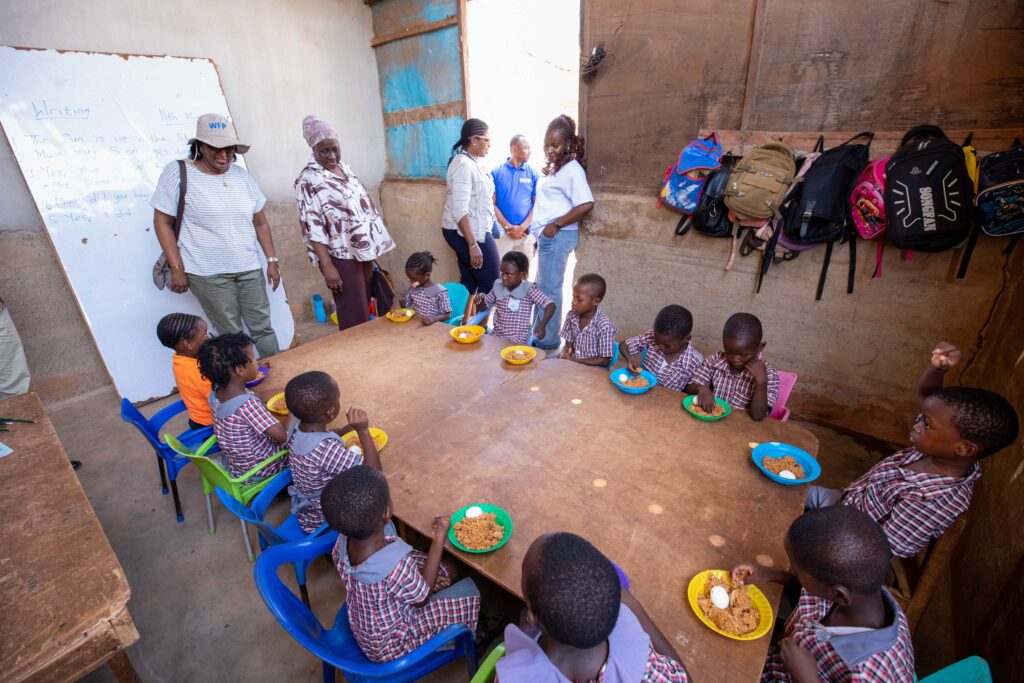
That reality is now drawing renewed policy attention following a joint field assessment by the World Food Programme, the Government of Ghana and development partners into a US-funded school feeding initiative operating across low-fee private schools in Northern Ghana.
The programme, which currently supports approximately 60,000 pupils across 207 schools in Tamale, Zebilla and Gambaga, is beginning to expose the wider economic and developmental significance of school feeding beyond hunger reduction alone.
As Ghana continues to battle youth unemployment, uneven educational outcomes and rising household pressures, the intervention is increasingly being viewed as part of a broader social investment strategy capable of improving learning outcomes while simultaneously stimulating local economies.
Enrollment Surges as Meals Become a Classroom Incentive
One of the clearest trends emerging from the assessment is the direct relationship between school feeding and student enrollment.
At Oxford Grammar Academy in Tamale, enrollment reportedly rose from 175 pupils to 445 after the feeding programme was introduced, according to school proprietors participating in the assessment mission.
Similar improvements were reported across several participating schools.
For many low-income households, particularly within vulnerable communities, the availability of guaranteed daily meals increasingly influences whether children consistently attend school.
Ten-year-old Eliana Akuka, a Class Five pupil at Supreme Academy in Zebilla, offered perhaps the simplest explanation.
“If we do not eat well, we will be hungry and cannot pay attention or participate in class,” she said during the assessment exercise.
The statement reflects a challenge that continues to shape educational outcomes across several developing economies: learning capacity often remains closely linked to basic nutritional security.
Education experts have long argued that school feeding programmes improve concentration levels, reduce absenteeism and strengthen retention rates, particularly in underserved communities where food insecurity remains prevalent.

Beyond Nutrition: An Economic Multiplier Emerging
The programme’s impact is also extending well beyond the classroom.
By sourcing food supplies locally, the initiative is creating a growing economic ecosystem involving farmers, traders, caterers and transport providers within beneficiary communities.
The consistent demand for grains, vegetables and other food inputs is helping stabilise markets for smallholder farmers while reducing post-harvest losses.
Local caterers engaged in meal preparation are also generating employment opportunities and supporting informal enterprise growth.
In effect, the school feeding programme is functioning not only as a social protection intervention, but also as a local economic stimulus mechanism.
That multiplier effect has become increasingly important at a time when many rural communities continue to face limited economic diversification and weak employment opportunities.
Health Improvements Strengthen Human Capital
Health indicators within participating schools are also reportedly improving.
At Harvest Community School, school officials indicated that cases of diarrhoea had declined significantly after structured school meals replaced the unregulated street food many children previously relied upon.
Teachers and parents similarly reported stronger energy levels, improved attentiveness and better classroom engagement among pupils.
The broader implications are significant.
For developing economies, poor nutrition during childhood often creates long-term productivity losses through weaker educational performance, health complications and reduced workforce readiness later in life.
Programmes that simultaneously improve nutrition and educational participation are therefore increasingly being viewed as investments in future economic productivity.
A Policy Conversation Is Emerging
The assessment mission may now influence broader national policy discussions around school feeding expansion.
The Ghana School Feeding Programme’s National Coordinator, Hajia Fati Forgor, indicated that findings from the field assessment could help shape future decisions around extending school feeding support to low-fee private schools at a larger scale.
That possibility carries important implications.
While public schools have historically dominated national feeding interventions, low-fee private schools continue to absorb significant numbers of pupils within underserved urban and rural communities where public education infrastructure remains constrained.
Extending feeding support into that segment could widen educational access while reducing pressure on vulnerable households.
Sustainability Questions Remain
Despite the programme’s positive outcomes, sustainability remains a major concern.
The current funding cycle is scheduled to conclude in June 2026, placing attention on how future financing arrangements will be secured.
The World Food Programme identified three major factors critical to sustaining and expanding the initiative: predictable long-term funding, stronger multi-sector partnerships and deeper community ownership.
Signs of local participation are already emerging.
At Savior Academy in Gambaga, school leadership announced plans to engage parents and community leaders on sustaining the feeding programme beyond the current funding cycle.
The conversation increasingly reflects a broader national development question.
As Ghana seeks to strengthen human capital, improve educational outcomes and reduce inequality, policymakers may increasingly need to decide whether school feeding should remain largely donor-supported or evolve into a more deeply institutionalised national investment strategy.
More Than a Meal
The programme’s growing visibility arrives at a time when governments across Africa are facing mounting pressure to invest more aggressively in social interventions capable of simultaneously addressing poverty, education and economic resilience.
For the World Food Programme, the initiative represents part of a wider push to position school feeding not simply as humanitarian assistance, but as a long-term development tool.
“The goal remains clear,” said WFP Country Director Aurore Rusiga. “To expand access so that more children, particularly in vulnerable communities, are consistently fed, healthier, able to learn, and supported to stay in school.”
In Northern Ghana, that goal is increasingly proving to be about far more than lunch.