Tema LNG Could Open Regional Gas Market for Ghana, GNPC Says
Ghana’s planned liquefied natural gas (LNG) terminal at Tema could eventually serve markets beyond the country, giving the Ghana National Petroleum Corporation (GNPC) an additional route to meet domestic demand while exploring opportunities in the wider West African gas market.
The terminal, which GNPC is developing with its partners, is expected to be operational by the end of 2027 and will have the capacity to regasify up to 400 million standard cubic feet of gas per day.
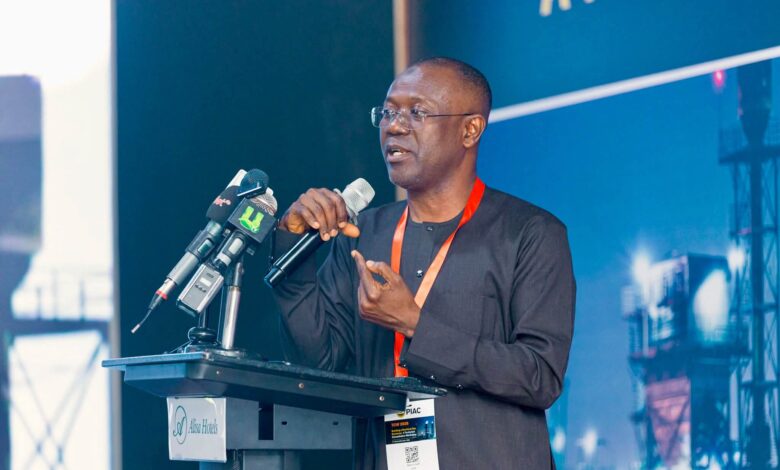
Deputy Chief Executive in charge of Finance, Commercial and Administration at GNPC, Hamis Ussif, said the facility would allow imported LNG to be converted back into gas and supplied to power producers and industries through Ghana’s gas network.
He said the infrastructure could also provide a platform for supplying gas to neighbouring countries, including Togo, Benin, Côte d’Ivoire, Sierra Leone and Liberia.
Mr Ussif made the remarks at the second Technical and Consultative Workshop organised by the Public Interest and Accountability Committee (PIAC) in Accra.
The workshop was held under the theme, “Building a Resilient Gas Economy: Collaborative Strategies for Financial Equilibrium and Efficient Gas Value Chain.”
Another source of gas
LNG is natural gas that has been cooled into liquid form to make transportation easier. Once it arrives at its destination, it has to be converted back into gas through a regasification facility.
Mr Ussif said the Tema terminal had been designed to perform that function before feeding the gas into Ghana’s existing system.
For Ghana, the facility is expected to provide another source of gas when domestic production is unable to meet demand.
Mr Ussif said the terminal could also be expanded as demand increases, with additional storage and pumping capacity allowing more LNG to be handled.
The project is being developed under a Build, Own, Operate and Transfer (BOOT) arrangement.
GNPC will be the off-taker, Shell will supply the LNG, while LNG Terminal Company will operate the terminal.
Mr Ussif said the arrangement runs for 17 years, after which the facility will transfer to GNPC.
Cost remains a key consideration
Imported LNG will generally cost more than some of Ghana’s domestic gas supplies, but GNPC says the alternative could be even more expensive when the country has to rely on liquid fuels for power generation.
Mr Ussif said LNG could be cheaper than fuels such as light crude oil (LCO) and heavy fuel oil (HFO), which are used when there is insufficient gas available for thermal power plants.
“If we don’t have that LNG, we will have to import more of liquid fuels, LCO, HFO, for use in power generation,” he said.
He also pointed to the environmental cost of relying more heavily on liquid fuels, saying LNG would provide a less damaging alternative.
The issue of cost is particularly important as Ghana seeks to keep the gas value chain financially sustainable while ensuring reliable fuel supplies for electricity generation and industry.
Domestic production remains a priority
The LNG project is being developed alongside efforts by GNPC and its partners to increase domestic gas production.
Mr Ussif said more than US$3.5 billion was being invested in exploration and production activities, with the aim of increasing gas supply from the Sankofa field to about 350 million standard cubic feet per day.
Jubilee and TEN are expected to reach about 160 million standard cubic feet per day by 2028, he said.
As of September 21, the three producing fields were supplying more than 409 million standard cubic feet of gas per day, according to GNPC.
Gas has become an important source of revenue for the corporation. Mr Ussif said gas revenue reached US$952.38 million in 2025, accounting for 65.6 per cent of GNPC’s standalone revenue.
He said natural gas also contributed more than 90 per cent of thermal power generation, with thermal plants accounting for about 66 per cent of Ghana’s total electricity generation.
Building demand for Ghanaian gas
Mr Ussif said Ghana’s challenge was not simply producing more gas but ensuring that the entire value chain worked efficiently.
That includes securing investment in exploration and production, expanding infrastructure for processing and transportation, ensuring reliable demand and maintaining commercial arrangements that allow participants across the chain to remain financially viable.
GNPC, he said, had been negotiating with producers and suppliers to bring down the cost of gas.
Recent negotiations involving Jubilee, Sankofa and LNG partners have generated savings that are expected to benefit consumers, he said, putting the saving from the Jubilee renegotiation at about 18 per cent.
He also cited an agreement reached at the beginning of the Jubilee project under which GNPC received the first 200 billion cubic feet of gas at no cost, helping establish the foundation for Ghana’s domestic gas market.
Regional opportunity
The potential regional role of the Tema terminal comes as West African countries continue to face different levels of access to natural gas.
Mr Ussif said Ghana could use its LNG infrastructure to import gas and distribute it to countries that currently lack adequate gas supplies.
That would add a regional dimension to a project primarily being developed to strengthen Ghana’s own energy supply.
For now, however, GNPC’s immediate focus remains ensuring that the terminal is completed and integrated into the country’s gas network by the end of 2027.
The project, together with increased domestic production, is expected to give Ghana greater flexibility in sourcing gas for power generation and industry while reducing the need to turn to more expensive liquid fuels when domestic supplies fall short.