From Dialogue to Delivery: Amref Calls for African-led Health Financing and Resilient Systems
At the World Health Summit, Amref Health Africa urges governments, donors and global institutions to invest in resilient primary health care including health workers and locally led health systems ahead of Africa Health Agenda International Conference 2027 (AHAIC 2027) in Kigali.
Africa must increase domestic investment in healthcare as falling international aid puts essential services at risk, Amref Health Africa has said, calling on governments to take greater responsibility for funding health systems while urging development partners to provide more predictable support.
Official development assistance fell by 23.1% in 2025, raising concerns about the sustainability of services that depend on external funding, including HIV treatment, immunisation, maternal and newborn care, nutrition programmes and support for health workers.
For patients, funding shortages can mean difficulty obtaining medicines, delays in treatment and overcrowded health facilities. Communities with limited access to healthcare, particularly in rural areas, face greater risks when services are disrupted or preventive care receives less funding.
Amref is advancing the call for African-led health financing and stronger primary healthcare at the World Health Summit, where health leaders are considering how countries can sustain essential services amid mounting financial, public health and climate pressures.
Dr Githinji Gitahi, Group Chief Executive Officer of Amref Health Africa, said the central challenge was not identifying health priorities but finding the resources to implement them.
“Africa does not lack health priorities and what is missing is financed delivery,” he said.
He called for health systems built around African priorities and adequately funded to withstand disease outbreaks, climate shocks and financial uncertainty.
Primary healthcare needs sustained investment
Amref wants African governments to increase investment in primary healthcare, which provides the first point of contact for many patients and can help detect and treat illnesses before they become more serious.
This requires adequately resourced local health facilities, reliable supplies of essential medicines and vaccines, effective disease surveillance and better support for health workers through training, equipment and fair remuneration.
Community health workers are particularly important in reaching households far from hospitals and other formal health facilities. Their work can help people obtain basic care, receive health information and access treatment earlier.
Amref argues that countries must invest in preparedness before outbreaks occur. Effective responses depend on trained personnel, functioning local health authorities, reliable surveillance systems and public trust built through regular engagement between health workers and communities.
Climate change adds another layer of pressure. Floods, droughts and extreme heat can disrupt healthcare delivery while increasing risks for vulnerable populations. Amref is calling for climate financing to support practical improvements in health facilities and services so they can continue operating during extreme weather.
Domestic funding cannot replace international support overnight
Amref wants governments to allocate more public resources to healthcare, improve the use of available funds and give greater priority to prevention, primary care and the health workforce.
But increasing domestic funding will be difficult for countries already dealing with limited budgets and competing demands, including debt payments and infrastructure investment.
The organisation says African ownership of health systems should not become a justification for international partners to withdraw their support. Instead, it wants development partners to provide predictable funding aligned with national health plans and directed towards strengthening public institutions.
Unreliable external financing can leave governments and healthcare providers struggling to maintain programmes that require sustained investment. While stronger domestic systems are essential, building them takes time, making continued international support important, particularly for countries facing severe financial constraints.
Amref is also advocating greater African production of medicines and medical supplies, stronger regulatory institutions and closer regional cooperation. Expanding local manufacturing could reduce reliance on imported products and help protect countries against supply disruptions and volatility in global markets.
From summit commitments to community needs
At the World Health Summit, Amref is engaging governments, funders and implementation partners through three co-hosted sessions, seven speaking engagements and six bilateral meetings.
The discussions cover practical approaches to health service delivery, cooperation across regions and Ethiopia’s efforts to advance Sustainable Development Goal 3 through primary healthcare reform.
Amref is also calling for essential services to be protected in conflict-affected and climate-vulnerable areas, alongside sustained investment in disease surveillance, routine immunisation and access to vaccines, medicines and diagnostic tools.
The test will be whether commitments made at international meetings lead to better services for communities. For patients, progress means being able to find essential medicines, receive care from trained health workers and obtain treatment on time without suffering financial hardship.
Dr Gitahi said African leadership must be backed by funding, accountability and partnerships that strengthen local health systems rather than substitute for them.
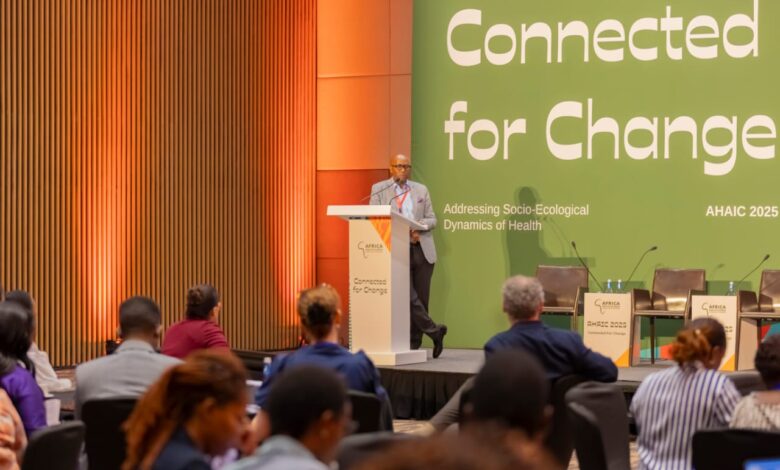
The discussion is expected to continue at the Africa Health Agenda International Conference (AHAIC 2027), scheduled for February 28 to March 3, 2027, in Kigali, Rwanda.
The conference is being co-hosted by Amref Health Africa, Rwanda’s Ministry of Health, Africa CDC and the World Health Organization’s Regional Office for Africa. It will focus on African-led health reform, primary healthcare, the health workforce and more resilient health systems.
The challenge for African governments and their development partners is to turn those discussions into sustained financing and more reliable access to healthcare for people across the continent.