WHO Targets Healthcare Costs as 96 Million Face Financial Hardship
About 96 million people in the World Health Organization’s Eastern Mediterranean Region face financial hardship from paying for healthcare, prompting governments to commit to reforms aimed at reducing the burden on households.
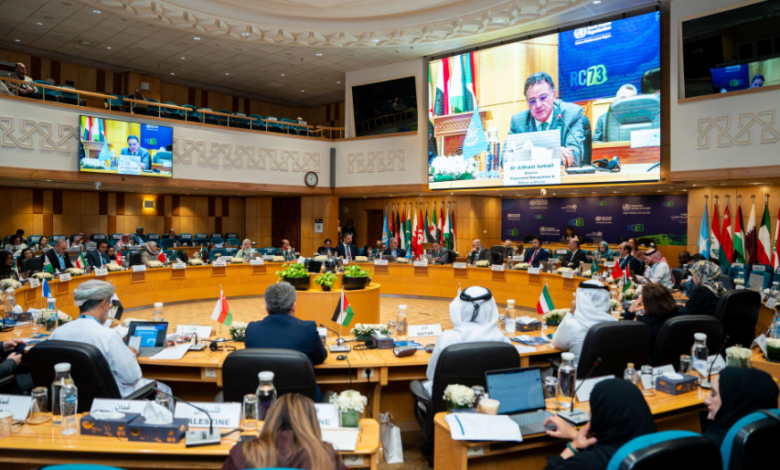
Health ministers and senior officials from 22 countries and territories adopted a resolution on health financing at the 73rd session of the WHO Regional Committee for the Eastern Mediterranean in Cairo, held from October 13 to 15, 2026.
The resolution calls on governments to increase public spending on healthcare, reduce direct payments by patients and expand financing arrangements that spread treatment costs across larger groups of people.
For families paying medical bills from their own pockets, illness can mean cutting spending on food, housing and other necessities. The proposed reforms seek to reduce that pressure, particularly on low-income households and underserved communities.
“In adopting the resolution on health financing and financial protection, you committed to a shared path: one where no family should have to choose between treating an illness and keeping a roof over their heads,” said Dr Adham Rashad Ismail, Officer-in-Charge of the WHO Regional Office for the Eastern Mediterranean.
Reducing the cost of care
The resolution recommends prepaid and pooled health financing, affordable healthcare benefit packages and better purchasing of health services. It also calls for stronger links between healthcare and social protection, improved accountability for public spending and tighter regulation of private health financing.
Countries are encouraged to explore additional funding options, including Islamic financing models, as they work to make healthcare more affordable and sustainable.
WHO will support governments through technical assistance, country-specific reform plans and a regional Health Financing Taskforce. Progress will be reviewed at the Regional Committee’s 75th and 77th sessions.
Countries seek joint approach to disease elimination
The meeting also adopted a resolution calling for a coordinated approach to eliminating communicable diseases, replacing separate programmes with shared systems for surveillance, laboratory services, supply chains and healthcare workers.
The approach is intended to help countries make better use of limited resources while improving prevention, diagnosis and treatment. The resolution also calls for closer cooperation across borders, particularly to reach displaced people and mobile populations.
WHO will help countries prepare implementation plans and develop a regional data portal to track progress. An investment case will also be developed to support long-term funding, with progress reports expected every two years until 2032.
Dr Ismail said countries could make faster progress by tackling several diseases together rather than running separate programmes for each one.
Funding cuts threaten health services
The commitments come as countries in the region continue to deal with emergencies, strained health systems and limited resources.
The Committee reviewed efforts to strengthen health systems, respond to emergencies and eradicate polio. Afghanistan and Pakistan remain the last two countries where wild poliovirus is endemic.
WHO’s regional office has also faced a 14% reduction in its base budget, leading to difficult decisions, including the reduction of 300 posts.
Despite the funding pressure, partner support helped the Regional Office mobilise US$1.6 billion in 2024–2025, among the highest amounts across WHO regions.
The Committee also discussed the safe use of artificial intelligence in public health, the proposed WHO Programme Budget for 2028–2029 and reforms to the global health system.
Closing the meeting, Dr Ismail said the success of the resolutions would depend on what changed after the meeting, not simply on the commitments governments had adopted.
The next session of the WHO Regional Committee for the Eastern Mediterranean is scheduled for October 2027.