Spend the Boom Wisely, Before the Bust
By Prof Samuel Lartey
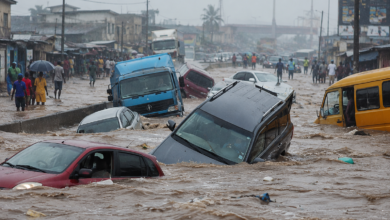
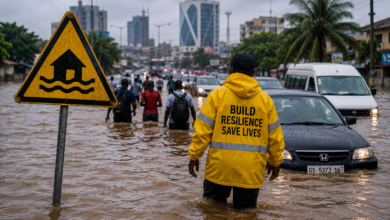
A business celebrates record sales while quietly accumulating debt. A household increases spending after a salary rise. A government expands recurrent commitments because revenues have improved. All three may appear successful until inflation, financing costs or an unexpected shock exposes their vulnerability. Inspired by René Carayol’s leadership philosophy, the essential lesson is clear: good seasons should finance resilience, while difficult seasons should test judgement rather than extinguish ambition.
Ghana’s recovery demands disciplined choices
The Ghana Statistical Service recorded real GDP growth of 6.0 per cent in the second quarter of 2026, while annual consumer inflation reached 5.2 percent in September. At its September meeting, the Bank of Ghana maintained its policy rate at 14.0 percent. Its monetary policy report placed the average bank lending rate at 15.9 percent in August 2026, compared with 24.2 percent one year earlier. These improvements matter, but falling inflation does not mean falling prices, and cheaper credit does not guarantee profitable investment. Services inflation remained 8.3 per cent in September, underscoring continuing pressures on budgets.
Government: save capacity, not merely cash
For government, prosperity creates fiscal space that must be allocated carefully. Windfall revenue should strengthen contingency provisions, settle verified arrears, maintain infrastructure and support investments with measurable social returns. Fiscal plans should distinguish temporary receipts from permanent income: recurrent expenditure funded by a one year windfall can create future deficits. Transparent procurement, independent project appraisal and credible medium term budgeting protect taxpayers. During downturns, reprioritisation should preserve essential health, education and targeted social protection while eliminating low value spending.
Businesses: make resilience measurable
A growing enterprise should evaluate cash conversion, not only reported profit. Suppose a firm sells GH¢10 million annually and operates with a 12 per cent margin, producing GH¢1.2 million operating profit. If revenue drops 20 per cent while most fixed costs persist, profit can disappear quickly. This is an illustrative scenario, not a forecast. Management should stress test sales, input costs, exchange rate exposure and debt payments; maintain appropriate reserves; diversify customers; and train essential staff. In a downturn, renegotiate costs and redesign products before abandoning productive capabilities.
Investors: distinguish price from value
Investment discipline requires assessing prospective cash flows, valuation, liquidity and downside risk in both economic seasons. Lower asset prices during a crisis are not automatically bargains: deteriorating earnings may justify them. Equally, buoyant markets can conceal excessive leverage. Investors should diversify, match asset maturities to financial obligations and avoid financing long term commitments through unstable short term borrowing. Due diligence must test adverse scenarios, including weaker sales, higher interest costs and delayed repayment. Emotional confidence is not a substitute for evidence.
Households: build a personal fiscal buffer
For households, the principle begins with budgeting. A family earning GH¢8,000 monthly that sets aside 10 per cent accumulates GH¢9,600 over twelve months before investment returns, assuming regular contributions. The amount is illustrative, but the discipline is transferable. Emergency savings, appropriate insurance, skills development and responsible debt repayment protect livelihoods. When prices moderate, households should avoid treating slower inflation as renewed purchasing power without reviewing actual food, rent, transport and school expenses.
Table 1. Decisions that distinguish preparation from reaction
| Stakeholder | Good season | Difficult season |
| 1. Government | Build buffers; fund productive assets | Protect essentials; review spending |
| 2. Business | Retain cash; develop people | Stress test cash flow; adapt |
| 3. Investor | Diversify; question valuations | Preserve liquidity; assess value |
| 4. Household | Save; insure; build skills | Prioritise needs; control debt |
How to quantify exposure
Simple sensitivity analysis turns uncertainty into decisions. For a company with GH¢2 million of variable rate borrowing, a two percentage point interest increase adds GH¢40,000 to annual interest expense, assuming the full increase passes through for a year. A business should compare that exposure with its cash reserves and forecast operating surplus. Public agencies can similarly model the effects of revenue shortfalls and higher debt servicing on their primary balance. Households should calculate how many months of essential expenditure their savings would cover. Such calculations cannot eliminate shocks, but they reveal vulnerabilities before conditions deteriorate.
Four actions for the next economic cycle
- Establish liquidity and contingency targets before expansion.
- Require realistic scenario analysis for major expenditure and investment.
- Protect human capital, accountability and institutional knowledge.
- Publish measurable results and correct failing decisions promptly.
Conclusion
René Carayol’s people centred leadership message is financially relevant: sustainable performance depends on trusted teams, sound culture and decisive action, not favourable conditions alone. Ghana’s improving indicators offer an opportunity to reinforce fiscal credibility, productive investment and household security. Governments must budget prudently; enterprises must preserve capacity; investors must price risk; and families must save deliberately. The greatest achievement of a good season is not consumption today, but the strength to withstand tomorrow’s storm.