
Why Indian Manufacturers Are Betting on Ghana as West Africa’s Next Industrial Hub
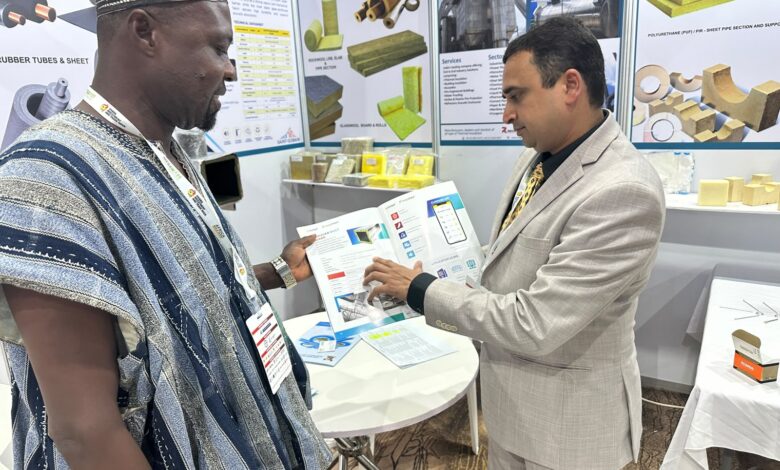
Three Indian manufacturers are positioning Ghana as a potential gateway to West Africa, signalling growing international confidence in the country’s industrial ambitions as they explore partnerships that could eventually lead to local assembly, technology transfer and manufacturing.

Executives from Panasonic Electric Works India, Shubham Tanks & Liners Pvt. Ltd. and Mag Hard Insulators told ghnewshub.com that while their immediate focus is on identifying Ghanaian business partners, their longer-term strategy extends far beyond exports. Each company is evaluating Ghana as a regional production and distribution hub capable of serving the wider West African market under the African Continental Free Trade Area (AfCFTA).
The discussions took place on the sidelines of the Ghana Investment and Trade Week (GITW), held alongside the Africa Build Show and Megawatt Africa Conference and Exhibitions in Accra. The three-day event attracted more than 100 exhibitors and promoted investment in infrastructure, construction, renewable energy, electric mobility, manufacturing and trade.
Although the companies operate in different industries, they share a common investment model: enter the market through local partnerships, build technical capacity, and scale into assembly and manufacturing once commercial demand reaches sustainable levels.
AfCFTA Changes the Investment Equation
Rather than viewing Ghana as a standalone market of 35 million people, the companies see it as an entry point into a regional market of more than 400 million consumers.

For Panasonic Electric Works India, Ghana represents the company’s next expansion after establishing a presence in Nigeria.
“We are looking for partners who will invest in Panasonic stock and grow the market with us,” said Praful Gangurde, Senior Manager at Panasonic Electric Works India.
The company intends to appoint two distribution partners before considering larger investments, including local assembly operations.
“The idea is not just Ghana. We are looking at West Africa as a whole,” Gangurde said.
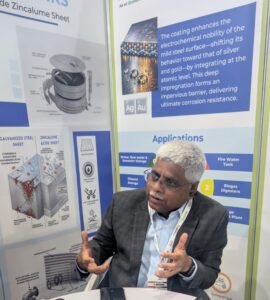
Shubham Tanks & Liners, a manufacturer of modular water storage systems for agriculture, mining and municipal infrastructure, is pursuing a similar strategy.
“We would definitely look at the entire West African market,” said Sunil Uplap.
Mag Hard Insulators, which produces thermal insulation systems for industrial facilities, power stations and refineries, also views Ghana as a potential regional distribution hub should market demand justify a permanent presence.
The companies’ thinking reflects a broader shift among international manufacturers, who increasingly see AfCFTA as creating larger integrated markets capable of supporting local production rather than simply export sales.
Skills Before Factories
Unlike many foreign investors that announce immediate factory plans, the three companies are adopting a phased approach centred first on developing local technical capacity.
Panasonic plans to organise training programmes for Ghanaian electricians to improve installation standards and electrical safety.
Shubham Tanks & Liners said Ghanaian partners would receive manufacturing licences, engineering expertise and continuous technical support.
“Our experts would train local teams in manufacturing, assembly and business development,” Uplap said.
Mag Hard Insulators also intends to train local technicians if it establishes operations in Ghana.
Company representative Manan Doshi said developing local skills would form a core part of the company’s market entry strategy.
The emphasis on knowledge transfer suggests these firms see long-term value in developing local capabilities rather than relying indefinitely on imported finished products.
Manufacturing Comes Later
None of the companies has committed to immediate factory investment.
Instead, executives indicated that local production would follow only after building sufficient market demand and commercial partnerships.
Shubham Tanks & Liners estimates that between 40 and 50 percent of its storage tank components could initially be produced locally before transitioning to full-scale manufacturing.
“Our objective would eventually be to make it a Made-in-Ghana product,” Uplap said.
Panasonic said local assembly would become commercially viable only after establishing a strong distribution network across Ghana and neighbouring markets.
Mag Hard Insulators expressed a similar position, indicating that manufacturing decisions would depend on sustained regional demand.
The strategy mirrors how many global manufacturers enter emerging markets—testing demand through distribution before committing capital to industrial production.
Infrastructure Boom Creates New Opportunities
The investment interests of the three companies closely align with Ghana’s industrialisation agenda.
Panasonic sees opportunities in housing, commercial real estate, public infrastructure, mining and power projects.
Shubham Tanks & Liners expects demand for industrial and municipal water storage systems to grow as governments and businesses invest in water security and climate resilience.
Mag Hard Insulators is targeting industries including power generation, cement, steel, petrochemicals, pharmaceuticals and food processing, where energy-efficient insulation reduces production costs.
Collectively, the sectors they target are central to Ghana’s drive to expand manufacturing, strengthen infrastructure and improve industrial competitiveness.
Policy Could Determine the Next Phase
While expressing confidence in Ghana’s prospects, the executives said further reforms could accelerate investment decisions.
Panasonic called for stricter enforcement against substandard electrical products to protect consumers and reputable manufacturers.
Shubham Tanks & Liners advocated industrial parks, stronger intellectual property protection and policies that encourage technology partnerships.
Mag Hard Insulators noted the importance of efficient business registration procedures and a predictable regulatory environment.
None of the companies announced investment commitments during the exhibition.
Yet their messages point to an emerging trend. International manufacturers are increasingly evaluating Ghana not simply as a destination to sell products, but as a location from which to manufacture, transfer technology and serve the wider African market. For Ghana, translating that interest into factories and jobs will depend on how effectively it strengthens its investment climate, industrial infrastructure and partnerships with global manufacturers.