Korea Turns to AfCFTA as Africa Pushes for Industrial Partnerships Beyond Raw Materials
After years of courting Africa largely through trade and investment diplomacy, South Korea is now moving to position itself as a strategic partner in the continent’s industrialisation agenda, with manufacturing, infrastructure, digital trade and energy cooperation emerging as key areas of engagement.
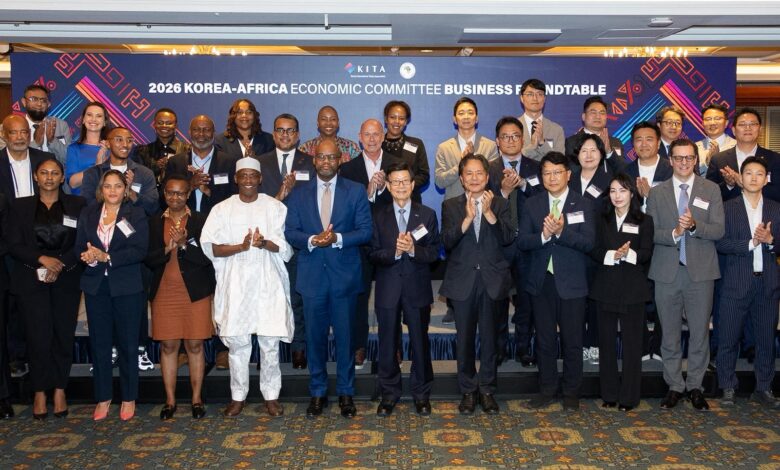
The shift was evident in Seoul this week as the Korea International Trade Association (KITA) and the Secretariat of the African Continental Free Trade Area (AfCFTA) convened the first Business Roundtable of the newly established Korea-Africa Economic Committee (KAEC), bringing together some of the largest companies and institutions from both regions.
The meeting marks the first formal engagement under the KAEC framework, which was established following the signing of a Memorandum of Understanding between KITA and the AfCFTA Secretariat during the Korea-Africa Business Summit in 2024.
For Africa, the discussions come at a particularly important moment.
As implementation of the AfCFTA gathers pace, policymakers are increasingly seeking partnerships that move beyond commodity exports toward industrial production, technology transfer, value addition and stronger participation in global supply chains.
That objective appeared to feature prominently during the Seoul discussions.
The roundtable brought together 35 companies and organisations, including major Korean firms such as Hyundai Motor Group, POSCO International and Samsung Electronics, alongside African institutions including the Pan-African Chamber of Commerce and Industry (PACCI), South African power utility Eskom and the OPAIA Group.
Industrialisation Takes Centre Stage
While trade between Africa and South Korea has grown over the years, the latest engagement signals a deeper ambition to build industrial partnerships that align with Africa’s long-term development priorities.
KITA Chairman Jin Sik Yoon argued that combining Korea’s industrial capabilities with Africa’s growth potential could create a globally significant model of economic cooperation.
“If Korea’s industrial competitiveness is combined with Africa’s growth potential, we will be able to create a future-oriented model of cooperation that draws global attention,” he said.
For the AfCFTA Secretariat, the opportunity lies in leveraging Korea’s strengths in manufacturing, technology and infrastructure development to support the continent’s industrial transformation agenda.
AfCFTA Secretary-General Wamkele Mene described the initiative as a platform for “practical and mutually beneficial partnerships” and welcomed deeper cooperation in trade, investment, industrialisation, technology and infrastructure.
Why This Matters for Africa
The significance of the Seoul meeting extends beyond diplomacy.
Africa’s biggest economic challenge remains the limited value it captures from its natural resources. Many countries continue to export raw commodities while importing higher-value manufactured products.
The AfCFTA seeks to change that equation by creating a single market capable of supporting regional manufacturing, industrial clusters and integrated supply chains.
South Korea’s own development journey makes it a potentially attractive partner.
Within a few decades, the country transformed itself from a largely agrarian economy into one of the world’s leading manufacturing and technology hubs, home to globally recognised industrial champions.
For African policymakers, the question is whether partnerships with Korean firms can help accelerate similar industrial development pathways on the continent.
Supply Chains, Digital Trade and Energy
A presentation delivered during the roundtable by Dr. Mun Su Kang of the Korea Institute for International Economic Policy highlighted potential areas for collaboration including manufacturing, infrastructure development, decarbonisation, energy, digital trade and e-commerce.
Particular attention was given to developing reciprocal supply chains that connect Africa’s industrialisation ambitions with Korea’s technological and manufacturing capabilities.
That focus reflects a broader shift in global trade, where resilience, supply-chain diversification and regional production networks are becoming increasingly important amid geopolitical fragmentation and rising economic nationalism.
From Dialogue to Deals
The ultimate test, however, will be whether the platform generates concrete investment projects and commercial outcomes.
Africa has participated in numerous international cooperation forums over the years, but many have struggled to translate high-level discussions into measurable industrial investment, technology transfer or job creation.
Recognising this challenge, KITA and the AfCFTA Secretariat indicated that the Korea-Africa Economic Committee will become a permanent platform, with regular meetings and business exchanges held on a rotational basis across both regions.
For businesses across Africa, particularly those seeking manufacturing partnerships, access to technology and integration into global value chains, the institutionalisation of the KAEC could provide a new avenue for commercial engagement.
As Africa pushes to transform the AfCFTA from a trade agreement into an industrial development vehicle, partnerships such as this may increasingly determine whether the continent can move beyond exporting raw materials and begin capturing more value from its own growth story.