Ghana EXIM Bets on Local Production to Drive Jobs, Industrial Growth and Exports
Ghana’s economic challenge is not simply the volume of goods it imports. It is the persistent gap between what the country can produce and process competitively and what it purchases from abroad. This gap represents lost opportunities for farmers, manufacturers, young workers, investors and the national balance of payments. Yet the solution is not to reject all imports. It is to distinguish imports that displace viable Ghanaian production from those that equip Ghanaian enterprises to produce, process and export more.
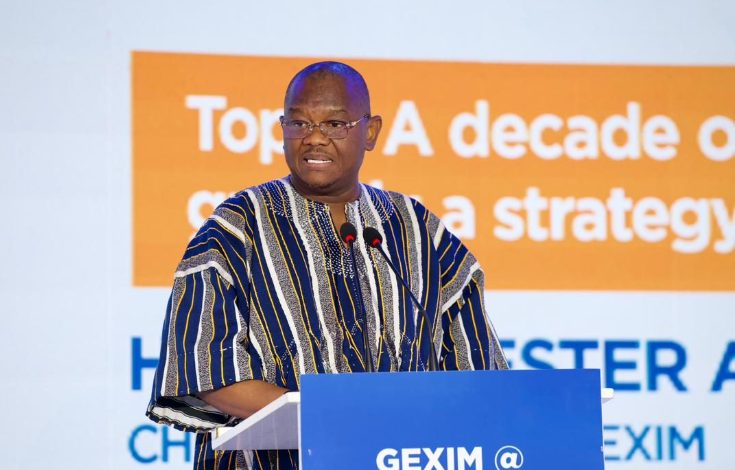
Under the leadership of Chief Executive Hon. Sylvester Adinam Mensah, Ghana Export Import Bank (GEXIM) is positioning development finance as an instrument for national production, industrial transformation and export competitiveness. Its strategic direction for 2025 to 2030 emphasises commercially viable value chains, stronger enterprises, market access and disciplined financing. The opportunity is to connect Ghanaian farms to factories, factories to markets and businesses to regional and international buyers.
Government’s Vision, Drive for Industrial Transformation
The Government’s ambition is to build a more productive economy through the Feed Ghana Programme, the Agriculture for Economic Transformation Agenda and the 24 Hour Economy and Accelerated Export Development Programme. The 2026 Budget presents agriculture, industry, logistics and exports as linked sources of growth and jobs. Planned agroindustrial parks, productive corridors, export logistics and incentives for mechanisation, irrigation, food processing and storage are intended to remove obstacles that individual enterprises cannot overcome alone.
Hon. Sylvester Mensah’s central leadership priority is equally clear: the Bank must move beyond isolated credit facilities towards coordinated support for enterprises capable of generating measurable economic value. At GEXIM’s tenth anniversary conference in March 2026, he outlined a five pillar approach covering solutions oriented finance, commercially scalable sectors, enterprise competitiveness and export readiness, market access and trade facilitation, and institutional modernisation. He has also stressed that finance alone is insufficient without quality, packaging, logistics, efficient production and market intelligence.
This vision stretches from agriculture to industry. Rice and poultry can reduce avoidable food import dependence; cashew, shea, cocoa and oil palm can generate higher value through local processing; and garments, pharmaceuticals, light manufacturing and other competitive industries can open additional export markets. The Bank’s support for the Northshore Apparel Hub illustrates how blended finance can help mobilise productive investment in Ghanaian manufacturing, rather than confining development finance to primary commodities.
Crucially, a production first strategy must also accommodate imports that strengthen local operations. Imported irrigation systems, tractors, milling machinery, food processing lines, cold chain equipment, laboratory instruments, industrial technology, specialist components and inputs not yet available competitively in Ghana can raise domestic productivity. Such imports should be assessed by their contribution to Ghanaian jobs, local value addition, import savings over time and export earnings. Financing them is not a retreat from import substitution; when properly targeted, it is a practical route to achieving it.
From Isolated Loans to Complete Value Chains
The Bank’s strategy identifies financing, scalable sector development, stronger small and medium enterprises, market access and governance as mutually reinforcing priorities. A financed rice mill without reliable paddy supplies may operate below capacity. Farmers without dependable buyers may suffer produce gluts. A processor without packaging, cold storage, certification and transport may struggle to reach supermarkets, let alone foreign buyers. Successful development banking must therefore connect the entire chain.
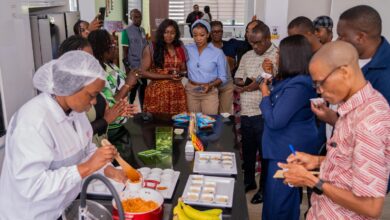
GEXIM’s engagement with cashew outgrowers supplying Nadkansco Company Limited in Wenchi offers a practical example of linking production with technical support. Training in plantation maintenance, crop protection and quality control strengthens the reliability of industrial raw material supplies. Similar arrangements can support rice, oil palm, shea, vegetables and other value chains, with transparent purchasing agreements that protect smaller producers.
Rice as a Test of Productive Transformation
Rice remains an especially visible test of whether this strategy can work. The original article cites government reporting in June 2026 of annual rice consumption of roughly 1.71 million tonnes and domestic production of approximately 960,000 tonnes, implying a supply gap of about 751,000 tonnes. It also cites October 2026 reporting of rice self sufficiency at approximately 56 per cent. These are reported estimates, not independent measurements reproduced here; production, consumption and self sufficiency figures should be read against their respective reporting periods and definitions.
The same article cites Ghana Statistical Service trade reporting that placed 2025 imports of semi milled and wholly milled rice at approximately GH¢2.39 billion and broken rice at GH¢1.19 billion, a combined GH¢3.58 billion for those categories. This is both a foreign exchange challenge and a sizable commercial opportunity for Ghanaian producers able to meet consumer expectations on cleanliness, consistency, taste, convenience and price.
Table 1. Rice indicators and their commercial significance
| Indicator | Reported figure | Implication |
| Annual consumption | About 1.71 million tonnes | Large domestic demand |
| Domestic production | About 960,000 tonnes | Base for expansion |
| Estimated supply gap | About 751,000 tonnes | Opportunity for investment |
| Reported self sufficiency | About 56% in 2026 | Progress with continuing import needs |
| 2025 rice imports, two categories | About GH¢3.58 billion | Scope for competitive local substitution |
Source: figures reproduced from the supplied article, which attributes them to Ministry of Food and Agriculture and Ghana Statistical Service reporting.
The appropriate response is to finance irrigation, certified seed, mechanisation, aggregation, warehouses, quality milling, packaging, distribution and reliable offtake arrangements together. A commercially viable rice programme would enable millers to source predictable volumes and farmers to secure predictable prices, while helping consumers obtain competitive products throughout the year.
Productive Imports: A Bridge to Stronger Local Industry
A Ghanaian manufacturing agenda must avoid the false choice between importing and producing. Imports of finished products that can be made efficiently at home deserve scrutiny. By contrast, carefully selected imports of capital goods, specialised equipment and intermediate materials may be necessary to establish domestic industries, improve product standards and enter export markets.
GEXIM could structure eligible financing around three tests: first, the imported asset must close a verifiable production or technology gap; second, the borrower must demonstrate a credible plan for local employment, skills development and domestic sourcing where feasible; and third, the resulting operation must show measurable productive output, competitive import replacement or potential export revenue. Supplier due diligence, equipment commissioning milestones and performance monitoring would protect the Bank’s balance sheet.
For example, financing a modern rice milling line could convert locally grown paddy into supermarket quality rice. Imported textile machinery could help Ghanaian apparel factories fulfil larger export orders. Cold rooms and testing equipment could extend the shelf life and compliance of Ghanaian horticultural exports. The economic question is not whether an item crosses the border, but whether that item enables Ghana to create more value within its borders.
Financing That Matches Production Cycles
Agriculture and manufacturing require financial products adapted to operational realities. GEXIM has publicly identified instruments including pre export and post export facilities, concessional working capital, export credit guarantees, invoice discounting, factoring, warehouse receipt finance and blended finance. These tools can bridge the time between planting and harvesting, purchasing inputs and receiving sales proceeds, or shipping an export order and collecting payment.
Effective finance also requires credit discipline. Disbursements should follow verified production milestones, funded businesses should meet procurement and accounting standards, and sector programmes should be evaluated against output, repayment performance and job creation. Coordinating GEXIM finance with private banks, the Ghana Export Promotion Authority, standards agencies and credible export buyers can make scarce development capital go further.
What Success Means for Government, Business, Investors and Households
- Government. Higher domestic output can advance food security, reduce avoidable import expenditure, broaden the tax base and support the 24 Hour Economy. Public support should be tied to measurable delivery, not the number of project launches.
- Businesses. Farmers, input suppliers, equipment dealers, factories, packaging firms, transport operators and technology providers can benefit when local production systems are linked to predictable markets.
- Investors. Integrated supply chains offer opportunities in irrigation, warehousing, processing, industrial equipment, renewable energy and export logistics. Investors will nevertheless require bankable projects, stable policy, reliable utilities and enforceable contracts.
- Households. Sustainable jobs, higher rural incomes and competitive local products can improve living standards. These benefits depend on quality and affordability, since consumers cannot be expected to buy Ghanaian products solely out of patriotism.
Conclusion
Ghana EXIM Bank can help transform the national economy only if finance translates into greater productive capacity. Hon. Sylvester Mensah’s emphasis on focused, commercially disciplined investment offers a framework for moving from fragmented interventions to functioning supply chains. The Government’s economic aspirations and the Bank’s institutional direction can reinforce each other when agricultural development, industrial processing, productive imports and export promotion are pursued as one coherent programme.
The ultimate achievement will not be how much the Bank lends, but how much more Ghana grows, processes, manufactures, sells and exports. When Ghanaian farms supply thriving factories, modern equipment supports local employment and competitive Ghanaian products earn their place in world markets, development finance becomes a genuine engine of national prosperity.