Floods in Ghana: A National Wake-Up Call
Building Resilience for Sustainable Development, Economic Growth and National Prosperity
By : Prof Samuel Lartey
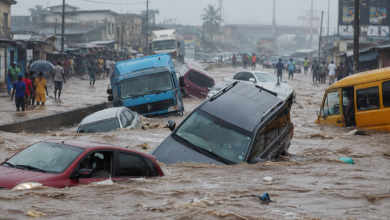
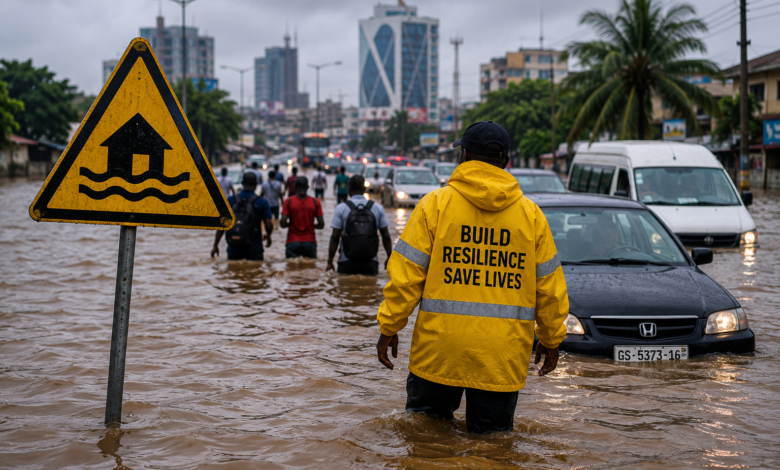
Flooding has become one of Ghana’s most serious and costly national development challenges. What was once regarded as a seasonal occurrence has evolved into a recurring national emergency with profound economic, environmental, financial and social consequences. Every rainy season brings familiar scenes of submerged communities, stranded motorists, collapsed roads, destroyed businesses and families mourning the loss of loved ones.
The devastating floods that affected parts of Greater Accra, Tema and surrounding communities in late June and early July 2026 once again highlighted Ghana’s vulnerability to extreme weather events. The disaster claimed lives, displaced families, interrupted economic activity and placed enormous pressure on emergency services. The event also reminded policymakers that climate resilience is no longer an environmental concern alone but a national economic priority.
Flooding is now a governance challenge, an investment challenge, a business challenge, a financial sector challenge and a human development challenge. Unless Ghana adopts bold and coordinated long-term solutions, floods will continue to reverse development gains and undermine the country’s ambition of becoming a resilient and competitive middle income economy.
Understanding Floods
Floods occur when water overflows onto land that is normally dry as a result of excessive rainfall, overflowing rivers, tidal surges, blocked drainage systems or dam spillages.
Although heavy rainfall is a natural occurrence, the scale of destruction witnessed in Ghana is increasingly influenced by human activities, including poor planning, environmental degradation and weak enforcement of regulations.
Why Floods Continue to Worsen in Ghana
Several interconnected factors continue to increase Ghana’s exposure to flooding.
- Climate change resulting in more intense and unpredictable rainfall.
- Rapid urbanisation without corresponding drainage infrastructure.
- Construction on waterways, wetlands and flood plains.
- Poor waste management leading to blocked drains.
- Weak enforcement of land use and building regulations.
- Inadequate drainage maintenance.
- Deforestation and environmental degradation.
- Increasing population density in major urban centres.
- Coastal erosion and rising sea levels.
- Limited investment in climate-resilient infrastructure.
Floods in Ghana Since Independence
The frequency and severity of floods have increased considerably over the decades.
| Year | Flood Event | Major Impact |
| 1968 | Southern Ghana floods | Widespread destruction of homes and farms |
| 1995 | Greater Accra floods | Extensive infrastructure damage and displacement |
| 2007 | Northern Ghana floods | Thousands displaced and significant crop losses |
| 2009 | Nationwide flooding | Damage across several regions and transport disruption |
| 2010 | Agona Swedru floods | Approximately 3,000 people affected |
| 2015 | Accra floods and petrol station explosion | More than 200 lives lost making it Ghana’s deadliest flood disaster |
| 2016 | Greater Accra floods | Severe traffic disruption and property damage |
| 2021 | Kumasi floods | Loss of lives and destruction of businesses |
| 2022 | Accra floods | Significant disruption to commerce and transportation |
| 2023 | Akosombo Dam spillage | More than 26,000 people displaced across Volta, Eastern and Greater Accra Regions |
| 2024 | Flooding in southern Ghana | Farms, roads and homes destroyed |
| 2026 | Greater Accra and Tema floods | Loss of lives, destruction of property and major economic disruption |
The increasing frequency of these disasters demonstrates that flooding has shifted from an occasional emergency to a recurring national development challenge.
The Cost to Government
Floods place enormous pressure on public finances by forcing Government to redirect limited resources from development projects towards emergency response and reconstruction.
Major impacts include:
- Reconstruction of roads, bridges and drainage systems.
- Rehabilitation of schools and hospitals.
- Emergency relief and humanitarian assistance.
- Increased healthcare expenditure following outbreaks of waterborne diseases.
- Delays in infrastructure development.
- Higher public debt through reconstruction financing.
- Reduced productivity across the public sector.
Every major flood delays national development and weakens progress towards achieving the Sustainable Development Goals.
Impact on Investor Confidence
Investment thrives where there is certainty, resilience and reliable infrastructure.
Recurring floods increase uncertainty by raising:
- Infrastructure risks.
- Construction costs.
- Insurance premiums.
- Supply chain disruptions.
- Business continuity risks.
- Property damage risks.
- Operational costs.
- Financing risks.
Investors increasingly consider climate resilience before committing long term capital. Cities with recurring flood disasters become less attractive investment destinations compared with more resilient economies.
Impact on Businesses and Corporate Ghana
Floods affect organisations of every size.
Major consequences include:
- Temporary closure of businesses.
- Damage to equipment and inventory.
- Loss of revenue.
- Disruption of production schedules.
- Delayed delivery of goods and services.
- Increased maintenance costs.
- Rising insurance claims.
- Reduced customer confidence.
- Lower profitability.
- Job losses within affected sectors.
Small and medium enterprises remain particularly vulnerable because many operate with limited financial reserves and inadequate insurance protection.
Impact on Households
For many Ghanaian families, floods represent years of lost investment and shattered livelihoods.
Households often experience:
- Destruction of homes.
- Loss of personal property.
- Food insecurity.
- School interruptions.
- Water contamination.
- Increased health risks.
- Psychological stress.
- Temporary displacement.
- Loss of employment and income.
- Increased poverty and indebtedness.
For vulnerable households, recovering from one flood often takes several years.
Floods and Financial Inclusion
Floods directly threaten Ghana’s efforts to deepen financial inclusion.
Their effects include:
- Increased loan defaults.
- Depletion of household savings.
- Rising non performing loans within banks.
- Reduced access to affordable credit.
- Increased dependence on informal borrowing.
- Greater insurance claims.
- Reduced business investment.
- Lower confidence in financial planning.
Financial institutions also become more cautious when lending within flood-prone communities, slowing entrepreneurship and local economic development.
Implications for Critical Stakeholders
Government
- Greater investment in climate-resilient infrastructure.
- Stronger enforcement of planning regulations.
- Expansion of urban drainage systems.
- Better disaster preparedness.
- Increased climate adaptation financing.
Metropolitan, Municipal and District Assemblies
- Improve waste management.
- Protect waterways and wetlands.
- Remove illegal structures from drainage corridors.
- Improve community education.
- Maintain drainage infrastructure throughout the year.
Financial Institutions
- Develop climate responsive lending policies.
- Expand disaster insurance.
- Introduce affordable climate finance products.
- Strengthen environmental risk assessment.
- Support business recovery financing.
Businesses
- Develop business continuity plans.
- Invest in resilient infrastructure.
- Digitise operations where possible.
- Strengthen insurance protection.
- Improve supply chain resilience.
Households
- Dispose of waste responsibly.
- Avoid building on waterways.
- Purchase affordable insurance where available.
- Participate in community sanitation programmes.
- Prepare household emergency response plans.
A Lasting Solution for Ghana
Flood prevention requires continuous commitment rather than seasonal emergency responses.
The following actions deserve urgent national attention.
- Develop and implement a National Flood Resilience Strategy extending to 2050.
- Modernise drainage infrastructure across all major cities.
- Strictly enforce planning and building regulations.
- Restore wetlands and natural drainage systems.
- Digitally map all flood risk zones.
- Introduce smart flood monitoring and early warning systems.
- Expand climate resilient urban planning.
- Strengthen the National Disaster Management Organisation through improved funding and technology.
- Promote public education on environmental responsibility.
- Establish a permanent National Flood Resilience Fund involving Government, development partners and the private sector.
- Encourage banks and insurance companies to develop innovative climate risk financing products.
- Promote greater collaboration among Government, academia, engineers, environmental experts, traditional authorities, civil society and local communities.
Conclusion
Floods have become one of the greatest obstacles to Ghana’s sustainable development since independence. They destroy lives, weaken investor confidence, increase public expenditure, disrupt businesses, deepen household poverty and threaten financial inclusion. As climate change intensifies extreme weather events, the economic and social costs of flooding will continue to rise unless decisive action is taken.
The solution lies not in responding to disasters after they occur but in preventing them through disciplined planning, resilient infrastructure, environmental protection, technological innovation and responsible citizenship. Ghana possesses the expertise, institutions and human capital needed to address this challenge. What is required now is sustained political commitment, coordinated stakeholder action and a shared national determination to build safer, stronger and more resilient communities.
A flood-resilient Ghana will not only save lives and protect property but will also strengthen investor confidence, improve business competitiveness, safeguard Government development initiatives and secure a more prosperous future for every Ghanaian.