
Africa’s Nutrition Crisis: Inside Nestlé’s Search for Practical Solutions
Africa’s nutrition challenge is no longer defined simply by hunger. Increasingly, it is shaped by what nutrition experts describe as the “double burden” of malnutrition—where undernutrition, hidden micronutrient deficiencies and rising obesity exist side by side.
The consequences extend far beyond public health. Poor nutrition affects children’s cognitive development, weakens learning outcomes, reduces labour productivity and increases healthcare costs, making it one of the less visible but most significant constraints on human capital development across the continent.
Even where food is available, millions of people continue to consume diets that lack the vitamins and minerals essential for healthy growth, leaving countries to grapple with what experts call “hidden hunger.”
According to Dr. Brehima Emmanuel Cissoko, Director of Nutrition, Health and Wellness for Nestlé Central and West Africa, micronutrient deficiencies, often described as “hidden hunger”, remain among the region’s most pressing public health concerns. While an estimated 25 to 30 percent of the global population suffers from deficiencies in essential vitamins and minerals, Sub-Saharan Africa bears a disproportionate share of that burden, with West and Central Africa accounting for more than 45 percent of the region’s micronutrient deficiency cases.
Unlike visible hunger, hidden hunger often goes unnoticed. Millions consume enough food to satisfy their appetite but still lack the vitamins and minerals needed for healthy growth, learning and productivity.
For governments, the consequences extend well beyond health. Malnutrition increases healthcare costs, weakens educational outcomes, lowers labour productivity and ultimately slows economic growth by eroding the quality of a country’s future workforce.
When Malnutrition Becomes a Human Capital Challenge
Among the many forms of malnutrition affecting Africa, iron deficiency has become one of the continent’s most persistent nutritional challenges.
Iron deficiency is the leading cause of anaemia—a condition that reduces the blood’s ability to transport oxygen throughout the body. For children, the consequences include impaired brain development, poor concentration, slower physical growth and weaker academic performance. For pregnant women, anaemia increases the risk of complications during pregnancy and childbirth while affecting the health of newborns.
Dr. Cissoko said tackling these nutritional deficiencies forms part of Nestlé’s broader Nutrition, Health and Wellness strategy, which focuses on improving the nutritional quality of everyday foods while promoting balanced diets and healthier lifestyles rather than relying on single-product solutions.
The scale of the challenge is reflected in Ghana.
A study led by Professor Matilda Steiner-Asiedu, Professor of Nutrition and Food Science at the University of Ghana, found that anaemia prevalence among schoolchildren in Kyekyewire in the Eastern Region reached an alarming 78 percent, well above already high national estimates of between 60 and 70 percent.
The findings reinforce growing concerns that iron deficiency is no longer simply a public health issue. It is increasingly viewed as a human capital challenge capable of affecting educational attainment today and economic productivity tomorrow.
Against this backdrop, researchers are asking a practical question: can the foods families already eat every day become part of the solution?
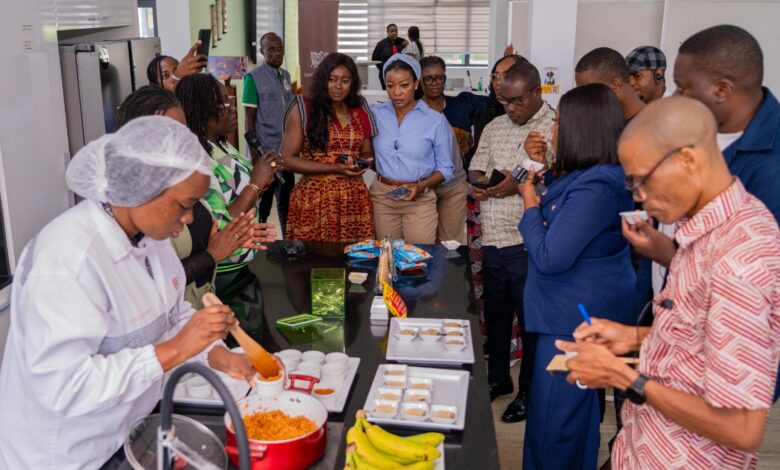
That question formed the basis of discussions during a visit by The High Street Journal to the Nestlé Research and Development Centre for Sub-Saharan Africa in Abidjan, Côte d’Ivoire, where scientists are developing fortified foods designed specifically for African consumers.
Why Iron Has Become the Focus
According to Dr. Margaret Mary Tohouenou, Nutritionist at Nestlé’s Research and Development Centre for Sub-Saharan Africa, Ghana’s experience mirrors nutrition patterns seen across much of the continent.
“Usually you see iron deficiency and anaemia cutting across all the African countries,” she told The High Street Journal.
Drawing on demographic and health surveys conducted by African governments and studies by the World Health Organization, the World Bank and the Food and Agriculture Organization, she said iron deficiency remains one of Africa’s most widespread nutritional deficiencies.
“You would also see vitamin A deficiency. Sometimes you see the B vitamin deficiencies.”
Using this evidence, she said, food manufacturers increasingly design products around the nutritional needs of those most at risk.
“What we have done as industry is to pick this data and look at the groups that are mostly affected. Usually you see children below five years old, pregnant women, lactating women and women of childbearing age, and then we try to tailor our products with these micronutrients to support them.”
Across many of its products sold in Africa, Nestlé prioritises iron fortification alongside iodine, B vitamins and vitamin C, which improves iron absorption.
Can Everyday Foods Close the Nutrition Gap?
Rather than relying solely on supplements, researchers are increasingly focusing on foods families already consume every day.
According to Dr. Jeroen Muller, Head of Nestlé’s Research and Development Centre for Sub-Saharan Africa, products such as cooking aids provide one of the most practical ways of improving micronutrient intake because they are used in meals prepared for entire households.
“Affordable nutrition and micronutrient fortification are key objectives for us,” he said.
“We look at the products people consume every day. Cooking aids, for example, are used to prepare meals for the whole family, so they provide an opportunity to improve micronutrient intake.”
Iron and iodine, he explained, are particularly suitable because they remain relatively stable during cooking while having little effect on taste.
The Science Doesn’t End with Fortification
Adding nutrients to food is only the beginning.
Researchers must ensure vitamins and minerals survive processing, storage and cooking before they can deliver meaningful health benefits.
“Some vitamins degrade when exposed to heat,” Dr. Muller explained.
“We are trying to find ways to make these micronutrients stable so they survive cooking and still provide nutritional benefits. Those solutions are still being developed.”
Nestlé works with specialist suppliers to improve nutrient stability and bioavailability under African cooking conditions.
Making Better Nutrition Affordable
Scientific advances have little impact if nutritious foods remain beyond the reach of ordinary households.
Because fortification increases production costs, affordability has become a key consideration.
Dr. Muller said researchers are working with suppliers to develop standardised micronutrient blends that help contain costs.
“The product still has to remain accessible to the people who need it,” he said.
Affordability has also influenced packaging.
According to Dr. Tohouenou, products once sold mainly in tins are now increasingly available in smaller sachets, allowing consumers to buy quantities that better match household incomes.
“When I was growing up most of our products were in tins,” she recalled.
“Today we’ve introduced smaller sachets, even down to 25 grams in some cases, just to make nutritious products more accessible.”
Fortified Foods Are Only One Part of the Solution
Nestlé’s researchers stress that food fortification complements but does not replace a balanced diet.
“When it comes to good nutrition, variety is the key,” Dr. Tohouenou said.
“As you’re consuming fortified foods, vegetables like kontomire, garden eggs, tomatoes and other locally available foods also provide important nutrients when they are prepared and consumed properly.”
Nestlé has complemented product innovation with public education initiatives, including its Iron Campaign in Ghana, encouraging households to combine fortified foods with locally available nutritious ingredients.
Changing Perceptions Could Be the Biggest Breakthrough
According to Patricia Ekaba, Head of Corporate Communications and Public Affairs for Nestlé Central and West Africa, one of the greatest barriers to better nutrition is not always affordability but awareness.
“One thing we realised through the Iron Campaign is that many of the foods rich in iron are already available locally,” she said.
“People sometimes believe nutritious foods have to be expensive or imported, yet many of these foods can be found within their own communities.”
She said stronger collaboration among governments, health professionals, industry and the media is essential to changing behaviour.
“Creating awareness is critical because it helps people make the right choices. That’s why partnerships with the media and other stakeholders are so important.”
Protecting Africa’s Future Workforce
The discussions in Abidjan point to a broader conclusion. Scientific research can identify nutritional gaps, governments can introduce supportive policies, industry can develop more nutritious foods and the media can help translate nutrition science into practical guidance. But lasting progress depends on these efforts working together.
For Ghana, where childhood anaemia remains widespread, improving nutrition is ultimately an investment in human capital. Food fortification alone will not eliminate iron deficiency, but combined with balanced diets, nutrition education and sustained public health interventions, it can help reduce one of Africa’s most persistent barriers to healthier, more productive lives.