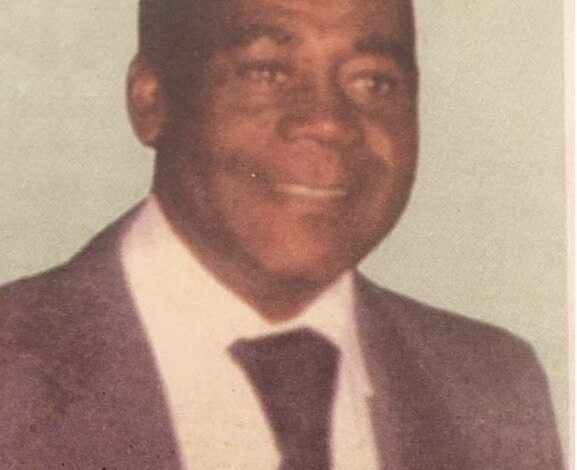
Remembering a Colossus of Ghanaian Politics: The Enduring Legacy of Sam Boateng
Ghana’s Fourth Republic stands today as one of Africa’s most resilient democratic experiments, built on a foundation of constitutional rule, peaceful transitions of power, and an enduring culture of dialogue. Since 1992, the country has navigated electoral contests, political tensions, and governance challenges with a maturity that continues to earn international recognition.
Yet this stability was neither accidental nor easily won. It is the product of decades of struggle, sacrifice, and principled leadership by a generation that confronted uncertainty, ideological conflict, and institutional fragility. Among those who stood at the crossroads of Ghana’s political evolution was Sam Boateng, a figure whose life intersected with some of the most defining moments in the nation’s history.
A Nation Forged in Turbulence
Before the relative calm of the Fourth Republic, Ghana’s political journey was marked by upheaval. The years surrounding independence and the period between 1966 and 1981 were characterised by coups, ideological divisions, and interrupted democratic experiments. It was an era when the direction of the nation was fiercely contested, and the balance between tradition and modern statehood remained unsettled.
From this crucible emerged leaders of conviction—individuals who navigated shifting political terrains while helping to shape the institutions that underpin Ghana’s democracy today. Sam Boateng belonged firmly to this generation.
Early Life and Political Awakening
Born in 1924, Sam Boateng came of age during the height of nationalist agitation in the Gold Coast. Like many young men of his time, he was drawn to the ideals of self-determination and joined the Convention People’s Party led by Kwame Nkrumah.
His early political engagement was rooted in grassroots mobilisation, particularly through the Ashanti Youth Association, where he contributed to the growing momentum for independence. However, his political journey would soon take a decisive turn.
In 1954, guided by conviction and a strong sense of justice, Boateng broke ranks with the CPP. The split was driven by concerns over representation, fairness, and the economic welfare of Asante farmers. It was a defining moment that underscored his willingness to challenge authority in defence of principle.
The National Liberation Movement and Federalist Ideals
The breakaway from the CPP gave rise to the National Liberation Movement, founded in Kumasi under the moral authority of Osei Agyeman Prempeh II.
Sam Boateng emerged as one of the movement’s early organisers, working alongside key figures such as Baffuor Akoto and others to advance a political vision centred on regional autonomy, respect for traditional institutions, and federal governance.
As part of the nkwankwaa, the “youngmen” who boldly declared “Mate Me Ho”—“I have separated myself”—Boateng became a voice for a movement grounded in identity, dignity, and self-determination. His role reflected both ideological clarity and organisational strength.
Shaping Opinion Through the Media
Recognising the power of ideas, Boateng extended his influence into the media space. As co-founder of the Samalex News Syndicate and a key figure behind The Liberator, he helped shape alternative political narratives during a period of intense ideological contestation.
Through his editorial work and contributions to publications such as The Pioneer, he articulated perspectives that challenged dominant discourse and amplified the concerns of his constituency. In doing so, he contributed to the early development of Ghana’s pluralistic media landscape.
Service in the Second Republic
With the return to constitutional rule in 1969, Boateng once again stepped into national service. As the first Ashanti Regional Secretary of the Progress Party under Kofi Abrefa Busia, he played a central role in party organisation and mobilisation.
His work during this period reflected a consistent commitment to political engagement and nation-building, even as Ghana’s democratic journey remained fragile.
Influence Beyond Politics
Boateng’s impact extended beyond partisan politics into the economic sphere. As Executive Secretary of the Civil Engineering and Building Contractors Association of Ghana (CEBCAG), he transformed the organisation into a powerful professional body.
Under his leadership, CEBCAG became a critical gatekeeper in the allocation of government contracts, shaping participation in Ghana’s infrastructure development. His role positioned him at the intersection of policy, business, and national development, reinforcing his influence across multiple sectors.
A Complex and Contested Era
His tenure as Special Aide to Ignatius Kutu Acheampong represents one of the more complex chapters of his life.
Entrusted with overseeing satellite organisations that promoted the Union Government (UNIGOV) concept, Boateng played a central role in mobilising grassroots support for the regime. These groups became instrumental in shaping public discourse during a politically charged period.
However, the 1978 palace coup that removed Acheampong brought a swift end to this chapter. The subsequent dismantling of the satellite organisations and investigations into key figures, including Boateng, marked a turning point, linking his legacy to both the rise and fall of that era.
Return to Nation-Building: The 1992 Constitution
In a remarkable full-circle moment, Boateng returned to national service as a member of the Consultative Assembly that drafted Ghana’s 1992 Constitution.
The Assembly, comprising representatives from across Ghanaian society, reviewed extensive public submissions and laid the foundation for the Fourth Republic. Boateng’s participation in this process reflected a transition from political activism to statesmanship.
The Constitution, approved by referendum and enacted in 1993, remains the bedrock of Ghana’s democratic governance.
Legacy of Conviction and Service
Sam Boateng passed away on April 25, 2009, leaving behind a legacy that is as layered as Ghana’s own political history.
His life was defined by conviction, adaptability, and an enduring commitment to public service. From nationalist activism and political organisation to media influence, economic leadership, and constitutional development, his contributions spanned critical phases of Ghana’s evolution.
His story is not one of simplicity, but of complexity, reflecting the realities of leadership in times of change.
A Life Intertwined with a Nation’s Journey
In remembering Sam Boateng, one is reminded that Ghana’s progress is not the result of singular events, but of cumulative efforts by individuals who navigated uncertainty with courage and purpose.
His journey mirrors that of the nation itself, marked by struggle, transformation, and ultimately, renewal.
As Ghana continues to build on the foundations of its Fourth Republic, the legacy of figures like Sam Boateng serves as both a reminder and an inspiration. Their contributions endure not only in history books, but in the institutions and democratic values that define the nation today.
May his legacy continue to inspire. May his contributions never be forgotten.