Ghanaians Regain Financial Confidence, But Recovery Still Rests on Fragile Ground
After years of inflation shocks, currency instability and rising living costs, working Ghanaians are finally beginning to feel some financial relief. Debt pressures are easing, savings are slowly improving and optimism about the economy is returning.
Yet behind the improving mood lies a more sobering reality: many households remain dangerously exposed to future economic shocks, with limited long-term savings and weak financial protection.
That is the central message emerging from the latest Old Mutual Financial Wellness Monitor, which tracks the financial wellbeing of urban and peri-urban workers earning at least GH¢1,200 across Ghana’s formal and informal sectors.
The findings point to a population gradually moving from survival mode toward recovery, though without the financial resilience needed to sustain stability over the long term.
Confidence in Ghana’s economy has more than doubled, rising from 22 percent to 48 percent, while nearly seven in ten respondents believe economic conditions will improve over the next year.
Personal financial expectations have also improved significantly, with almost 80 percent expecting their own financial situation to get better within six months.
The improving sentiment reflects a broader stabilisation of the economy following a prolonged period of severe financial pressure on households.
Most notably, financial stress among working Ghanaians has fallen sharply from 60 percent to 30 percent, representing the lowest stress levels recorded since the survey began three years ago.
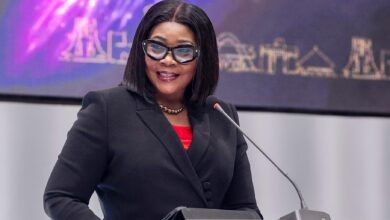
Chief Executive Officer of Old Mutual Group Ghana, Roy Punungwe, said many Ghanaians are beginning to regain control over their finances after years of economic uncertainty.
“People are becoming more intentional — managing debt prudently, exercising greater control over spending, and actively rebuilding their savings,” he said.
Income Growth Has Not Eliminated Vulnerability
Despite the signs of recovery, the report warns that the foundations remain fragile.
Although 37 percent of respondents reported earning more than they did a year ago, nearly half said they would run out of money within three months if their income stopped.
Close to 40 percent also expressed fears about losing their income entirely.
The findings expose a deeper structural challenge within Ghana’s economy: incomes may be improving, but many households still lack sufficient financial buffers to absorb unexpected disruptions such as unemployment, illness or future economic instability.
In response, more Ghanaians are increasingly taking on multiple income streams to survive.
The survey found that more than one in four workers are now “poly-jobbing,” combining formal employment with side businesses, freelancing or additional after-hours work.
The trend is especially common among younger workers facing job insecurity and rising financial uncertainty.
Savings Improve, But Mostly for Emergencies
The report also recorded improvements in savings behaviour.
Households are now allocating roughly 24 percent of income toward savings, while 80 percent of respondents indicated they had specific savings goals.
However, the nature of those savings reveals continuing financial anxiety.
Most savings remain focused on emergency needs, children’s education and business continuity rather than long-term investment or wealth creation.
The findings suggest that many households are still prioritising short-term survival over future financial security.
Savings behaviour also remains heavily tilted toward informal and highly liquid channels.
Bank accounts, mobile money wallets and traditional Susu schemes dominate saving patterns, while more than one in five respondents still keep savings in cash outside regulated financial institutions.
The trend reflects both improving financial discipline and lingering caution toward formal investment systems.
Retirement Planning Still Lags Behind
One of the report’s clearest warning signs relates to retirement preparedness.
While 92 percent of respondents acknowledged the importance of saving for retirement, only one in three said they were actively doing so.
Retirement ranked only seventh among household savings priorities.
Confidence in investment decision-making also weakened, with just 14 percent of respondents saying they felt highly confident about savings and investment decisions, down from 21 percent last year.
Limited access to professional financial guidance appears to be worsening the problem.
Only 13 percent of respondents currently use financial advisers, despite evidence showing that those who receive financial advice display stronger confidence and better long-term financial planning habits.
“There is a clear gap between intention and action when it comes to long-term financial planning,” Mr Punungwe noted.
Recovery Is Returning — But So Are Bigger Questions
The broader picture emerging from the survey is that Ghana’s economic recovery is beginning to filter into household finances, helping restore optimism after years of hardship.
But the findings also suggest that much of the recovery remains shallow and vulnerable.
Many households continue to operate without adequate long-term savings, investment culture or financial protection mechanisms capable of withstanding another major economic shock.
As macroeconomic conditions improve, the challenge may no longer simply be about restoring stability.
It may increasingly be about whether Ghanaians can convert short-term financial recovery into lasting economic resilience.