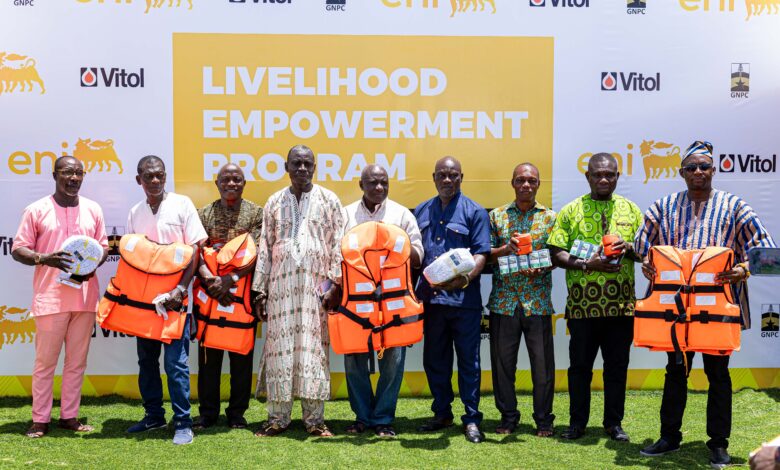
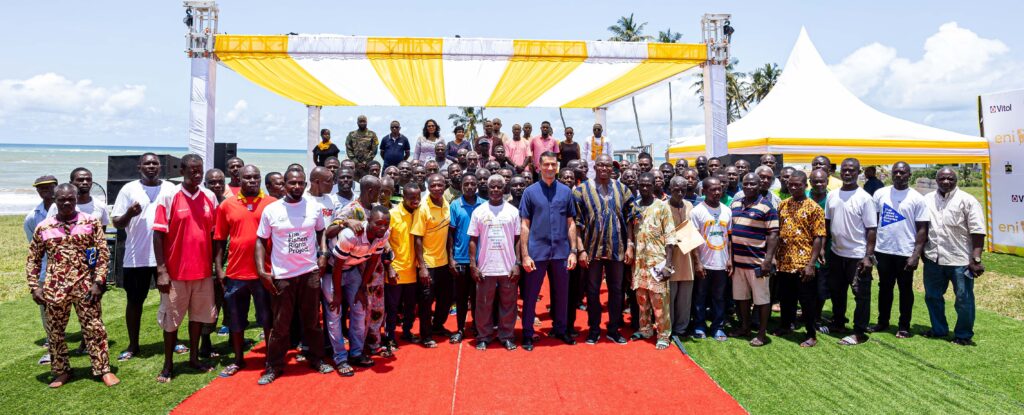
Eni Ghana, in partnership with Vitol Upstream Ghana Ltd and Ghana National Petroleum Corporation (GNPC), has launched a large-scale livelihood enhancement programme targeting over 1,000 artisanal canoe owners across 14 coastal districts, in a move aimed at strengthening local fisheries and supporting coastal economies.
The initiative spans key fishing communities including Sekondi-Takoradi, Shama, Cape Coast, Effutu and Mfantseman, among others, reflecting a broad geographic focus across Ghana’s coastal belt.
Targeting Productivity and Jobs
The programme is designed to enhance employment opportunities while increasing local fish supply, addressing both economic and food security concerns in coastal communities where artisanal fishing remains a primary source of livelihood.
At its core, the intervention seeks to tackle long-standing productivity constraints within the sector, including ageing fishing nets, obsolete outboard motors and unsafe towing equipment, factors that continue to limit catch volumes and incomes for fisherfolk.
Speaking at the launch, Maurizio Pinna, Managing Director of Eni Ghana, said the initiative goes beyond equipment provision to include capacity building and sustainability.
“This program aims to strengthen canoe-based fishing by supplying modern nets and equipment, while enhancing safety at sea. Through this initiative, we are committed to reinforce awareness on marine biodiversity conservation and provide training in sustainable fishing practices, safety and business management,” he said.
Equipment Upgrade and Safety Standards
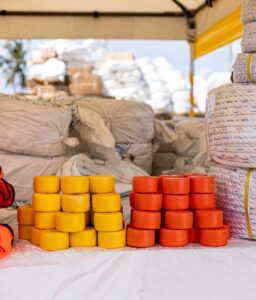
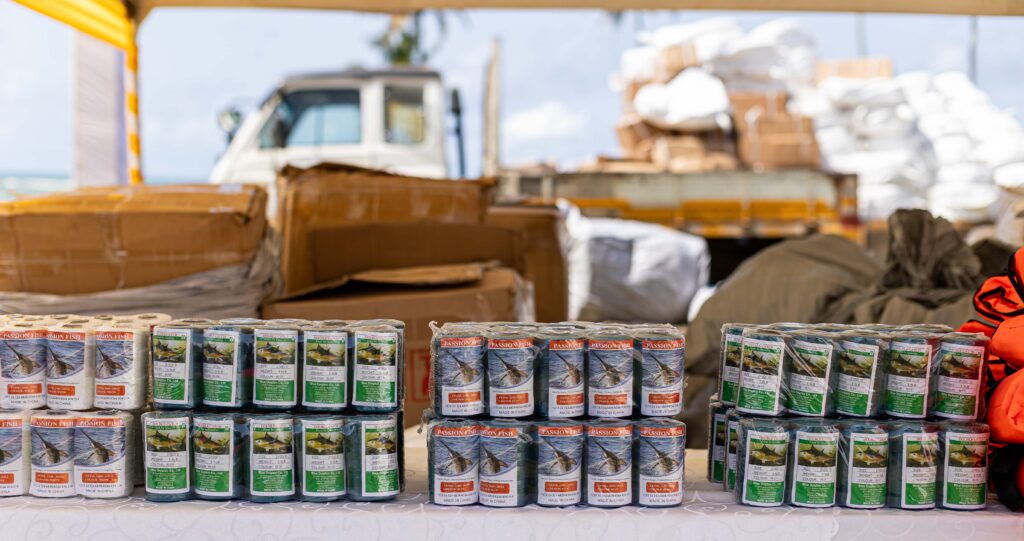
Under the programme, beneficiaries will receive modern fishing inputs tailored to local practices and conditions. These include multifilament nets, weaving threads, buoys, lead weights and dragging ropes, all designed to meet standards set by the Ghana Maritime Authority.
The focus on safety is particularly significant, as artisanal fishing operations often rely on outdated equipment, exposing fisherfolk to heightened risks at sea.
By upgrading tools and reinforcing safety protocols, the programme is expected to improve both operational efficiency and working conditions across participating communities.
Aligning with Local Content and Sustainability Goals
The initiative forms part of Eni’s broader commitment to sustainable development and local content integration within Ghana’s petroleum sector. It aligns with the International Finance Corporation Environmental and Social Performance Standards, as well as Ghana’s regulatory framework on local participation in the oil and gas industry.
Beyond compliance, the programme reflects a strategic shift toward linking extractive sector activities with tangible socio-economic outcomes in host communities.
Energy Revenues Supporting Coastal Economies
Eni has operated in Ghana since 2009, with offshore exploration and production activities delivering equity output of about 40,000 barrels of oil equivalent per day. The company leads the Offshore Cape Three Points (OCTP) project with a 44.4 percent stake, alongside Vitol (35.6 percent) and GNPC (20 percent).
While the joint venture remains a major contributor to Ghana’s energy output, it has increasingly expanded its footprint into community development initiatives, including investments in training, economic diversification, water and sanitation, and energy access.
Bridging Extractives and Livelihoods
The fishing support programme underscores a broader policy and business trend, leveraging extractive industry value chains to support non-oil sectors and local economies.
By strengthening artisanal fishing, the initiative not only boosts incomes but also contributes to stabilising fish supply, a key component of Ghana’s food system.
For coastal communities, the intervention represents a direct link between offshore oil production and onshore economic resilience, turning resource wealth into inclusive growth opportunities.