The Emirates Group has reinforced its position as one of the world’s most resilient aviation giants after posting a record profit of AED 24.4 billion (US$6.6 billion) for the 2025-26 financial year, despite severe geopolitical disruptions that rattled global air travel in the final month of its reporting period.
The performance cements Emirates’ standing as the world’s most profitable airline and underscores the growing strategic importance of Dubai as a global aviation and logistics hub amid continuing uncertainty in international markets.
The Group’s latest annual report showed revenue rising to a record AED 150.5 billion (US$41 billion), while cash assets climbed 12 percent to AED 59.6 billion (US$16.2 billion), highlighting the company’s strong liquidity position even as airlines worldwide grapple with volatile fuel prices, supply chain disruptions, and geopolitical instability.
Profit Growth Despite Regional Tensions
The results come against the backdrop of significant military activity in the Gulf region during the closing stages of the financial year, which disrupted commercial aviation routes across the Middle East.
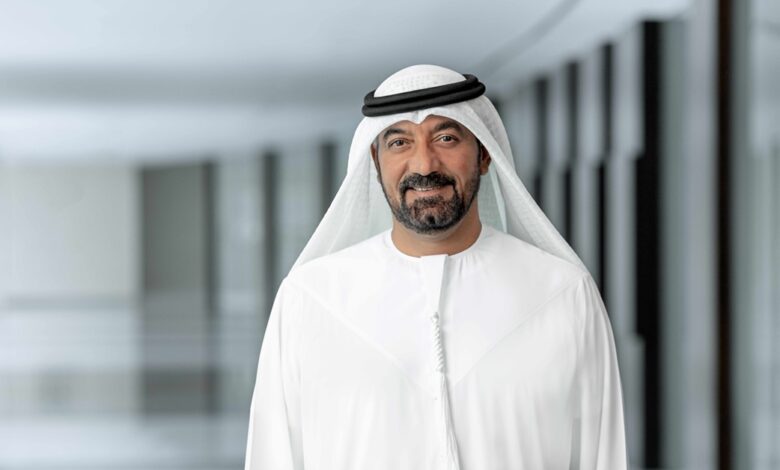
Chairman and Chief Executive of Emirates Airline and Group, His Highness Sheikh Ahmed bin Saeed Al Maktoum, described the outcome as proof of the Group’s resilience and operational adaptability.
“These outstanding results, despite significant challenges in the last month of our financial year, reaffirm the strength and resilience of the Emirates Group’s business model,” he said.
According to him, Emirates and dnata were forced to rapidly adjust operations after military activity on February 28 disrupted commercial air traffic across the Gulf, including the United Arab Emirates.
However, he credited Dubai’s aviation infrastructure and coordinated ecosystem for enabling swift recovery and operational continuity.
Emirates Remains Industry Profit Leader
Emirates Airline alone generated AED 22.8 billion (US$6.2 billion) in profit before tax, representing a 7 percent increase over the previous year, while revenue climbed to AED 130.9 billion (US$35.7 billion).
The airline also recorded its highest-ever cash asset position at AED 54.9 billion (US$15 billion), giving it substantial financial flexibility at a time when many global airlines continue to struggle with debt burdens accumulated during the pandemic years.
Industry analysts say the scale of Emirates’ profitability reflects a combination of strategic route positioning, premium product investment, and Dubai’s growing role as a global transit centre linking Asia, Europe, Africa, and the Americas.
Fleet Expansion Signals Long-Term Confidence
Far from slowing expansion plans, Emirates deepened its long-term investments during the year.
The Group collectively invested AED 17.9 billion (US$4.9 billion) in aircraft, infrastructure, equipment, and technology as part of its future growth strategy.
Emirates added 15 Airbus A350 aircraft during the year and expanded its global network to 152 cities across 80 countries, launching new destinations including Da Nang, Shenzhen, Hangzhou, and Siem Reap.
At the 2025 Dubai Airshow, the airline also announced fresh aircraft commitments worth US$41.4 billion, including orders for 65 Boeing 777-9 aircraft and eight additional Airbus A350-900s.
Its total aircraft order book now stands at 367 aircraft scheduled for delivery through to 2038, reflecting strong long-term confidence in global aviation demand.
Cargo and Logistics Become Strategic Growth Drivers
While passenger operations remained the airline’s dominant revenue source, cargo operations emerged as another critical growth pillar.
Emirates SkyCargo transported 2.4 million tonnes of goods during the year, generating AED 16.2 billion (US$4.4 billion) in revenue.
The division expanded its freighter network and introduced new specialist logistics services targeting sectors such as aerospace, engineering, defence, and e-commerce.
The airline also launched Emirates Courier Express, a cross-border door-to-door delivery solution aimed at strengthening its position in the rapidly growing logistics and e-commerce market.
Analysts say the continued diversification into logistics reflects a broader trend among global airlines seeking more stable revenue streams beyond passenger travel.
dnata Delivers Strong Global Growth
Ground handling and aviation services subsidiary dnata also recorded strong growth, with revenue rising 12 percent to AED 23.6 billion (US$6.4 billion).
Its international operations now account for 77 percent of total revenue, reflecting the Group’s increasingly global footprint.
dnata handled nearly 889,000 aircraft turns globally and processed 3.2 million tonnes of cargo during the year, supported by increased flight activity in major markets including Europe, Australia, the UAE, the United Kingdom, and the United States.
The company also expanded aggressively through acquisitions, infrastructure investments, and new airport operations.
Technology and Customer Experience Investments Intensify
Emirates continued to position premium customer experience as a competitive differentiator.
The airline accelerated deployment of Starlink high-speed onboard Wi-Fi, introduced new accessibility-focused travel services, and expanded its Premium Economy offering through an ongoing US$5 billion aircraft retrofit programme.
It also opened new hospitality and crew training facilities as part of broader investments in workforce development and service quality.
The Group’s workforce increased 8 percent to more than 130,000 employees globally.
Sustainability and ESG Take Centre Stage
Environmental sustainability also featured prominently in the Group’s strategy.
Emirates signed agreements to explore sustainable aviation fuel supply options and partnered on initiatives aimed at improving airspace efficiency and reducing emissions.
Across its subsidiaries, the Group expanded waste reduction programmes, invested in electric and hybrid ground equipment, and supported conservation and social impact initiatives globally.
The airline industry remains under mounting pressure to decarbonise operations, with investors and regulators increasingly scrutinising environmental performance.
Aviation’s Recovery Enters a New Phase
The Emirates Group’s record performance reflects a broader recovery trend in global aviation, but also signals a transition into a new competitive era where financial strength, operational flexibility, technology investment, and geopolitical resilience are becoming decisive advantages.
Even as regional tensions and global economic uncertainty persist, Emirates appears determined to maintain aggressive expansion plans while reinforcing its role as a central player in global commerce and travel.
“Our fundamentals are strong,” Sheikh Ahmed said.
“The Emirates Group’s proven business model is unchanged. Dubai’s place at the nexus of global commerce, trade and travel flows is unchanged.”