
Ghana Pushes Continental Digital Trade Order as 3i Africa Summit Opens in Accra
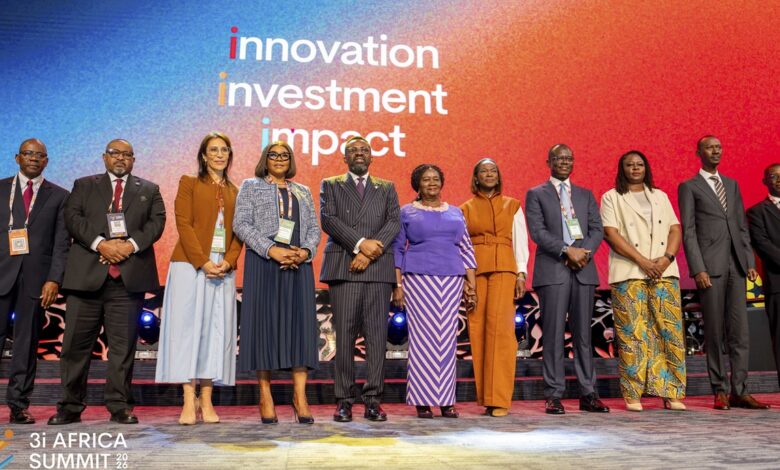
Ghana will work with peer African countries to operationalise a continental digital trade order, Vice President Jane Naana Opoku-Agyemang has announced, outlining a coordinated push to align fintech systems, digital identity frameworks and cross-border payment infrastructure across the continent.
Delivering the opening address at the 2026 3i Africa Summit in Accra, under the theme “The Next Frontier, Shaping Africa’s Integrated Fintech Future,” the Vice President said Ghana would collaborate with countries including Rwanda and Zambia to implement, test and scale interoperable digital trade systems across borders.
The initiative will focus on mobile money interoperability, mutual recognition of digital identity for cross-border Know Your Customer (KYC) processes, and harmonised electronic invoicing systems, forming the backbone of what she described as a unified African digital marketplace.

From Gateway to Functional System
Framing Ghana’s long-standing positioning as a gateway to Africa, the Vice President cautioned that the designation must move beyond symbolism.
“A gateway is not just a title. It is a system measured by whether transactions clear, businesses connect easily, and markets operate with certainty,” she noted.
She pointed to Ghana’s political stability, openness to investment, and hosting of the African Continental Free Trade Area Secretariat as foundational advantages, but stressed that the next phase of growth would depend on the country’s ability to anchor digital integration across the continent.
Digital Integration as Economic Imperative
Referencing the vision of Kwame Nkrumah, she argued that Africa’s economic independence is now inseparable from digital integration, where value is increasingly created, exchanged and controlled.
From traders and smallholder farmers to software developers, participation in modern economies, she said, now hinges on the ability to transact seamlessly, establish identity, and operate across borders.
Africa’s rapid adoption of mobile money and fintech solutions demonstrates its capacity to leapfrog legacy systems, but the challenge remains scaling these gains into a coherent continental framework.
Tackling Fragmentation in Payments and Systems
A major constraint, she noted, is the continued routing of intra-African transactions through external financial systems and third-party currencies, which increases costs, delays settlements and weakens the concept of a single African market.
Platforms such as the Pan-African Payment and Settlement System were identified as critical to addressing these inefficiencies, alongside the African Union’s Digital Trade Protocol adopted in 2024.
The goal, she explained, is to enable a Ghanaian business to invoice clients across Africa and receive payments directly in cedis efficiently and at competitive cost.

Governor: Next Phase Goes Beyond Payments
Reinforcing the shift in focus, Governor of the Bank of Ghana, Johnson Asiama, noted that the evolution of digital finance on the continent will extend well beyond basic payment systems.
“The next phase of digital finance will not be defined by payments alone. Across our markets, the basic payment infrastructure is increasingly in place. The opportunity now lies in building the next layer of value,” he said, pointing to merchant payments, embedded finance, supply chain finance and cross-border services as key growth areas.
He emphasised that future financial products must respond to the realities of women, micro, small and medium-sized enterprises (MSMEs), young people and the informal sector—segments that remain central to Africa’s economic structure.
Dr. Asiama also highlighted persistent constraints, noting that the challenge is no longer access, but fragmentation, cost and uneven regulatory alignment.
“The challenge is no longer building systems. It is connecting them,” he stressed, calling for clearer priorities and stronger coordination across jurisdictions.
He added that regulation must remain firm to protect consumers, safeguard financial system integrity and preserve macroeconomic stability as innovation scales.
Identity, Regulation and Trust as Pillars
Beyond payments, the Vice President highlighted digital identity as a foundational requirement for trust in the digital economy, noting that millions of Africans remain excluded due to lack of verifiable identity systems.
Interoperable identity frameworks, she said, are essential to unlock participation at scale, particularly in cross-border trade.
She also pointed to regulatory fragmentation as a barrier to innovation, calling for harmonised standards, regulatory sandboxes and coordinated policy implementation to reduce compliance costs and encourage fintech growth.
Infrastructure Gap and Investment Needs
The address underscored infrastructure as a critical enabler, with limited broadband access, high data costs and low data centre capacity constraining Africa’s digital ambitions.
“If our data is stored and processed elsewhere, then even when we participate, we lack control,” she warned, calling for increased investment in broadband networks, cloud infrastructure and digital public systems.
A Defining Moment for Africa’s Digital Economy
Despite the challenges, the Vice President emphasised that Africa’s demographic growth and rapid technology adoption position it to play a defining role in the next phase of global digital expansion.
The 3i Africa Summit, she indicated, represents not just a platform for dialogue, but a catalyst for implementation, ensuring that integration is not merely discussed in Accra but demonstrated across the continent.
Ultimately, she stressed, the success of Africa’s digital future will depend on whether countries can build systems that work consistently across borders and at scale—determining whether the continent participates in the global digital economy on its own terms or within frameworks shaped elsewhere.