
Has Labour’s Jobless Growth Warning Hit Home? Mahama Unveils 1% GDP Jobs Investment Plan
Ghana’s economic narrative may be approaching an inflection point, as the debate shifts from the strength of macroeconomic indicators to the depth of their impact on jobs and incomes.
After years of prioritising stability, policymakers are increasingly being pressed to demonstrate how growth translates into tangible livelihoods for households and the country’s expanding labour force.
That pressure has been building from organised labour and policy circles, raising a central question now shaping the discourse. Is the country’s next phase of economic strategy being recalibrated in response to persistent concerns over jobless growth?
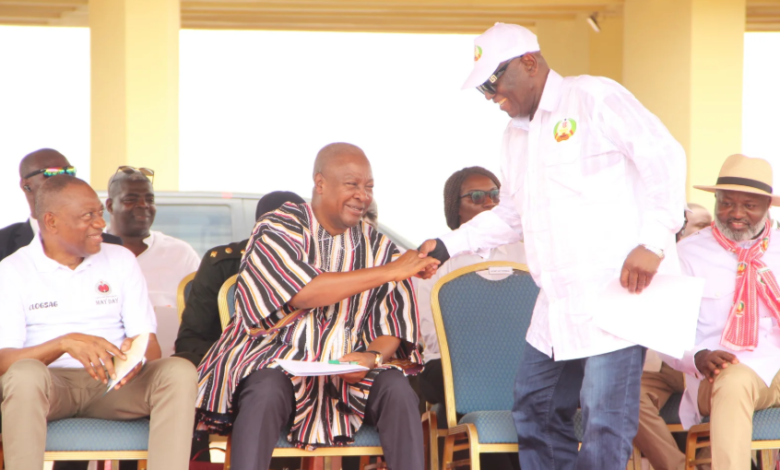
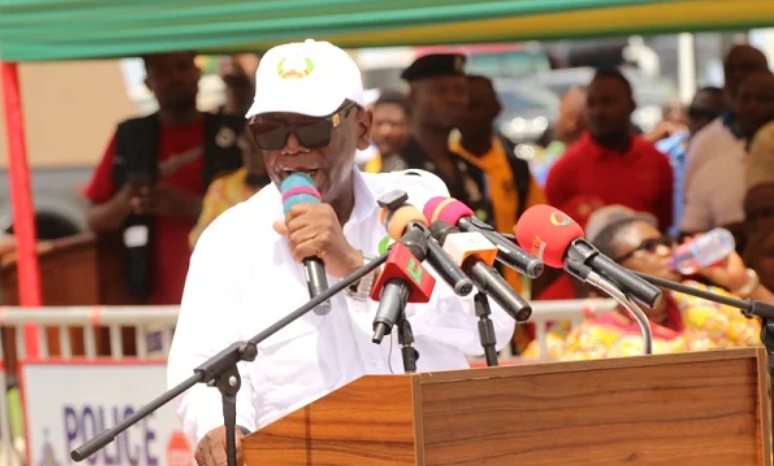
Against this backdrop, President John Dramani Mahama signalled a potential pivot at the 2026 May Day celebrations, announcing that the Ministry of Finance Ghana will soon present a new policy framework to Cabinet and Parliament. The plan centres on committing at least one percent of Gross Domestic Product annually to high-growth sectors, with job creation positioned as a primary outcome.
The proposal marks a shift in emphasis from broad macroeconomic management toward targeted, investment-led growth, suggesting a more interventionist stance aimed at correcting structural gaps in employment generation.
A Shift in Economic Thinking
For much of the past three decades, Ghana’s policy mix has been anchored on macroeconomic stability, with inflation control, exchange rate management and fiscal consolidation treated as core priorities. The implicit assumption has been that sustained growth would, over time, translate into employment gains.
However, labour market data and anecdotal evidence have increasingly challenged that premise, pointing to a weak employment elasticity of growth and persistent underemployment, particularly among the youth.
The proposed allocation of a fixed share of output to job-intensive sectors signals a move toward embedding employment targets within the growth framework itself, rather than relying on indirect transmission mechanisms.
Converging with Labour’s Position
The policy direction mirrors long-standing concerns raised by the Trades Union Congress Ghana. Its Secretary-General, Joshua Ansah, has repeatedly argued that Ghana’s growth model has delivered limited gains in terms of decent work and income security.
Organised labour has framed the issue as one of structural imbalance, where macro-level gains are not sufficiently filtering through to the workforce.
The alignment between these concerns and the government’s emerging policy stance points to a convergence that could reshape how economic performance is defined and evaluated.
Investment as a Catalyst for Jobs
While sectoral details remain pending, the focus on high-growth areas suggests an emphasis on industries with strong multiplier effects and labour absorption capacity.
Manufacturing, agro-processing and infrastructure development are likely candidates, given their potential to drive value addition, deepen supply chains and reduce import dependence.
The commitment to a recurring annual investment also introduces a degree of policy predictability that could improve investor confidence and support medium-term planning.
Beyond Stability to Outcomes
The broader implication of the initiative is a shift toward outcome-based economic management, where success is measured not only by macroeconomic stability but by employment creation, income growth and resilience of livelihoods.
This aligns with the 2026 May Day theme, “Pivoting to Growth, Jobs and Sustainable Livelihoods Beyond Macroeconomic Stability,” which reflects a wider rethinking of policy priorities.
A Defining Policy Moment
As the framework moves toward formal presentation, attention will turn to execution risks, including fiscal space, institutional capacity and the ability to crowd in private capital.
For analysts, the significance lies in whether the policy can translate into measurable gains in employment and productivity, rather than remaining an aspirational shift.
If implemented effectively, the strategy could mark a structural transition in Ghana’s economic model, from stability-led management to investment-driven, job-focused growth.