BoG’s GH¢15.63bn Loss Sparks Accountability Debate as Abena Osei-Asare Demands Parliamentary Scrutiny
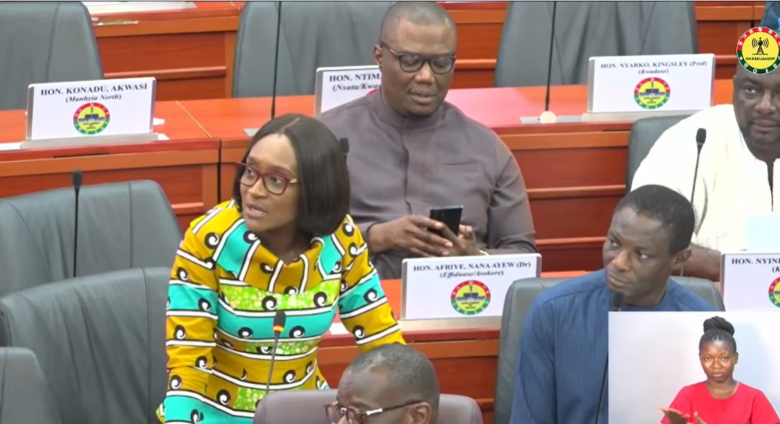
Fresh concerns over Ghana’s fiscal outlook have emerged following a strong critique by Abena Osei Asare, who has called for urgent parliamentary oversight of the Bank of Ghana’s deteriorating financial position.
In a detailed post assessing the central bank’s 2025 audited accounts, the Atiwa East legislator and former Deputy Finance Minister warned that the scale of losses and rising negative equity pose significant risks to public finances and policy credibility.
Losses Deepen, Equity Position Worsens
According to her analysis, the Bank recorded a loss of GH¢15.63 billion in 2025, up sharply from GH¢9.49 billion in 2024. More concerning, she noted, is the widening negative equity position of the Bank of Ghana Group, which deteriorated from GH¢58.62 billion to GH¢93.82 billion within a year.
She described the figures as evidence of a “material worsening” of the central bank’s financial health, warning that the growing capital deficit represents a fiscal risk that cannot be ignored.
Gold Sales Cushion Losses
Ms Osei-Asare argued that the headline loss does not fully reflect the underlying situation, suggesting that asset liquidation—particularly gold sales—played a critical role in containing the scale of financial deterioration.
Without the disposal of gold accumulated between 2023 and 2024, she contended, losses could have been significantly higher, pushing the Bank into a deeper financial hole.
“The conclusion is clear,” she stated. “The gold accumulated was not sold as part of a routine reserve strategy, but liquidated to cushion and mask mounting losses.”
Policy Contradictions Emerge
The lawmaker questioned what she described as a contradiction in policy direction, pointing to government’s subsequent proposal under the Ghana National Gold Purchase Programme to acquire even more gold.
Citing official projections, she noted that the programme aims to purchase 242.68 tonnes of gold at an estimated cost of GH¢242.67 billion, based on a benchmark price of $4,000 per ounce.
“You cannot liquidate assets to cover losses and call it stability, and then propose a quarter-of-a-trillion-cedi programme to rebuild the same reserves,” she argued.
Accounting and Transparency Concerns
Beyond the numbers, Ms Osei-Asare raised concerns over the Bank’s reported departure from International Financial Reporting Standards in certain accounting treatments.
She called for full disclosure of the financial implications of these deviations, stressing that Parliament must be informed of the true cost and impact on the Bank’s accounts.
Political Accountability Under Scrutiny
Her intervention also revisits earlier political positions taken during the 2022 central bank losses, highlighting what she described as a shift in tone by the current administration.
She noted that losses and negative equity previously triggered calls for accountability, including demands for resignations, but are now being framed as the cost of maintaining stability.
“This is about credibility, not accounting semantics,” she said, adding that operational continuity should not be used to downplay financial accountability.
Taxpayer Exposure and Recapitalisation
The Bank’s 2025 accounts acknowledge a planned recapitalisation programme between 2026 and 2032, effectively transferring the burden of restoring its capital base to the state.
Ms Osei-Asare warned that this translates into future fiscal obligations, whether through debt issuance, direct cash injections or other financial adjustments.
“A GH¢93.82 billion negative equity hole is not just a central bank issue. It is a public finance problem,” she stressed.
Calls for Parliamentary Action
The MP outlined a series of actions she believes Parliament must take, including:
- Urgent briefings by the Governor, Finance Minister, auditors and relevant officials
- Full disclosure of costs arising from IFRS departures
- Publication of the recapitalisation framework and its fiscal implications
- Independent review of gold transactions and related programmes
- Parliamentary scrutiny of any recapitalisation involving public resources
A Test of Governance
In her conclusion, Ms Osei-Asare argued that central bank independence must be matched by transparency and accountability, warning that failure to address the issue could erode public trust.
“The Bank of Ghana’s financial position has been materially impaired,” she stated, pointing to rising losses, growing negative equity and reliance on asset disposals.
As the recapitalisation timeline approaches, she insists that Parliament must act decisively.
“The public is entitled to know who is responsible, on what terms, and at what cost to the taxpayer,” she said.
Her remarks are likely to intensify debate over the central bank’s financial strategy and the broader implications for Ghana’s fiscal stability, as policymakers grapple with balancing macroeconomic gains against mounting institutional costs.