
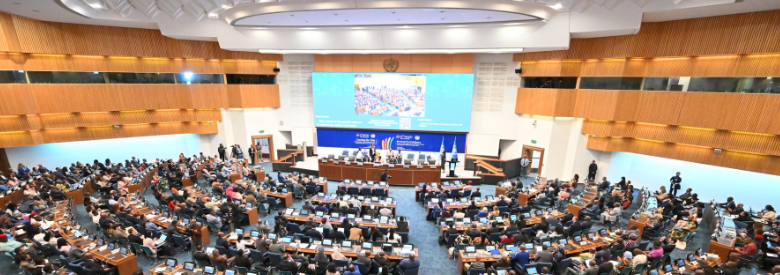
African leaders have issued a renewed call for urgent and coordinated action to reverse slow progress on development goals, adopting the Addis Ababa Declaration on Turning the Tide at the close of a high-level regional forum in Ethiopia.
The declaration, endorsed during the 12th session of the Africa Regional Forum on Sustainable Development 2026 in Addis Ababa, underscores mounting concern that the continent is falling behind on both the 2030 Agenda for Sustainable Development and the African Union’s long-term blueprint, Agenda 2063.
Africa Off Track on Development Goals
Participants, including ministers, policymakers and development partners, acknowledged that Africa is significantly off course in achieving the Sustainable Development Goals (SDGs). Progress remains slow on 12 goals, with outright regression recorded on five.
Key structural challenges identified include limited access to clean water and sanitation, widespread energy poverty affecting an estimated 600 million people, weak industrial growth, rapid urbanisation pressures and rising public debt levels. The continent also faces a substantial annual SDG financing gap of between $670 billion and $848 billion.

Five Priority Areas for Urgent Action
The declaration outlines five priority areas requiring immediate scale-up of interventions: water and sanitation, energy, industrialisation, sustainable cities and partnerships.
On water, leaders called for stronger governance systems, sustainable financing and ecosystem protection, while positioning water as a driver of economic growth and stability.
Energy discussions focused on accelerating investment in renewable solutions, including decentralized power systems, clean cooking technologies and regional electricity markets to expand access across households and industries.
For industry and infrastructure, ministers urged countries to adopt forward-looking strategies that respond to global shifts such as digital transformation, artificial intelligence and climate change, while strengthening regional value chains under the African Continental Free Trade Area.
Cities and Financing in Focus
Urbanisation emerged as a central theme, with cities identified as engines of inclusive growth. The declaration calls for increased investment in housing, resilient infrastructure and digital systems, alongside improved urban planning and revenue generation.
On financing, African leaders renewed calls for reforms to the global financial system, including fairer credit ratings, expanded domestic resource mobilisation and innovative financing models such as blended finance. The proposed establishment of an Africa credit rating agency was also highlighted as a tool to reduce borrowing costs and boost investor confidence.
Strategic Positioning Ahead of Global Forums
The declaration will serve as Africa’s unified position at major global engagements, including upcoming United Nations and climate forums. It also aligns with preparations for COP32, which Ethiopia is expected to host, presenting an opportunity for Africa to push for implementation-focused climate action.
Youth and Inclusion at the Core
A notable feature of the declaration is its emphasis on inclusivity, particularly the role of young people, women and vulnerable groups. Leaders stressed the need to move beyond viewing these groups as beneficiaries, positioning them instead as active drivers of development through targeted investments, access to finance and future-ready skills.
Turning Commitments into Results
Organised by the United Nations Economic Commission for Africa, in collaboration with the African Union Commission and the African Development Bank, the forum marks a critical moment for the continent.
At its core, the Addis Ababa Declaration reflects a growing consensus: Africa’s development challenge is no longer just about setting ambitious goals, but about accelerating implementation through coordinated policy action, stronger institutions and sustainable financing.
With less than five years to the 2030 deadline, the message from Addis Ababa is clear—Africa must move faster, act collectively and deliver measurable results.