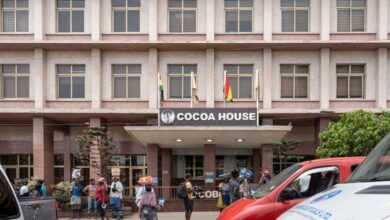
UN Warns Ghana’s Agricultural Reforms Are Leaving Small Farmers Behind
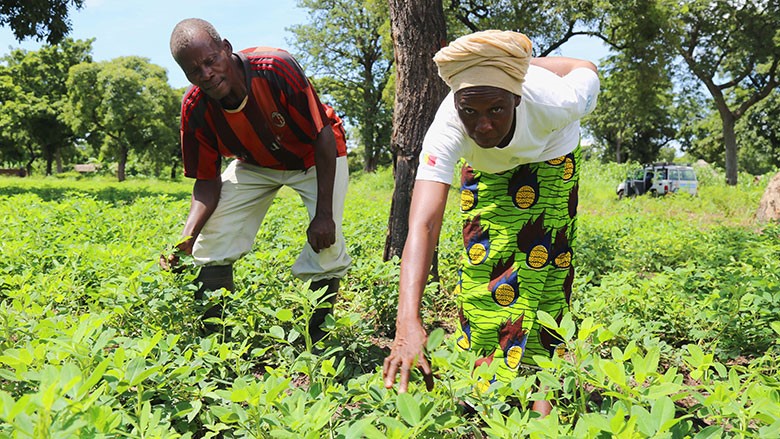
Ghana’s drive toward large-scale agricultural modernisation and export-oriented farming risks deepening inequality within the rural economy unless stronger protections are introduced for smallholder farmers, artisanal fishers and pastoralist communities, a United Nations Working Group has warned.
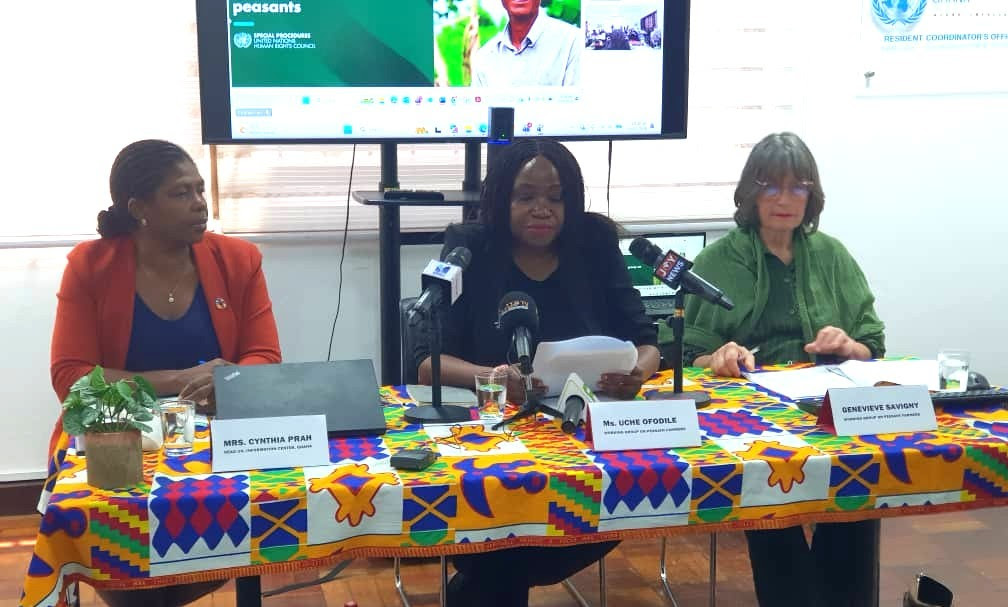
At the end of an official visit to Ghana, the UN experts acknowledged the country’s progress in strengthening laws and policies around human rights and rural livelihoods, but cautioned that implementation gaps continue to leave many rural producers trapped in poverty, exclusion and environmental vulnerability.
The warning comes at a critical moment for Ghana’s agricultural policy direction as government continues pursuing food security, agribusiness expansion and export growth under broader economic transformation programmes.
According to the Working Group on the rights of peasants and rural workers, Ghana’s current agricultural transition, which increasingly emphasises mechanised and export-driven production systems, risks creating a “dual food system” where large commercial agriculture expands while family-based farming becomes progressively marginalised.
Strong Laws, Weak Implementation
The UN experts praised Ghana for recent policy and legislative reforms, including the Fisheries and Aquaculture Act 2025, the Social Protection Act 2025, the Affirmative Action (Gender Equity) Act 2024 and the ratification of the International Labour Organization’s Work in Fishing Convention.
However, the delegation stressed that strong legal frameworks alone are insufficient if rural communities continue struggling to experience meaningful improvements on the ground.
The Working Group said smallholder farmers, artisanal fishers and pastoralists remain economically and socially excluded despite forming the backbone of Ghana’s food production systems.
The experts argued that many rural producers still face serious barriers in accessing land, financing, infrastructure and legal protection necessary to participate competitively in the evolving agricultural economy.
Land Insecurity and Gender Inequality
One of the strongest concerns raised by the UN delegation centred on Ghana’s land tenure system, which they said continues to expose many subsistence farmers to insecurity and sudden displacement.
According to the experts, Ghana’s dual land ownership structure combining customary and statutory systems often leaves rural farmers with limited legal recourse when disputes arise.
Women farmers were identified as particularly vulnerable.
Despite their extensive participation across farming and fishing value chains, the experts said women continue to face exclusion from land ownership and decision-making because of deeply entrenched social norms.
Youth and elderly farmers were also identified as groups facing compounded disadvantages within existing governance structures.
Galamsey Described as National Emergency
The Working Group also delivered a strong assessment of the growing environmental damage caused by illegal mining, commonly known as galamsey.
The experts described galamsey as Ghana’s “most acute, rapidly expanding and politically charged environmental emergency,” warning that the destruction now extends far beyond mining sites into broader threats to food systems, water security and public health.
They noted that contaminated rivers, destroyed farmlands and heavy-metal pollution are increasingly undermining agricultural sustainability and rural livelihoods across affected regions.
The UN delegation further warned that the crisis has become intertwined with elite interests and governance weaknesses, transforming it from an environmental issue into a wider national security and economic concern.
Infrastructure and Finance Gaps Deepen Rural Pressures
The report also highlighted longstanding structural barriers limiting productivity and incomes within rural communities.
Poor road infrastructure, inadequate cold-chain systems and the dominance of intermediaries within agricultural markets were identified as major contributors to post-harvest losses and weak farmer incomes.
The experts added that many smallholder farmers and artisanal fishers remain excluded from formal financing systems because they lack conventional collateral required by banks and lenders.
Climate-related shocks are meanwhile worsening these vulnerabilities as rainfall patterns become more unpredictable and pressure on land resources intensifies.
Pastoralists Face Structural Exclusion
The Working Group also raised concerns over the treatment of pastoralist communities, particularly Fulbe populations, describing them as structurally excluded from governance and legal protection systems.
According to the experts, many pastoralists face difficulties obtaining citizenship documentation and accessing state services because their nomadic lifestyles do not align with governance systems built around permanent settlements.
The erosion of grazing lands caused by agricultural expansion and climate pressures was also identified as a growing source of conflict between pastoralists and settled farming communities.
Political Will Seen as Key
Despite the concerns raised, the UN delegation maintained that Ghana possesses a sufficiently strong legal and policy foundation to address many of the challenges confronting rural populations.
The larger challenge, they argued, lies in implementation and political commitment.
According to the experts, meaningful progress will require “genuine political courage” capable of confronting entrenched interests and driving deeper institutional and social reforms.
The Working Group is expected to present a full report containing its findings and recommendations to the UN Human Rights Council in September 2026.