St. Thomas Aquinas SHS Seeks More Support After 1993 Year Group Restores Teachers’ Common Room
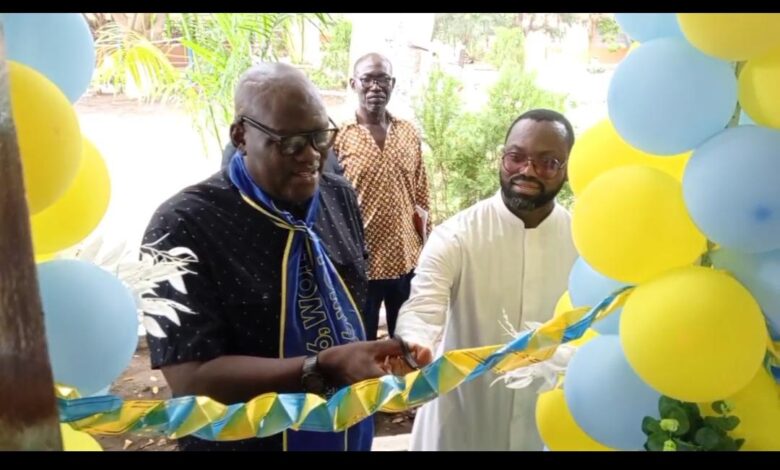
Concerns over the deteriorating state of infrastructure at St. Thomas Aquinas Senior High School have resurfaced following a major refurbishment project undertaken by the school’s 1993 year group, with school authorities using the occasion to appeal for wider intervention to help rehabilitate aging facilities across the campus.
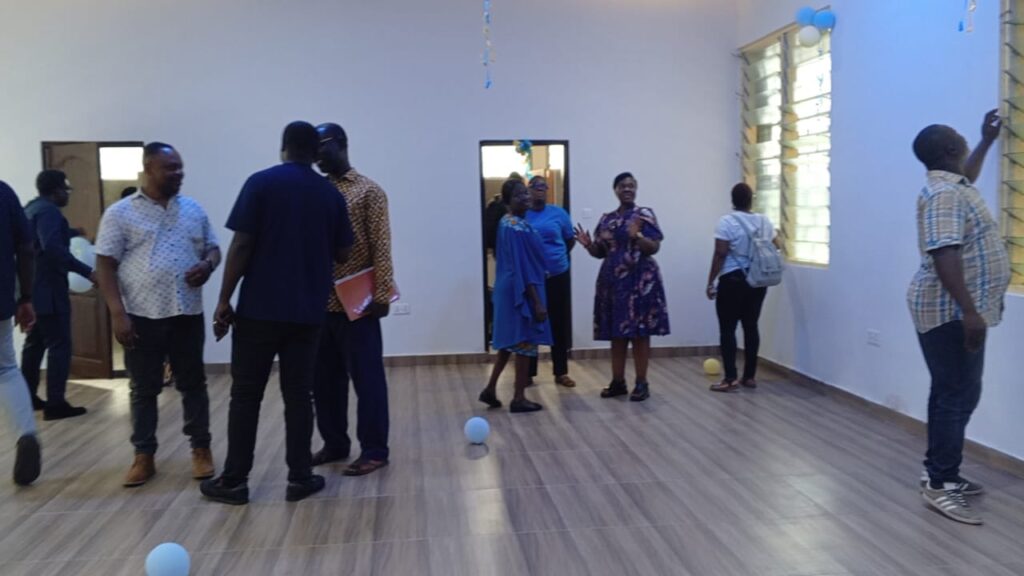
The refurbished teachers’ common room estimated at Gh¢92,000.00, was officially handed over to the school last Friday during a brief ceremony at the school’s Cantonments campus in Accra, where both alumni and management described the project as an important step toward improving teacher welfare and reviving critical infrastructure within the institution.
The intervention highlights the growing role old students continue to play in sustaining some of Ghana’s long-established secondary schools, many of which are struggling with deteriorating buildings, limited maintenance budgets and mounting rehabilitation needs.

Extensive Structural Rehabilitation
Project Manager for the refurbishment, Michael Sodzi Esq, said the project involved extensive reconstruction and rehabilitation works to restore the facility after years of deterioration.
According to him, the first phase of the project focused on demolition and removal of damaged sections of the building, including worn-out doors, broken windows, old floor tiles, deteriorated burglar-proof systems, electrical fittings, cables and other defective structural elements.
He explained that the project team subsequently carried out major repair works involving wall plastering, concreting, reinforcement of concrete slabs, repairs to walls and columns, rehabilitation of sections of the roof structure and replacement of rotten ceiling struts, battens and plywood ceilings.
Mr. Sodzi said additional works included replacement of louvre blades, installation of suspended ceilings, repairs to existing doors, replacement of faulty locks, fixing of eaves and barge boards, internal and external painting works, installation of ceiling lights and six ceiling fans, as well as renovation of the facility’s store room and kitchenette.
He added that the kitchenette area was also retiled as part of finishing works undertaken to improve the overall functionality and appearance of the facility.
According to him, the phased approach adopted for the project became necessary because of the extensive deterioration observed in several sections of the structure.
Headmaster Appeals for Wider Support
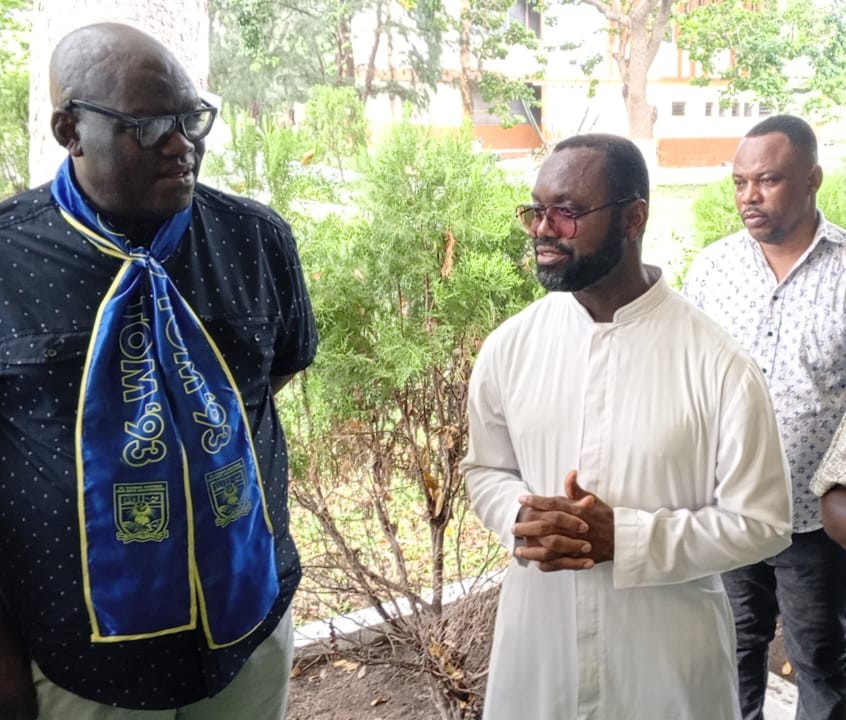
Headmaster of the school, Rev. Father George Obeng Appah, described the refurbished facility as a major improvement from its previous condition and commended the 1993 year group for responding to the school’s infrastructure challenges.
“This is beautiful,” he said after the ceremony.
“When I assumed office, the teachers’ common room was in a very bad shape and I decided to renovate it. I reached out to some friends to support me, only to realise that the 1993 year group had already committed itself to the project,” he stated.
Rev. Father Appah said the intervention demonstrated the importance of collective alumni support in preserving the school’s infrastructure and academic environment.
“We are not looking for anything overly huge from any year group. Little drops of water make a mighty ocean,” he said.
He warned that several facilities within the school remain in poor condition and urgently require rehabilitation.
“If you look at St. Thomas Aquinas SHS, many of the structures are dilapidated and we need people to come on board. Otherwise, considering where the school is located, it will become very worrying if nothing is done,” he added.
The headmaster specifically identified the school’s science laboratories as areas requiring urgent intervention.
“If you see the state of our science laboratories, it is nothing to write home about,” he stated, while appealing to old students, corporate organisations and individuals interested in education to support the school.
He further noted that although the common room refurbishment had significantly improved the facility, additional support would still be required to fully operationalise the space.
“The furniture is key. Without furniture, blinds and air-conditioning, it will be difficult for staff to fully move in and make proper use of the place,” he said.
According to him, creating a conducive environment for teachers remains critical to improving morale, productivity and academic delivery.
Importance of Teacher Welfare Infrastructure
Education stakeholders continue to stress the importance of teacher welfare facilities within schools, arguing that staff productivity and academic performance are often linked to the quality of working environments available to teachers.
Teacher common rooms serve as important centres for lesson preparation, marking, academic discussions and staff coordination. Poor staff facilities can therefore affect teacher motivation and ultimately impact teaching and learning outcomes.
Call for More Alumni Participation
Representative of the 1993 year group, Mr. Fredrick Adom, said the group undertook the project as part of efforts to contribute toward the development of the school and preserve its standards.
“For now, this is what we have. We want the school to take it over and put it to good use while we continue looking at other ways to support the school,” he said.
Mr. Adom also appealed to other year groups to undertake similar interventions within the school.
“This is what we are asking for — that all year groups come on board to support the school. If every year group adopts even one classroom or one project area, the transformation will happen within a short period,” he stated.
“Let us all come together and support the school so St. Thomas Aquinas SHS can become new again.”
Growing Dependence on Alumni Interventions
The intervention by the 1993 year group reflects a broader trend across Ghana’s education sector where alumni associations are increasingly stepping in to address infrastructure deficits in schools amid rising maintenance costs and limited public funding for rehabilitation projects.