
UG Tops Ethics Challenge as Banking Talent Push Intensifies
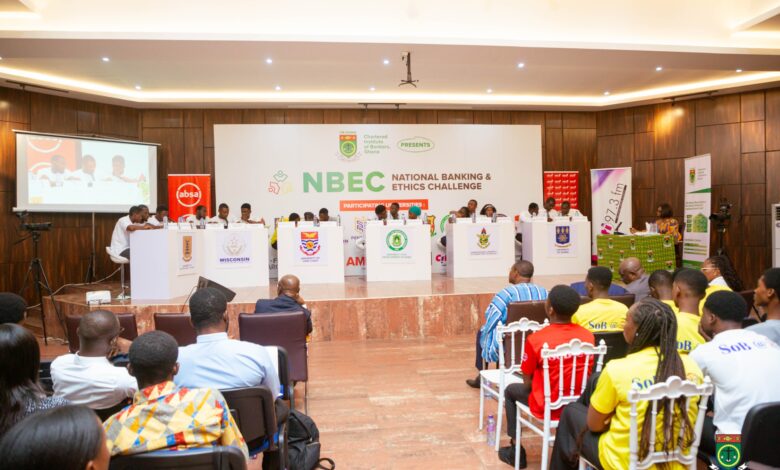
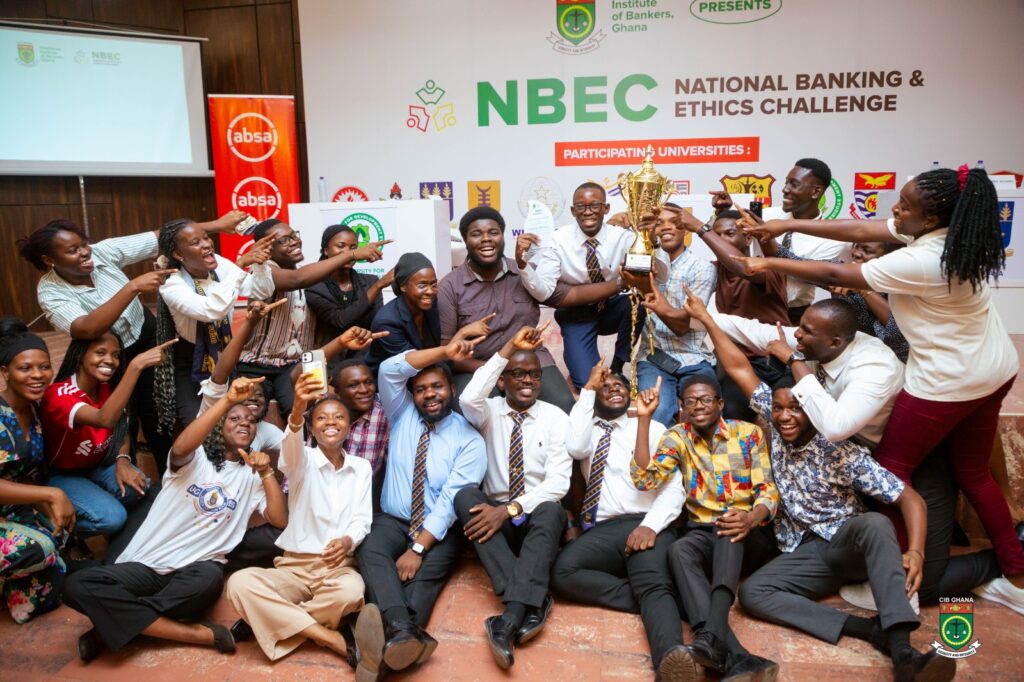
The University of Ghana Business School has taken top honours in the second National Banking and Ethics Challenge (NBEC 2.0), as Ghana’s banking industry steps up efforts to develop a new generation of professionals grounded in ethics and technical competence.
UG secured 35 points in the final round of the competition, finishing ahead of the University of Professional Studies, Accra (29.5 points) and the University for Development Studies (26.5 points). The contest, organised by the Chartered Institute of Bankers (CIB) Ghana, drew participation from 12 universities, more than double the number in the inaugural 2025 edition.

From Competition to Capacity Building
The expanding scale of the challenge reflects a deliberate shift by industry stakeholders to build a stronger talent pipeline at a time when trust and professionalism remain central concerns for the sector.
CIB Ghana President Benjamin Amenumey said the initiative was designed to go beyond academic competition, positioning it as a platform to shape the future workforce of the banking industry.
“The future of banking depends on professionals who are ethically grounded, intellectually sharp, and prepared for a rapidly evolving global environment,” he said.
Direct Industry Linkages
This year’s event introduced practical incentives aimed at bridging the gap between training and employment. GCB Bank has committed to offering internship opportunities to all contestants, while CIB Ghana is providing full registration fee waivers for participants who choose to pursue Chartered Banker certification.
A mentorship platform was also integrated into the programme, offering students guidance on career development and professional pathways within the financial services sector.
Ethics at the Core
For the organisers, the emphasis on ethics is a response to broader challenges confronting the industry, including reputational damage from past sector disruptions and rising cases of financial misconduct.
CIB Ghana Chief Executive Officer Robert Dzato underscored the importance of rebuilding trust as a core pillar of banking.
“Trust is the currency in banking. It is built on ethics, accountability and doing the right thing consistently,” he said.
He noted that the challenge forms part of a wider strategy to develop professionals who combine technical expertise with strong ethical judgment, while also improving financial literacy among the public.
Aligning Skills with Industry Needs
Participants were tested across a wide spectrum of banking topics, including digital finance, cybersecurity, fraud prevention, ESG principles and everyday banking operations. The scope of the competition reflects the evolving demands on banking professionals in an increasingly digital and regulated environment.
Organisers say the format is structured to ensure that knowledge gained extends beyond contestants to the wider audience, reinforcing the programme’s role as both a learning and awareness platform.
Looking Ahead
CIB Ghana plans to expand the initiative further, with proposals to introduce a zonal competition structure to increase participation across the country. Future editions are also