
Can Ghana’s Digital Payments Revolution Scale Beyond Interoperability Gains? GhIPSS Charts Next Phase of Financial Integration
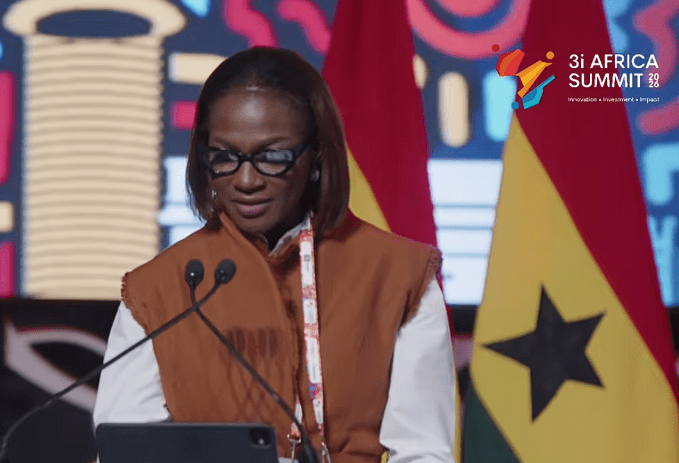
Ghana’s push toward a fully integrated digital financial ecosystem has taken renewed centre stage, with the Ghana Interbank Payment and Settlement Systems Limited (GhIPSS) outlining an ambitious roadmap to deepen interoperability, expand innovation, and strengthen cross-border payments across Africa.
Speaking at the 3i Africa Summit 2026 in Accra, Chief Executive of GhIPSS, Clara B. Arthur, said Ghana’s payments transformation was no longer a vision but a functioning reality built on collaboration between regulators, banks, fintechs, and mobile money operators.
She noted that the country’s digital finance journey is now shifting from building systems to strengthening scale, resilience, and regional connectivity.
From Vision to Everyday Transactions
Illustrating how far the system has evolved, Ms. Arthur referenced a market interaction in Makola, where a trader, when asked how she preferred to be paid, simply answered: “Mobile money.”
According to her, the response reflects how deeply interoperability has reshaped consumer expectations.
“She did not ask whether the sender was using a bank account or a wallet. She simply expected to receive the money without delay,” she said, stressing that such seamlessness is the product of deliberate infrastructure development and industry collaboration.
Building the Backbone of Digital Finance
Established by the Bank of Ghana in 2007, GhIPSS was mandated to drive payment systems transformation through interoperable infrastructure.
Over the years, it has developed and operated key national platforms including gh-link, Ghana’s domestic card scheme, the GhIPSS Instant Pay system, Mobile Money Interoperability, Cheque Codeline Clearing, and direct credit and debit systems.
Ms. Arthur said these systems now form a connected ecosystem that allows transactions to move seamlessly across banks, fintech platforms, and mobile money operators, significantly improving efficiency and access.
Next Phase: Standards, Regulation, and Expansion
Looking ahead, GhIPSS is positioning Ghana’s payment infrastructure for deeper global integration through the adoption of the ISO 20022 messaging standard.
The shift, she explained, will allow Ghana’s financial systems to “speak the same language as leading global markets,” enabling richer transaction data, faster settlement processes, and easier cross-border payments.
GhIPSS is also strengthening its domestic card scheme through strategic partnerships with regional and international payment networks.
On regulation and innovation, Ms. Arthur pointed to the recently passed Virtual Asset Service Providers Act, noting that GhIPSS is engaging virtual asset providers to ensure innovation occurs within a secure and regulated framework.
A Continental Vision for Payments
Beyond Ghana, GhIPSS is seeking stronger linkages with instant payment systems across Africa as part of efforts to reduce friction in cross-border transactions.
According to Ms. Arthur, the future of digital finance on the continent depends on interoperability not just within countries, but between them.
“Cross-border interoperability is where the next frontier lies,” she indicated.
Call for Deeper Industry Participation
GhIPSS also used the platform to encourage more financial institutions and fintechs to connect to the national switch, arguing that shared infrastructure reduces costs, eliminates duplication, and creates scale for innovation.
Ms. Arthur emphasised that GhIPSS’s role is to provide the “rails” on which financial service providers can build products that deepen financial inclusion and improve the financial health of citizens.
Partnership as the Driving Force
She concluded that Ghana’s progress in digital payments is fundamentally a story of leadership and partnership rather than isolated innovation.
“When leadership is collaborative and partnerships are intentional, digital finance moves beyond systems and delivers real impact,” she said, adding that the ultimate goal is a financial ecosystem where access is seamless and universal.
For Ghana, that future is already taking shape—one transaction at a time.