
African leaders have issued a renewed call for faster, coordinated action to accelerate progress on development targets, warning that the continent risks falling behind on key global and regional goals unless implementation is significantly stepped up.
At the opening of the Twelfth Session of the Africa Regional Forum on Sustainable Development 2026, policymakers, development partners and private sector actors gathered to reassess Africa’s trajectory toward the 2030 Agenda for Sustainable Development and Agenda 2063.
Held under the theme “Turning the Tide: Transformative and Coordinated Actions,” the forum comes at a critical juncture, with just four years remaining to the 2030 deadline.
From commitments to results
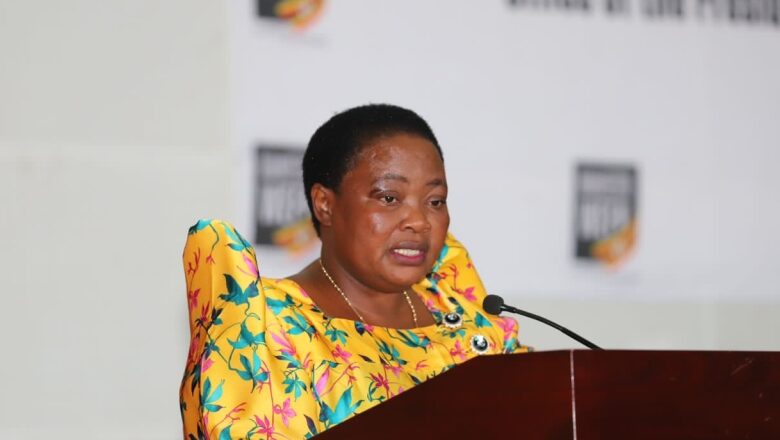
Uganda’s Prime Minister Robinah Nabbanja stressed the need for a decisive shift from policy commitments to measurable outcomes.
“With only four years remaining to 2030, we must move with urgency—from commitments to concrete, measurable results,” she said, pointing to science, technology, innovation and regional integration as key drivers of progress.
While acknowledging gains in aligning national development plans with global targets and improving data systems, she cautioned that financing gaps, climate vulnerability and weak implementation capacity continue to constrain progress.
Infrastructure and trade as growth enablers
A central theme emerging from the forum is the role of infrastructure and trade in unlocking Africa’s economic potential.
Leaders emphasised that investments in transport networks, energy systems and logistics are critical to reducing the cost of doing business and enabling the full benefits of the African Continental Free Trade Area.
“These enablers are not optional,” Nabbanja noted, adding that they are fundamental to positioning Africa as a competitive and integrated economic bloc.
Progress amid persistent challenges
Delivering remarks on behalf of the African Union Commission, Selma Malika Haddadi said the forum represents a “decisive moment for collective action,” as current progress remains below required levels.
She highlighted advances in infrastructure development, regional integration and digital transformation under Agenda 2063’s implementation framework, but warned that structural challenges persist—particularly in financing, job creation for Africa’s growing youth population, and climate resilience.
The forum is also focusing on key sectors including clean water, energy, industrialisation, sustainable cities and partnerships—areas seen as foundational to long-term development.
Partnerships and financing take centre stage
Participants underscored the importance of stronger partnerships between governments, the private sector and international institutions.
Existing frameworks, including cooperation between the African Union and the United Nations, are being leveraged to improve coordination, reduce duplication and enhance support for member states.
As deliberations continue, stakeholders are expected to develop actionable recommendations aimed at strengthening Africa’s collective voice in global development discussions and accelerating implementation at all levels.
A narrowing window
With the SDG deadline approaching, analysts say the forum’s outcomes will be critical in shaping policy direction and investment priorities across the continent.
The message from Addis Ababa is clear: Africa’s development ambitions remain achievable but only with urgent reforms, scaled financing, and a sharper focus on execution.
For governments and businesses alike, the next four years will determine whether the continent can translate ambition into tangible economic and social gains.