
Yam Export Boom Masks Data Gaps as Reconciliation Reveals Hidden Trade Value
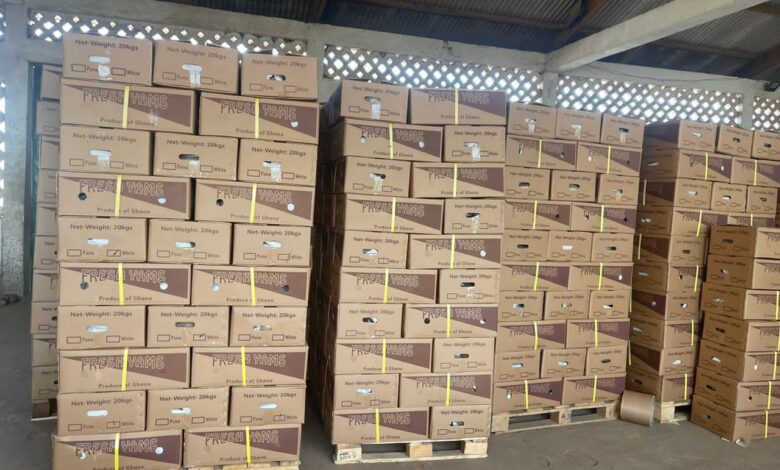
Ghana’s dramatic surge in yam exports in 2025 points to a deeper, more complex narrative—one shaped less by a sudden trade boom and more by longstanding data gaps that had understated the country’s true export performance.
On the surface, yam export values soared by an extraordinary 559.29% between 2024 and 2025. But this leap was not primarily driven by higher output or demand. Instead, it followed a detailed reconciliation exercise led by the Ghana Export Promotion Authority in partnership with the Federation of Associations of Ghanaian Exporters.
The review matched exporter records against entries in the Integrated Customs Management System, exposing persistent inconsistencies that had resulted in years of underreported export data.
Two main issues accounted for the discrepancies.
The first was widespread under-invoicing. Exporters, dealing with the risks associated with transporting highly perishable yams, often declared lower values on Letters of Commitment to minimise delays, penalties, or administrative hurdles that could lead to spoilage and financial losses. While not compliant, this approach reflected the operational realities of the trade.
The second issue was a structural disconnect between customs records and actual shipments. In many cases, figures captured in ICUMS did not align with the volumes and values physically exported, creating a gap between official statistics and real market activity.
By aligning these datasets, the exercise corrected the distortions and revealed that Ghana’s yam exports had been significantly higher than previously recorded. The revised data explains the sharp spike in 2025 and underscores how weak data systems can obscure the true state of trade performance.
The implications go beyond a single commodity. Reliable export data is essential for effective policymaking, credible market analysis, and maintaining investor confidence. For perishable goods in particular, where timing and pricing are critical, inaccurate reporting can weaken competitiveness and misguide strategic decisions.
The findings therefore highlight both a challenge and an opportunity—the need to better synchronise customs systems with exporter documentation, while strengthening transparency and accountability across the export value chain.
Beyond yams, Ghana’s agricultural exports delivered broad-based growth in 2025. Shea nut exports more than doubled, driven by strong global demand and policy signals, including a proposed ban on raw exports that accelerated shipments. Banana exports grew by 27%, supported by improved irrigation, infrastructure, and access to European markets.
Fresh and chilled tuna exports rose by 7%, aided by tighter controls on illegal fishing, improved vessel monitoring, and stronger cold-chain systems. Non-traditional exports such as medicinal plants expanded sharply by 215%, reflecting rising global demand for natural inputs in pharmaceuticals and cosmetics.
Seafood exports also performed strongly, with cuttlefish and squid exports increasing by 390%, while flower exports rose by 34%, benefiting from improved horticulture and proximity to key markets like the Netherlands. Live animal exports surged by 105%, driven largely by cross-border trade with neighbouring countries including Togo and Côte d’Ivoire.
Overall, Ghana’s 2025 export performance reflects a more resilient and diversified agricultural sector. Still, the yam export story remains particularly instructive—highlighting how data integrity can significantly shape economic narratives.
As the country looks to sustain export growth, strengthening data systems, improving transparency, and addressing structural inefficiencies will be just as important as increasing production capacity.