Ghana’s Economic Rise Must Deliver Jobs, Incomes and Prosperity
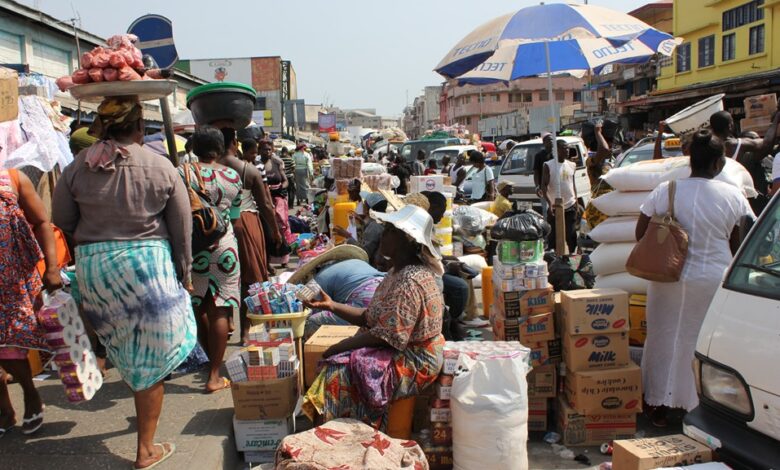
Ghana may be climbing the league table of Africa’s largest economies, but the real test is taking place far from the statistics. It is in the market where traders calculate transport and borrowing costs, in the home where parents budget for food and school fees, and among graduates searching for dignified employment. An impressive economic ranking will matter little if these experiences do not improve.
Reports drawing on the October 2026 International Monetary Fund (IMF) World Economic Outlook place Ghana eighth among African economies by nominal gross domestic product (GDP). This is welcome recognition of the country’s economic potential. Yet the central question for government, businesses, investors and households is more demanding: how can growth be converted into jobs, rising productivity, better services and lasting prosperity?
The article’s reported October 2026 figures place nominal GDP at US$128.64 billion, compared with an earlier estimate of US$114.71 billion. That difference of US$13.93 billion represents approximately 12.1 percent of the earlier estimate. It must not be presented as 12.1 percent real economic growth. The IMF projection cited in the source article is 5.7 percent real growth for Ghana in 2026, against 4.5 percent for sub Saharan Africa. The source also reports 6.2 percent growth in the first half of the year.
Nominal GDP expressed in US dollars can change because of exchange rate movements, domestic price changes, revised estimates and the timing of measurement. A stronger cedi may increase the dollar value of output without an equivalent rise in goods and services produced. Rankings also depend on the performance and currencies of other countries. Accordingly, analysts should compare estimates from consistent statistical periods and distinguish a bigger dollar figure from genuine improvements in living standards.
Government
The Government’s fiscal reset must be judged by what disciplined public finances deliver. The source article cites a first half 2026 fiscal deficit of GH¢9.9 billion, or 0.6 per cent of GDP, against GH¢21.4 billion, or 1.5 percent, a year earlier. It also reports a primary surplus of GH¢11.5 billion and public debt of GH¢719.5 billion, equivalent to 45.0 percent of GDP, at the end of June. These are important indicators of fiscal management, even as below target revenue collections call for caution.
Fiscal consolidation should therefore protect essential investment rather than merely compress spending. Transparent procurement, better tax administration, timely project completion and careful borrowing can release more value from scarce resources. Citizens should be able to see whether spending on roads, irrigation, schools, hospitals and electricity is producing measurable outcomes, particularly in underserved communities.
Businesses
An improving macroeconomic environment offers businesses an opportunity, not a guarantee of sales or profits. For a small manufacturer, access to affordable credit, steady electricity, transport links and predictable taxes may be more consequential than Ghana’s place on a continental list. Firms must respond by keeping reliable financial records, managing costs, upgrading skills and meeting quality standards.
Government and industry should jointly support agroprocessing, light manufacturing, logistics, tourism and digital services. Processing agricultural and mineral resources locally can create stronger supply chains, decent employment and export earnings. Faster payment to public contractors and simpler regulatory processes would also help businesses turn policy confidence into practical expansion.
Households
Most families assess the economy through what their income can buy. Slower inflation means prices are increasing less rapidly; it does not necessarily mean that food, rent or transport has become cheaper. A trader can still face narrow margins despite improving wholesale conditions, while a young worker can remain excluded from the recovery altogether.
Public policy must therefore measure real household purchasing power, decent jobs, regional inequality, access to healthcare and educational opportunity alongside GDP. Vocational training, targeted protection for vulnerable families and affordable essential services matter. Households can strengthen their resilience by budgeting carefully, comparing loan costs, building emergency savings where possible and acquiring marketable skills, but these efforts cannot replace effective public policy.
Precedence for Shared Prosperity
- Publish clear results for major public investments and maintain prudent fiscal management.
- Improve productive credit, power reliability and logistics for farmers and smaller enterprises.
- Channel investment towards local processing, exports, innovation and decent employment.
- Track purchasing power, youth employment and regional inequalities as closely as GDP.
- Explain economic data consistently, separating real growth from nominal values and currency effects.
Conclusion
Ghana’s reported position among Africa’s larger economies should inspire ambition, not complacency. An economy is not truly stronger because its dollar value has increased; it is stronger when more people work productively, businesses compete successfully, public money delivers reliable services, and families can plan with greater confidence.
The challenge is now one of execution and accountability. Government must turn fiscal discipline into effective investment, businesses must convert opportunity into production, and investors must back enterprises that create lasting value. Ghana’s economic progress will deserve celebration when the benefits are evident not only in international rankings, but also in communities, workplaces and households across the country.