GSE Water Project Targets Hygiene Challenges at Agbogba Schools, benefits 1,350 pupils
Borehole facility provides water for drinking, handwashing and sanitation as Exchange extends school infrastructure support
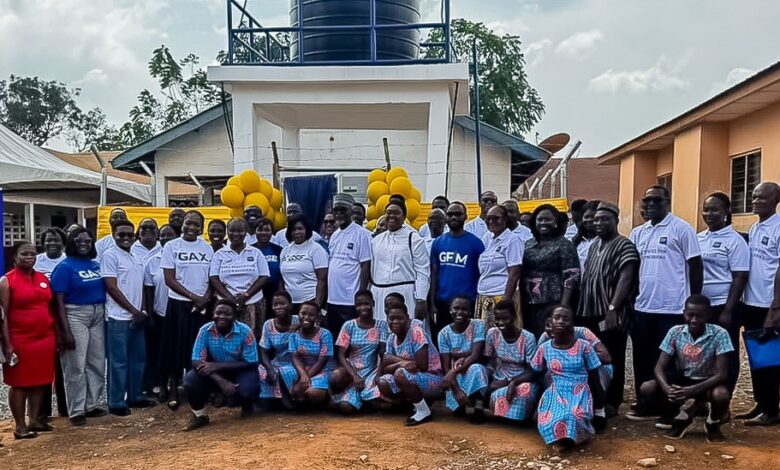
More than 1,350 pupils at the Anglican Agbogba Cluster of Schools are expected to benefit from improved water supply following the construction of a borehole by the Ghana Stock Exchange (GSE), in an intervention aimed at improving school hygiene, sanitation and children’s health.
The facility provides water for drinking, handwashing and use in school washrooms, addressing basic needs that are essential to maintaining a healthy learning environment.
The project, implemented under the Exchange’s Corporate Social Investment programme in partnership with The Hunger Project Ghana, is expected to make it easier for pupils to practise proper handwashing and maintain personal hygiene during school hours.
Vice Chairperson of the GSE Council, Audrey Naa Dei Kotey, who represented the Managing Director at the handing-over ceremony, said access to clean water was fundamental to the health and well-being of children and the quality of their school environment.
She said the intervention was intended to ensure that pupils had access to water for their daily needs while developing hygiene habits that could protect them against preventable illnesses.
“This project goes beyond providing a source of water. It is about improving the health, hygiene and overall well-being of our children,” she said.
Ms Kotey said the provision of water at designated washing points and washrooms would enable pupils to practise proper handwashing, maintain better personal hygiene and access clean drinking water within the school.
She said the availability of water and improved sanitation would also help create a cleaner environment and better conditions for teaching and learning.
The intervention builds on a similar borehole project undertaken by the Exchange at a school in Labadi, as it extends its support for basic infrastructure in educational institutions.
Ms Kotey said the two projects reflected the GSE’s commitment to making a practical difference in communities through investments in health, education and sustainable development.
She also linked the Agbogba project to Sustainable Development Goal 6, which calls for universal access to clean water and sanitation.
The Council Vice Chairperson acknowledged the collaboration of The Hunger Project Ghana, the leadership of the Agbogba Cluster of Schools, the Municipal Education Directorate, the Member of Parliament, traditional leaders and landowners in making the project possible.
She urged the school community to take responsibility for maintaining the facility to ensure that it remained functional and continued to serve generations of pupils.
Water access strengthens school hygiene
Country Leader of The Hunger Project Ghana, Agatha Quayson, said the facility would give pupils regular opportunities to practise handwashing, maintain personal hygiene and use sanitation facilities properly.
She said the installations would strengthen the school’s water, sanitation and hygiene (WASH) conditions, an important component of the organisation’s WASH in Schools interventions.
The availability of water at designated points, she said, would help pupils adopt healthier daily practices and contribute to a cleaner school environment.
Headmistress of Agbogba Anglican 1 Basic School, Victoria Mintan-Benyin, expressed appreciation to the GSE and The Hunger Project Ghana for the intervention.
She said the provision of water had brought relief to the school community and would benefit both pupils and teachers.
The project highlights the importance of reliable water supply in schools, where access to clean water is necessary not only for drinking but also for hand hygiene, sanitation and the prevention of water-related health risks.
For the GSE, the Agbogba intervention is part of its wider corporate social investment efforts to support community development, with the Exchange emphasising the need for the school to maintain the facility for long-term use.