
US Agribusiness Delegation Identifies Scalable Agriculture Solutions at Marphlix Trust
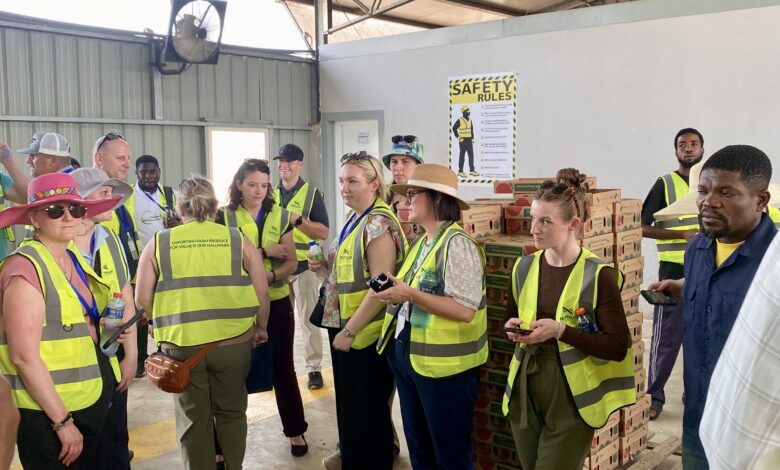
Agribusiness leaders from the United States say Ghana is laying the groundwork for practical, scalable solutions to its food security challenges, driven by innovation, youth participation and growing private-sector involvement.
Douglas Matthys, a farm manager from Indiana and a member of the visiting delegation, said what stood out most was the strong sense of purpose around food production.
“There is a lot of enthusiasm here, and that enthusiasm is translating into opportunity,” he said. “You can see a collective movement to solve food production challenges, and Ghana appears to be trending in a positive direction.”
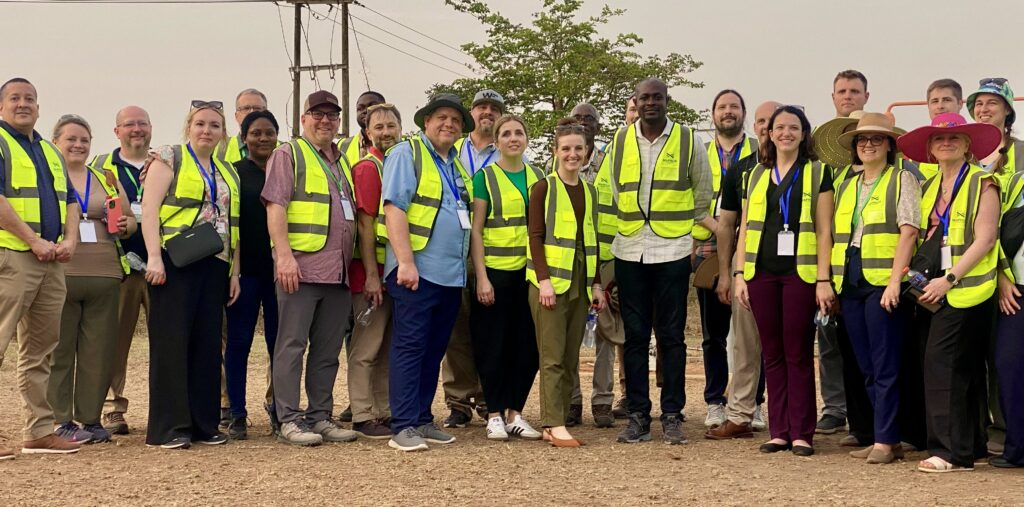
The delegation, made up of about 27 agribusiness chief executives from the Agri-Institute, is in Ghana on an Agricultural Study and Leadership Tour.
Hands-On Exposure at Marphlix Trust
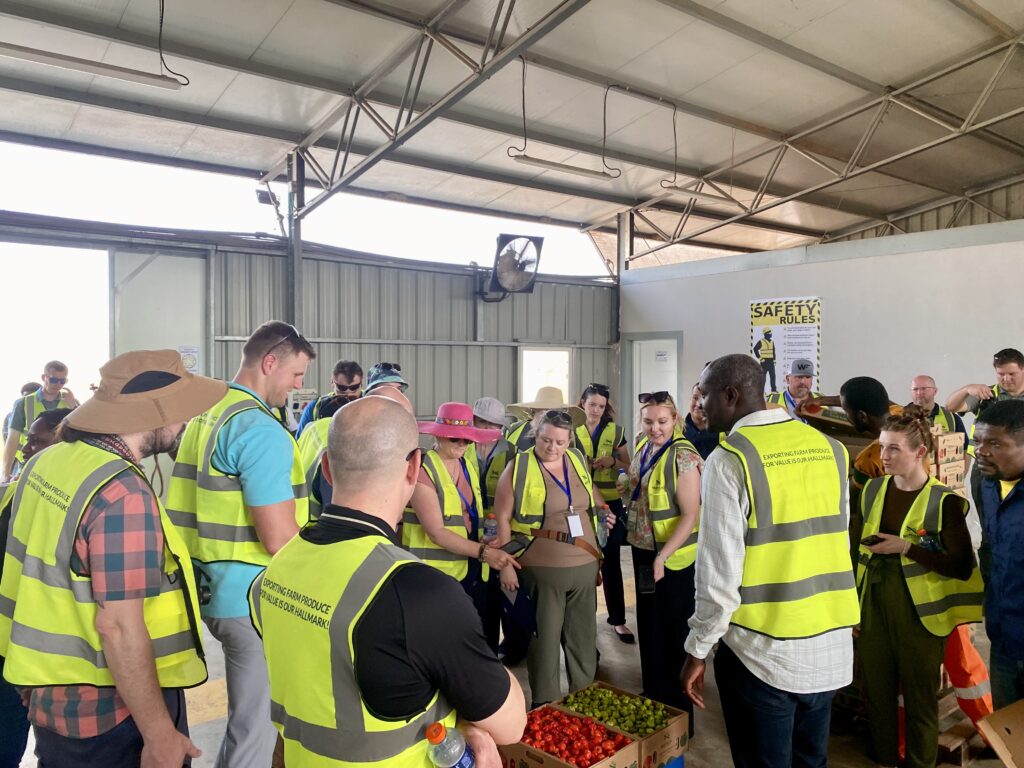
As part of the tour, the team paid a working visit to Marphlix Trust Limited at Dawhenya in the Greater Accra Region, where they observed greenhouse production systems, drip irrigation, fertigation technologies and youth-focused training programmes.
Matthys said the controlled greenhouse environment demonstrated how productivity could be improved while managing pests and disease more effectively.
“What we are seeing here is a solid foundation for producing quality, nutrient-dense food at a cost people can afford,” he noted, adding that the approach mirrors conversations currently taking place within the US farming community.
Shared Learning Over One-Way Transfer
Chief Executive Officer of Marphlix Trust, Dr Felix Kamassah, described the engagement as a collaborative exchange rather than a comparison exercise.
“This is about learning from each other,” he said. “They are learning from what we are doing here, and we are also interested in learning from their experiences, particularly in technology and systems.”
He said agriculture was increasingly evolving into a broader value chain that includes skills training, technology, exports and agritourism, creating opportunities for joint ventures and long-term investment partnerships.
Turning Idle Infrastructure into Opportunity
The visit also brought attention to Marphlix Trust’s role in revitalising abandoned public agricultural assets. In early 2025, the company rehabilitated a long-neglected irrigation facility under the Ministry of Food and Agriculture, converting it into a practical training hub for young people entering agribusiness.
The Dawhenya site was originally developed by the Ghana Irrigation Development Authority in partnership with Israeli firm Agritop. It includes about 100 greenhouse units and had remained unused for nearly eight years.
Today, the facility is actively used to train young farmers in modern production methods, irrigation management and export standards.
Agriculture Positioned as Employment Solution
Dr Kamassah said agriculture remains one of Ghana’s strongest tools for job creation, especially for young people.
“Government cannot employ everybody, but agriculture can,” he said, explaining that the sector creates opportunities not only for farmers, but also for engineers, accountants, economists and logistics professionals.
He stressed that irrigation development, combined with private-sector innovation, is key to expanding employment and productivity.
Closing the Import Gap
The Marphlix Trust CEO also highlighted Ghana’s continued dependence on imported tomatoes, describing greenhouse tomato production as a strategic priority.
“We are importing what we should be producing locally,” he said, calling for better coordination between production capacity and market demand to reduce import dependence.
Youth Training Model Gains International Approval
Members of the US delegation said the structured approach to youth training and post-training support was one of the most impressive aspects of the operation.
Matthys described the model as forward-looking, noting that equipping young people with practical skills and pathways to independence strengthens both food systems and livelihoods.
“Growing food that feeds your community and improves quality of life is a higher calling,” he said. “Farmers everywhere understand that.”
Prospects for Deeper Collaboration
Both sides expressed confidence that the engagement could lead to stronger collaboration in technology deployment, skills development and investment.
With agriculture increasingly positioned as a driver of jobs, exports and economic resilience, the visit reinforced Ghana’s potential to develop scalable, globally competitive agribusiness solutions.