
Can Ghana Turn Volta’s White Clay Into Its Next Export Success Story?
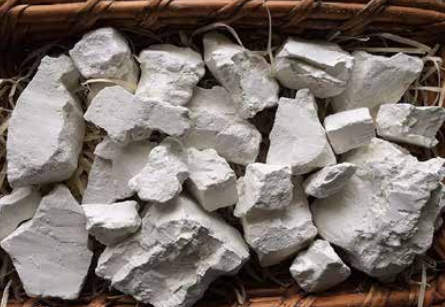
Beneath the rolling hills of Anfoega, Vakpo, Aveme-Sabadu and Botoku in the Volta Region lies a mineral that rarely attracts the attention commanded by gold, lithium or manganese. Yet globally, it is a critical ingredient in industries ranging from pharmaceuticals and cosmetics to ceramics, paper and construction materials.
The mineral is kaolin, and as global demand accelerates, Ghana faces an increasingly important question: can the country transform its vast deposits into a new source of industrial growth, exports and jobs?
The opportunity is significant.
According to information highlighted by the Ghana Investment Promotion Centre (GIPC), the global kaolin market was valued at more than US$4.75 billion in 2025 and is projected to reach US$7.5 billion by 2034, driven largely by growing demand from manufacturing industries worldwide.
At the centre of that growth is the ceramics sector, currently the fastest-expanding application for kaolin as construction activity fuels demand for tiles, sanitaryware and household products across emerging and developed markets alike.
For Ghana, the figures raise a broader strategic issue. While the country has spent years seeking to diversify its export base and reduce reliance on traditional commodities such as gold, cocoa and crude oil, kaolin presents a potentially overlooked avenue for industrial expansion.
A Resource Waiting for Capital
The Volta region hosts some of the country’s most extensive kaolin reserves, with Anfoega alone estimated to contain deposits spanning approximately 160,000 hectares.
For investors, the attraction goes beyond the size of the resource.
Ghana already exports kaolin to several international markets, including China, Belgium and Canada, while demand from Europe continues to grow. Italy, in particular, has emerged as one of the fastest-growing destinations for Ghanaian kaolin exports.
Combined with Ghana’s political stability, access to ports and strategic position within the African Continental Free Trade Area (AfCFTA), the country appears well positioned to attract investment into the sector.
Yet despite these advantages, large-scale commercial development has remained relatively limited.
The Bigger Prize Lies Beyond Mining
The real economic opportunity may not lie in exporting raw kaolin.
Across Africa, governments are increasingly recognising that the greatest value from natural resources often comes from processing and manufacturing rather than extraction alone.
Kaolin’s versatility offers Ghana multiple entry points into industrial production.
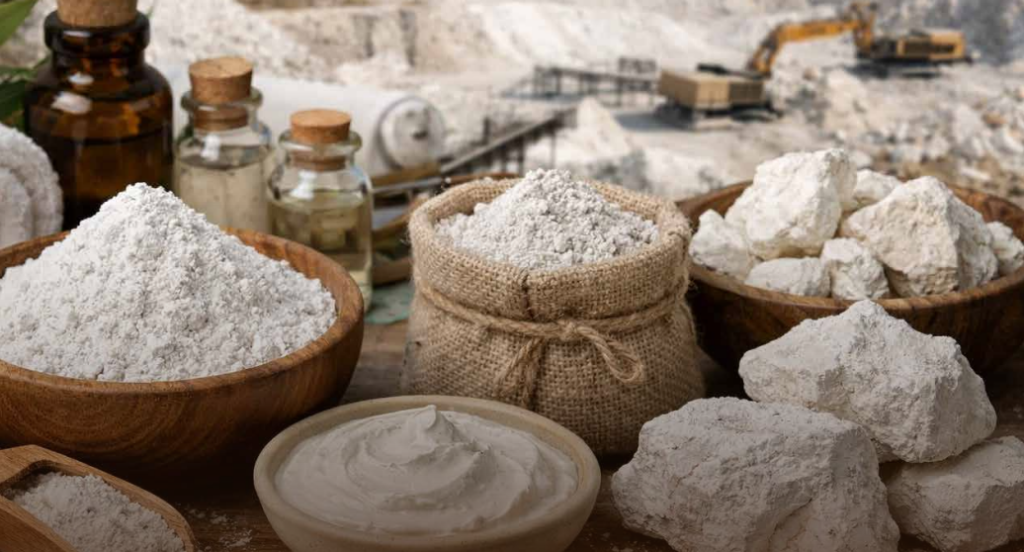
Processed kaolin is used extensively in ceramics, paints, plastics, rubber products, pharmaceuticals, cosmetics and paper manufacturing. Establishing processing facilities could therefore generate significantly greater economic value than simply shipping raw material abroad.
Such investments could create jobs, stimulate local supply chains, support technology transfer and strengthen Ghana’s manufacturing sector.
The challenge is whether investors and policymakers are prepared to pursue that higher-value route.
A Test of Ghana’s Industrial Ambitions
The renewed focus on kaolin comes as Ghana seeks new pathways for industrialisation and export growth.
Successive governments have promoted value addition in sectors ranging from cocoa to mining, but implementation has often lagged behind ambition.
The kaolin sector presents an opportunity to test whether Ghana can move beyond exporting raw materials and build a competitive downstream industry capable of serving both regional and international markets.
The timing may be favourable.
Global demand is expanding. Export markets already exist. The resource base is substantial. The AfCFTA offers access to a larger consumer market.
What remains uncertain is whether sufficient investment, infrastructure and industrial policy support can be mobilised to unlock the sector’s full potential.
The Investment Window
Recognising the opportunity, the GIPC’s Volta/Oti Regional Office has intensified efforts to connect investors with the region’s kaolin resources.
The Centre is encouraging prospective investors to undertake site assessments and explore opportunities for commercial development, positioning the sector as one of Ghana’s emerging mineral investment frontiers.
For now, the white clay deposits beneath the Volta landscape remain largely untapped.
But with global demand rising and countries increasingly competing for industrial investment, the question may no longer be whether Ghana possesses the resource.
It may be whether the country can move quickly enough to convert that geological advantage into a globally competitive industry before others seize the opportunity.