When Disaster Strikes, Who Arrives First? WHO Pushes Countries to Build Emergency Medical Teams
When floods sweep through communities, disease outbreaks overwhelm hospitals or conflict forces thousands of people from their homes, the difference between life and death often comes down to how quickly trained medical teams can reach those in need.
Recognising this reality, the World Health Organization (WHO) has intensified efforts to help countries across the Eastern Mediterranean Region build and strengthen Emergency Medical Teams (EMTs) capable of responding rapidly when crises occur.
The latest step in that effort was a three-day workshop held in Cairo, Egypt, bringing together health professionals, humanitarian agencies, academics and civil society representatives from across the region to develop national plans for strengthening emergency response systems.
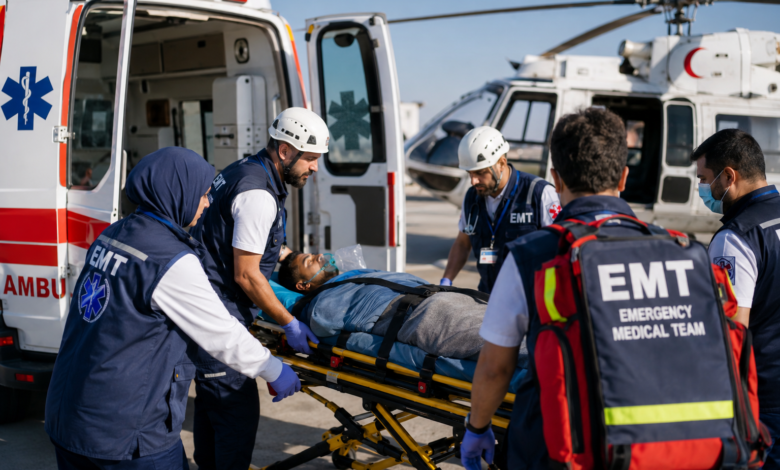
EMTs are specialised teams made up of doctors, nurses, paramedics and other health professionals trained to deploy quickly during emergencies. They provide immediate medical care when local health facilities are overwhelmed by disasters, disease outbreaks or conflict.
Their importance has become increasingly evident in a region facing some of the world’s most complex humanitarian challenges.
According to WHO, nine of the Eastern Mediterranean Region’s 22 countries and territories are affected by fragility or conflict, while an estimated 117 million people will require humanitarian assistance and urgent health support in 2026.
The region is currently grappling with multiple crises ranging from armed conflicts and disease outbreaks to climate-related disasters and population displacement.
For many communities, these emergencies can severely disrupt access to healthcare.
When Libya experienced devastating floods, Emergency Medical Teams helped address shortages of specialised health workers and ensured medical services remained available to affected populations.
In Yemen, where years of conflict have strained the healthcare system, efforts are underway to strengthen national emergency deployment systems to improve the country’s ability to respond to humanitarian crises.
Lebanon is also working to establish a fully operational national EMT as it faces recurring emergencies alongside economic and health system pressures.
WHO officials say building national emergency response capacity is becoming increasingly important as countries confront more frequent and complex crises.
“Our goal in WHO is to ensure that every country has the national capacities required to rapidly mobilize and deploy trained teams when emergencies occur,” said Dr. Annette Heinzelmann, Acting Emergency Director at WHO’s Regional Office for the Eastern Mediterranean.
She noted that strong national response systems form the foundation for effective emergency healthcare delivery.
For countries investing in EMTs, the objective is not only to respond more effectively to disasters but also to build stronger and more resilient health systems.
“Resilient health systems must be able to absorb, adapt and transform in the face of shocks. National emergency medical teams are one of the most concrete expressions of that resilience,” said Dr. Adham Rashad Ismail, Director of Programme Management at WHO’s Regional Office.
The Cairo workshop concluded with participating countries developing draft action plans covering legislation, governance structures, human resource requirements and operational frameworks needed to establish or strengthen national EMT programmes.
WHO says it will continue supporting countries through training, technical assistance and regional cooperation initiatives aimed at improving emergency preparedness.
As climate-related disasters, disease outbreaks and humanitarian crises become increasingly common, health experts argue that the ability to deploy trained medical teams at short notice is no longer a luxury but a necessity.
For communities caught in the path of emergencies, those first responders often represent the first sign of hope when help is needed most.