
Young Solar Firms Can Build It, but Can’t Afford to Bid, Says SYND
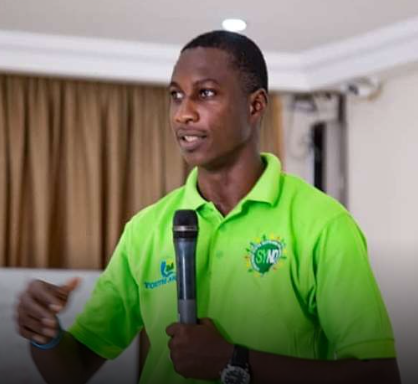
Ghana’s updated Renewable Energy Master Plan (REMP) cannot be delivered on time without young Ghanaian entrepreneurs, but contract rules are keeping them out, the Strategic Youth Network for Development (SYND) said on Monday.
At a press briefing in Accra, SYND and its Young Green and Sustainability Entrepreneurs Consortium (YoGSEC) said youth-led energy firms are ready to take part in the 2026-2030 plan but face terms written for large companies and applied to small ones.
A bid that was out of reach
SYND pointed to FF Electricals and Engineering, a young solar engineering firm in Takoradi. The firm took a diesel-powered threshing machine, removed its engine and replaced it with a 20-horsepower electric motor running on a 34 kW off-grid solar system. The machine is still in operation, and the firm has served 200 customers across 20 districts.
Yet when FF Electricals recently bid to install a 250 kW solar system, SYND said the terms put the contract out of reach:
- It was asked to pre-finance the first phase of the project itself.
- Payment was expected no sooner than 90 days after that phase was completed.
- It had to hold insurance cover of at least US$1 million.
- It had to present Energy Commission and tax clearance documents.
Even in years when it wins no contracts, the firm must keep paying to renew its Energy Commission installer certification.
“These are not problems of skill or ambition,” SYND said. “They are rules written for large companies and applied to small ones.”
In the firm’s own words, government should award contracts “without asking for documents they know businesses like us cannot possess.”
A US$10.8bn plan with a mixed record
The updated REMP requires an estimated US$10.8 billion in investment for 2026-2030 and projects more than 353,000 jobs. Its targets include 440 mini-grids, 1.1 million solar lanterns, 125,000 solar street and community lights, 10,000 hectares of solar irrigation, 100 solar crop dryers and 4.5 million improved cookstoves.
SYND said the plan’s own review of 2019-2025 shows why the contract rules matter. Utility-scale solar reached 183.1 of its 347.5 MWp target, or 53%. Utility-scale wind recorded no capacity against a 275 MWp target, and only 8 of 200 planned mini-grids were built. The Renewable Energy Fund was established but never made operational, and the REMP Coordinating Unit was never created. The requirement to procure at least 60% of goods and services locally under L.I. 2354 has not been met.
Where local businesses were involved, however, the plan delivered. Distributed solar reached 86 of its 100 MWp target, and improved cookstoves reached more than 5.3 million against a target of 1.8 million, which the plan credits to local supply chains and carbon finance.
Young firms have mapped their place
SYND said 18 youth-led energy businesses submitted business plans against the REMP targets at a workshop it organised. The plans cover 16 of the plan’s 26 technology areas. They include 24 of the 100 solar crop dryers, 11 of the 20 community water pumping systems, 15 of the 20 biogas plants, four mini-grids and more than 10 MWp of solar. SYND stressed these are business plans, not completed projects.
SYND said the four mini-grids would add half as many again to the eight built in six years. “Firms ready to make these investments deserve financing to match,” it said.
What SYND wants
SYND and YoGSEC called on government to:
- Operationalise the Renewable Energy Fund in the 2027 budget, with a window for youth-led firms combining pre-investment grants, partial credit guarantees and working capital.
- Break distributed energy targets into smaller contracts, and reserve at least 10% of the lots, or their installation and maintenance subcontracts, for qualified local youth-led firms.
- Pay small contractors within 30 days of each completed phase, or provide mobilisation advances.
- Set insurance requirements in proportion to the size and risk of each contract, instead of a flat US$1 million.
- Create one route through registration, certification and licensing, with one-stop facilitation desks in 2027, and publicise the existing five-year tax holiday for youth-led businesses.
- Link renewal of Energy Commission installer certification to actual activity, or cut renewal fees for young and small firms.
- Set up the REMP Coordinating Unit in 2027 with a seat for youth enterprise representatives.
The jobs case
SYND argued that supporting young firms is an investment, not a cost. On the REMP’s own figures, every US$1 million invested in renewable energy creates about 33 jobs. According to the Ghana Statistical Service, youth unemployment stands at 21.9%, nearly twice the national rate of 12.8%.
SYND said young firms that win REMP work add formal workers who pay income tax and SSNIT contributions, widen the tax base as businesses register, and keep spending in Ghana rather than on imports. Replacing diesel engines with solar also saves fuel and foreign exchange.
What SYND will do
SYND said it is not asking government to act alone. Through YoGSEC, it will present the entrepreneurs’ business plans to the Ministry of Energy and Green Transition and the Energy Commission, help members through registration, certification and pre-qualification, organise youth green trade fairs, and publish members’ results, including jobs, customers and installed capacity.