
Africa Rallies Capital to Unlock Green Economy Potential
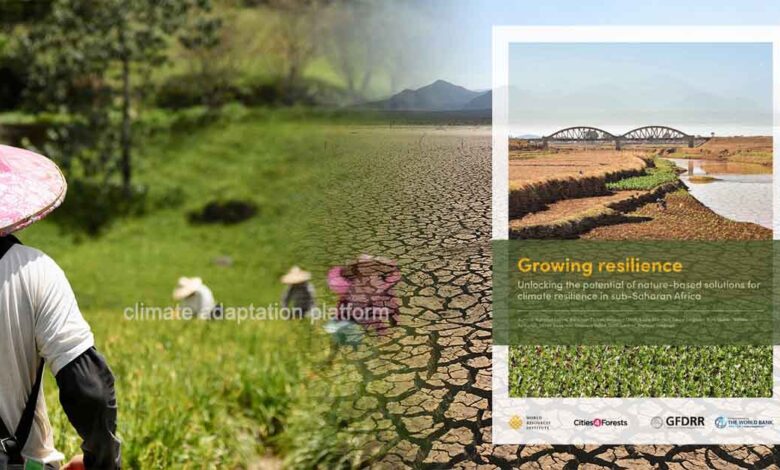
Africa’s drive toward a sustainable and climate-resilient future gathered fresh momentum as policymakers, investors and industry leaders intensified calls for bold investments and practical reforms to unlock the continent’s green economy potential.
This renewed push was evident at the Africa’s Green Economy Summit (AGES) 2026, which concluded in Cape Town after four days of discussions centred on climate finance, digital transformation, water security and sustainable agriculture.
The summit drew more than 600 delegates from 42 countries, including global investors, project developers and policymakers. Participants agreed that with the right policies and innovative financing models, Africa can transform its climate vulnerabilities into significant economic opportunities.
New financing models for climate action
A major focus of the summit was the urgent need to mobilise large-scale funding for climate projects across the continent.
Delegates explored a range of innovative financial instruments, including green bonds, blue bonds and wildlife conservation bonds such as the pioneering “Rhino Bond,” alongside emerging biodiversity credit markets designed to reward environmental protection.
Chief Executive Officer of Sanlam Investment Group, Carl Roothman, said the scale of Africa’s climate ambitions must be matched by equally bold financial commitments.
“Africa needs billions of dollars. It’s great to dream, but we must act and act at scale,” he noted.
For Iain Banner, co-founder of Go Green Africa and the summit, the transition to sustainable economic systems represents a fundamental shift in global development thinking.
“The green and blue economies are becoming the new operating systems of the modern world,” he said.
From policy commitments to real implementation
Government representatives stressed that the time had come to translate climate pledges into concrete projects.
South Africa’s Deputy Minister of Forestry, Fisheries and Environment, Narend Singh, emphasised the importance of practical collaboration between governments, investors and industry.
“This is where the rubber hits the road,” he said, pointing to South Africa’s Just Energy Transition Partnership and its renewable energy procurement programme as examples of progress.
Singh also encouraged African countries to move beyond exporting raw minerals and instead build local value chains that create jobs and strengthen technological capacity.
Digital technologies shaping climate solutions
Another key theme was the growing role of digital technologies in accelerating climate action.
Senior Digital Specialist at the World Bank, Siddhartha Raja, explained that data centres could help stimulate new renewable energy investments by acting as “anchor loads,” although he cautioned that digital infrastructure must be designed with climate resilience in mind.
He warned of emerging risks such as flooding and electronic waste, noting that these challenges could also create new recycling industries if managed properly.
Chrissy Meier of the Digital Impact Alliance highlighted another obstacle: the lack of reliable local data needed to implement climate plans in African cities.
She cautioned that artificial intelligence systems trained mainly on non-African data may overlook the realities faced by African communities.
Raja encouraged policymakers and businesses to harness digital technologies more aggressively.
“Carpe Digital — seize the digital to make economies more efficient, inclusive and greener,” he said.
Turning water security into an investment opportunity
Water security also featured prominently at the summit, with experts arguing that water infrastructure projects are often wrongly perceived as unattractive for investors.
Obadiah Mungai of the World Resources Institute Africa said the challenge lies in converting water outcomes into bankable investment opportunities.
“Improving governance systems and strengthening data are the first steps toward attracting capital,” he explained.
Louise Stafford of The Nature Conservancy pointed to Cape Town’s response to the “Day Zero” water crisis as an example of how nature-based solutions can sometimes deliver more cost-effective results than large-scale desalination projects.
“There is a bigger risk in business as usual than in investing in water,” she said.
Renewable energy supporting food security
Food systems were also high on the summit’s agenda, with experts highlighting how energy reliability directly affects agricultural productivity.
Without stable electricity, irrigation systems fail and cold-chain storage breaks down, threatening food security.
Henry Roman of the International Water Management Institute advocated a more integrated approach to managing the water-energy-food nexus, noting that digital tools are already helping farmers optimise water use and improve yields.
Meanwhile, Ian de Jager of I&F Engineering observed a growing trend of farmers becoming energy producers by using small-scale hydropower systems to power operations and generate renewable energy certificates.
Andrea Campher of Standard Bank added that global trade rules such as the Carbon Border Adjustment Mechanism are making emissions performance increasingly important for agricultural exports.
“Renewable energy strengthens ESG credibility,” she said.
Building Africa’s green economic future
Participants concluded that Africa’s transition to a green economy is no longer a distant aspiration but an immediate economic opportunity.
By combining climate-smart policies, digital innovation and large-scale investment, leaders at the summit said the continent can build a resilient, net-zero economy while creating new industries, jobs and long-term growth.
The next Africa’s Green Economy Summit is scheduled to take place in Cape Town from March 17 to 19, 2027, where stakeholders will review progress and deepen partnerships aimed at accelerating Africa’s green transformation