
Ghana’s 14% Interest Rate: How Long Can the Calm Last?
By Prof. Samuel Lartey
Ghana’s monetary policy environment has changed remarkably. After years of high inflation, elevated interest rates, currency pressures and expensive credit, the economy is entering a period of relative stability. The Bank of Ghana has maintained its Monetary Policy Rate at 14 percent inflation has remained in single digits, and commercial lending rates have declined substantially. Yet the present stability may not last indefinitely.
Fitch Solutions expects the Bank of Ghana to maintain the policy rate at 14 percent through the end of 2026, including at the final Monetary Policy Committee meeting expected in November. However, the international research firm projects that the central bank could increase the rate by a cumulative 200 basis points to 16 per cent in 2027 as inflationary pressures strengthen.
The forecast raises an important economic question: is Ghana entering a durable low inflation and lower interest rate era, or is the country merely enjoying a temporary period of monetary calm? The answer has major implications for government programmes, businesses, investors, banks and households.
The 14 Percent Decision
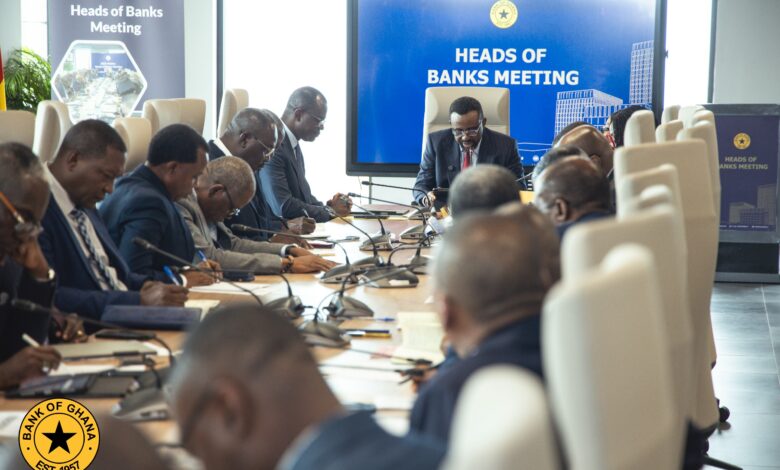
At its September 2026 Monetary Policy Committee meeting, the Bank of Ghana maintained the policy rate at 14 percent. The decision reflected relatively favourable economic conditions, including lower inflation, stronger economic activity and improved confidence. Ghana’s headline inflation stood at approximately 5.0 per cent in August 2026, compared with 4.6 per cent in July. Despite the slight increase, inflation remained below the Bank of Ghana’s medium term target band of 6 to 10 per cent.
This means monetary policy remains relatively tight when compared with prevailing inflation.
With a policy rate of 14 per cent and inflation of 5 per cent, the simple inflation adjusted policy rate is approximately 9 percentage points.
That provides the Bank of Ghana with considerable room to maintain its current policy position while monitoring developments in inflation, the exchange rate, fiscal policy and international commodity prices.
The Numbers Behind the Outlook
| Economic Indicator | Position |
| Bank of Ghana policy rate | 14.0% |
| August 2026 inflation | 5.0% |
| Fitch end 2026 inflation forecast | 6.8% |
| Fitch average 2027 inflation forecast | 11.3% |
| Fitch projected end 2027 policy rate | 16.0% |
| Second quarter 2026 real GDP growth | 6.0% |
| August 2026 average bank lending rate | 15.94% |
| August 2026 Ghana Reference Rate | 10.61% |
These indicators reveal an economy enjoying declining inflation and improving financing conditions while simultaneously facing the possibility of renewed inflation during 2027.
Why Fitch Expects Rates to Rise
Fitch Solutions expects inflationary pressures to strengthen during 2027.
Several developments could contribute to this.
- Reduced support from the cedi
A stronger cedi has helped moderate the cost of imported goods and supported lower inflation. If that benefit weakens, imported inflation could gradually return.
- Growth in money supply
Rapid expansion in money supply can stimulate consumption and investment. However, if liquidity increases faster than productive capacity, it may eventually translate into higher prices.
- Fiscal pressures
Increased government expenditure can support economic growth, infrastructure and employment. However, excessive fiscal expansion can also generate additional demand and inflation.
- Higher energy prices
Ghana remains exposed to developments in international petroleum markets. Higher crude oil prices can increase transport, manufacturing, electricity and food distribution costs.
- Food price uncertainty
Weather conditions, agricultural productivity, logistics and supply disruptions remain important determinants of Ghana’s inflation trajectory.
Fitch therefore expects inflation to average about 11.3 per cent in 2027 and anticipates that the Bank of Ghana may respond by increasing the policy rate to 16 per cent.
A Major Shift from Recent History
The present 14 percent policy rate represents a substantial improvement from Ghana’s recent monetary experience.
The policy rate reached 30 per cent during parts of 2023. It later declined to 27 per cent, then to 18 per cent, before falling further to 15.5 per cent in January 2026 and 14 per cent in March 2026.
Commercial lending rates have also declined.
The average lending rate fell from approximately 24.15 per cent in August 2025 to 15.94 per cent in August 2026.
That represents a fall of about 8.21 percentage points within one year.
The improvement is significant because high commercial interest rates have historically constrained investment, business expansion and household borrowing in Ghana.
Impact on Government Initiatives
A lower interest rate environment can provide important benefits to the government.
- Reduced domestic borrowing costs
Lower Treasury bill and bond yields can reduce the cost of financing government operations.
- Improved debt management
Lower interest expenditure can support debt sustainability and reduce pressure on public finances.
- Greater development expenditure potential
Reduced debt servicing costs can potentially create additional fiscal space for infrastructure, health, education, agriculture and employment programmes.
- Support for economic growth
Ghana recorded real GDP growth of approximately 6.0 per cent in the second quarter of 2026. Lower financing costs can support private investment and complement government development initiatives.
However, the government must remain cautious. If public expenditure grows too rapidly and contributes to excessive demand, the resulting inflation could force the Bank of Ghana to tighten monetary policy. The government must therefore ensure that fiscal expansion supports productivity rather than inflation.
Impact on Businesses
Businesses have potentially gained substantially from falling interest rates.
Consider a company borrowing GH¢10 million.
If its annual borrowing cost falls from approximately 24 per cent to 16 per cent, the difference amounts to about eight percentage points.
On GH¢10 million, that represents approximately GH¢800,000 in potential annual interest savings, assuming similar lending conditions.
Such savings can be used for:
- Hiring employees.
- Purchasing machinery.
- Expanding production.
- Improving technology.
- Increasing inventories.
- Strengthening working capital.
The possibility of a policy rate increase in 2027 should, however, encourage businesses to remain cautious.
Companies should not assume that borrowing costs will continue falling permanently.
This may be an appropriate period for financially sound firms to refinance expensive obligations, improve liquidity and restructure costly debt.
Impact on Households
Households are among the biggest beneficiaries of lower inflation.
When inflation falls, household incomes lose purchasing power more slowly.
This is particularly important for lower and middle income families that devote substantial portions of their income to food, transport, utilities, education and housing.
Lower interest rates can also improve the affordability of mortgages, personal loans and small business credit.
Households may further benefit indirectly if lower financing costs encourage companies to expand and create employment.
However, rising inflation in 2027 could reverse part of these gains. Higher prices for food, fuel, transport and utilities would place renewed pressure on household budgets. For households, therefore, the most important economic achievement is not simply lower interest rates. It is sustained price stability.
Why the Fitch Rating Matters
Ghana’s sovereign credit rating has wider economic consequences. Credit ratings influence how international investors assess the probability of repayment and the level of risk associated with lending to a country.
A stronger rating can improve Ghana’s investment image and potentially reduce the premium demanded by investors. It can also influence the cost of borrowing for banks and corporations because private sector credit risk is often closely connected to sovereign risk.
However, ratings can deteriorate if fiscal deficits widen excessively, debt sustainability weakens, international reserves decline or inflation returns strongly. Maintaining the current positive trajectory therefore requires continued macroeconomic discipline.
Conclusion
Ghana’s current monetary environment represents a significant improvement from the difficulties of recent years.
Inflation has fallen sharply. The policy rate has declined to 14 per cent. Commercial lending rates have moved downward. Economic growth has remained relatively strong and Ghana’s sovereign credit outlook has improved.
These developments provide government, businesses, investors and households with an opportunity to rebuild confidence and strengthen economic activity.
But the improvement should not produce complacency.
Fitch Solutions’ expectation that inflation could rise to an average of approximately 11.3 per cent in 2027 and that the policy rate could subsequently increase to 16 per cent provides an important warning.
Government must preserve fiscal discipline. Businesses should use the present financing environment to strengthen productivity and balance sheets.
Investors should recognise Ghana’s improving fundamentals while remaining conscious of continuing sovereign risk.
Households should benefit from declining inflation while maintaining prudent financial planning.
Ultimately, Ghana’s real economic success will not be measured simply by whether the policy rate remains at 14 per cent. It will be measured by whether the country can permanently combine low inflation, sustainable growth, affordable credit, fiscal discipline, currency stability and rising living standards.
The question therefore remains compelling: can Ghana make the present 14 percent stability last, or will inflation once again force interest rates upward?