
Emirates Group Holds on to Profitability as Gulf Tensions Disrupt Aviation Business

Emirates Group has maintained a profit before tax of AED4.1 billion (US$1.1 billion) for the first half of its 2026-27 financial year, as strong cargo earnings and sustained passenger demand helped cushion the impact of regional conflict and higher fuel prices.
The performance comes against a difficult operating environment in which airspace restrictions and closures across the Gulf forced changes to flight schedules, while global jet fuel prices doubled compared with the same period last year.
Group revenue nevertheless reached AED66.2 billion (US$18 billion) for the six months ended September 30, 2026, although this was 12% below the AED75.4 billion (US$20.6 billion) recorded a year earlier.
Chairman and Chief Executive of Emirates Airline and Group, Sheikh Ahmed bin Saeed Al Maktoum, said the business had been tested by the regional developments but continued to generate profits and maintain its investment plans.
He attributed the performance partly to sustained customer demand and the contribution of the cargo business, which benefited from changes in global freight movements.
The Group’s cargo revenue increased by 52% during the period, even though the volume transported by Emirates SkyCargo edged down by 1% to 1.2 million tonnes. Disruptions to maritime transport and reduced airfreight capacity encouraged more businesses to use air cargo.
Passenger operations faced greater pressure. Emirates carried 21.8 million passengers, representing a 22% decline from the corresponding period last year. Its average passenger seat factor also dropped from 79.5% to 72%.
The airline had restored 91% of its pre-disruption network by September 30, serving 150 airports across 78 countries and territories through Dubai.
Higher fuel costs also weighed on the financial results. Fuel expenses before hedging gains increased by 60%, despite a reduction in fuel consumption following the scaled-back flight schedule.
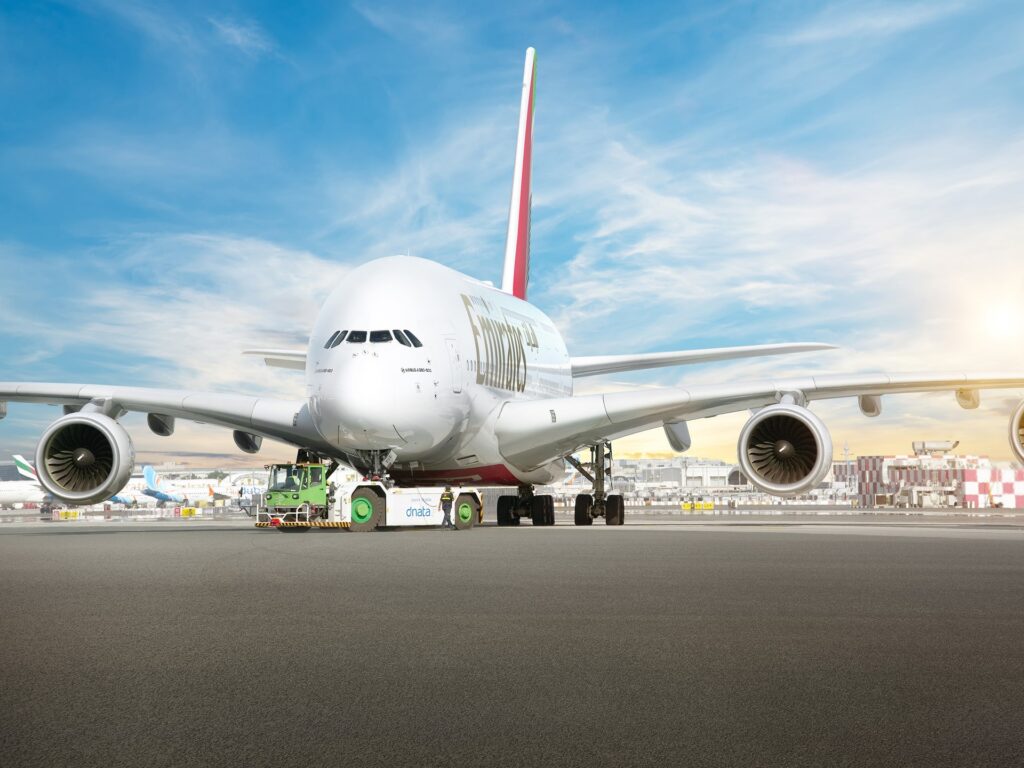
The airline’s fuel price risk management strategy generated AED7.1 billion in gains, limiting the net increase in fuel costs to 13%.
The Group recorded profit after tax of AED3.6 billion (US$1 billion), down 66% from the previous year, when it achieved record earnings. EBITDA declined by 41% to AED12.5 billion (US$3.4 billion).
Its cash reserves stood at AED54.1 billion (US$14.7 billion) at the end of September, providing funding for operations, aircraft payments and debt obligations.
Despite the pressure on earnings, the Group has continued investing in its operations. Emirates took delivery of nine new A350 aircraft, refurbished 12 aircraft and expanded its Starlink internet installation programme to 57 aircraft.
It is also developing a US$5.1 billion engineering and maintenance facility at Al Maktoum International Airport, although completion is not expected until the mid-2030s.
Meanwhile, dnata, the Group’s airport services, catering and travel subsidiary, recorded revenue of AED11 billion (US$3 billion), down 7%, while profit before tax declined by 51% to AED410 million (US$112 million).
Its international operations helped offset reduced activity in the UAE and other Gulf markets. The subsidiary also secured a seven-year ground-handling licence at Amsterdam Schiphol Airport, extending its presence in the European aviation market.
Sheikh Ahmed said the Group would continue to monitor geopolitical developments and fuel prices while maintaining its focus on safety, service quality and customer satisfaction.
He said the Group’s cash reserves and established financial position would help it manage the uncertainties facing the aviation industry in the second half of the financial year.