Emirates Brings Inclusive Travel Push to Ghana as Airlines Redefine Passenger Experience
Emirates is expanding its accessibility-focused travel strategy into Ghana, signaling how global airlines are increasingly competing on inclusive passenger experience alongside traditional route expansion and premium services.
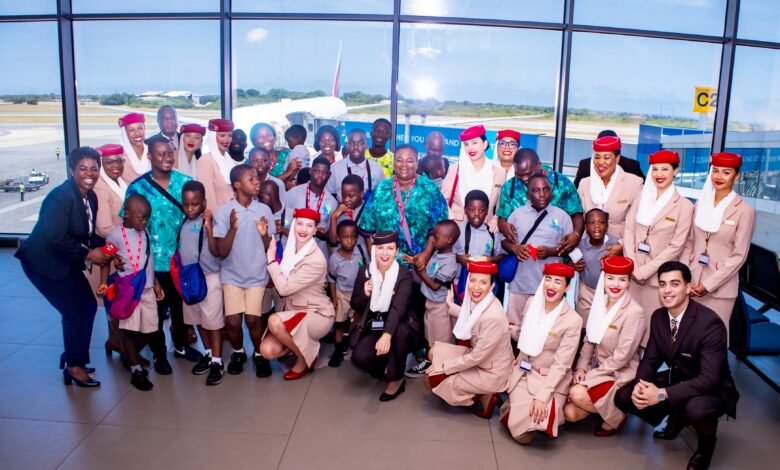
The Dubai-based carrier has launched its “Travel Rehearsal” programme in Ghana, allowing individuals on the autism spectrum to simulate the full airport and flight experience before undertaking actual travel.
The initiative, rolled out at Accra International Airport in partnership with HopeSetters Autism Center, reflects a broader shift within global aviation as airlines invest more heavily in accessible travel infrastructure and specialized customer support systems.
Airlines Expanding Beyond Traditional Competition
For decades, competition within Africa’s aviation industry largely revolved around ticket pricing, fleet size and route connectivity.
But as passenger expectations evolve, airlines are increasingly differentiating themselves through customer-centered services, accessibility programmes and personalized travel experiences.
Under the Ghana initiative, students on the autism spectrum and their guardians were guided through every stage of the airport journey, including check-in, immigration, security screening, lounge access and baggage reclaim procedures.
The objective is to reduce travel anxiety and improve passenger confidence before actual flights.
Industry analysts say such initiatives are becoming commercially significant as airlines seek to attract underserved passenger segments and strengthen long-term customer loyalty.
Ghana Positioned Within Emirates’ African Expansion Strategy
The Ghana rollout marks Emirates’ fourth Travel Rehearsal programme in Africa after similar initiatives in Durban, Harare and Luanda.
The expansion also places Accra within a growing network of global airports where Emirates is deploying accessibility-focused programmes as part of its broader international brand positioning.
According to the airline, more than 35,000 cabin crew and ground staff have undergone specialized autism-awareness training aimed at improving passenger support across different travel environments.
Accra Airport’s Global Ambition
The initiative also aligns with efforts by Ghana Airports Company Limited to position Accra International Airport as a modern and globally competitive aviation hub.
Managing Director Yvonne Nana Afriyie Opare said the airport operator remained committed to delivering “world-class facilities and services” for all categories of passengers, including neurodivergent travelers.
The programme comes as Ghana’s aviation sector undergoes broader modernization efforts, including major runway rehabilitation works and infrastructure upgrades intended to support rising passenger traffic and larger aircraft operations.
Accessibility Becoming Commercial Strategy
While accessibility initiatives were once largely viewed as corporate social responsibility projects, aviation analysts say they are increasingly becoming embedded within mainstream airline growth strategies.
As global travel rebounds and competition intensifies, airlines are under pressure to demonstrate not only operational efficiency, but also inclusivity and adaptability to diverse passenger needs.
For Emirates, the Ghana rollout strengthens its positioning as a premium global carrier while simultaneously tapping into a growing international conversation around accessible tourism and inclusive mobility.
The development also highlights how African aviation markets are becoming increasingly important testing grounds for new passenger experience models as airlines compete for long-term market share across the continent.