
Somalia Set to Become 50th AfCFTA State Party as Businesses Push for Faster Trade Access
Somalia is preparing to become the 50th State Party to the African Continental Free Trade Area (AfCFTA), opening the way for its businesses to access a single African market of more than a billion people.
The country intends to deposit its instrument of ratification in September 2026, according to its Ministry of Commerce and Industry, following a three-day visit by AfCFTA Secretary-General Wamkele Mene to Mogadishu.
The move could mark an important shift for Somali businesses, particularly exporters and companies operating in services, as the country moves from committing to the agreement on paper to putting the trading framework into practice.
For the private sector, however, ratification is only the beginning.
Somali businesses are seeking clarity on tariffs, customs procedures, export opportunities, finance and infrastructure before they can fully take advantage of the continental market.
From ratification to the first shipment
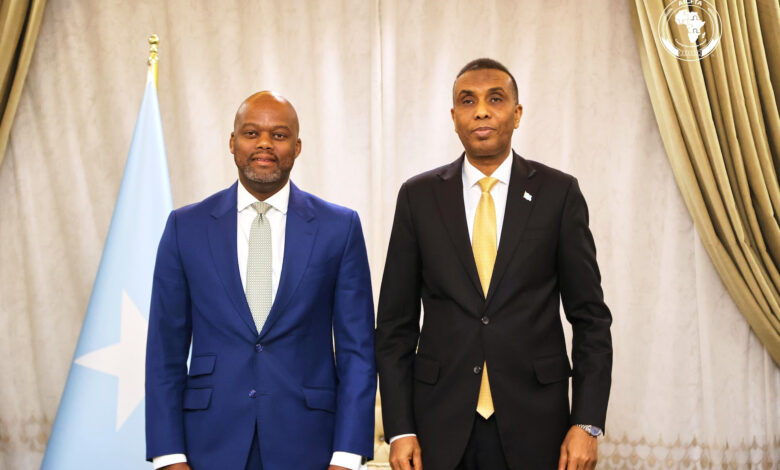
Mene’s discussions with Prime Minister Hamza Abdi Barre, Commerce and Industry Minister Gamal Mohamed Hassan and Foreign Affairs and International Cooperation Minister Abdisalam Abdi Ali focused on what needs to happen after ratification.
Key issues include tariff schedules, rules of origin and customs procedures that will determine whether Somali goods qualify for preferential treatment when entering other African markets.
The AfCFTA Secretariat is also offering Somalia tools such as the Pan-African Payment and Settlement System (PAPSS), the AfCFTA electronic tariff book and the AfCFTA Adjustment Fund.
The immediate objective is to move Somalia towards its first shipment under the AfCFTA, demonstrating the entire process from exporter to destination market.
“Our business people are eager, and they are right to be. They want to see the fruits. We need to move faster,” Commerce and Industry Minister Gamal Mohamed Hassan said.
He added that Somalia wanted to become the sixth East African country to submit its tariff schedules.
Somalia already has a head start
Somalia will not be starting the process from scratch.
As a Partner State of the East African Community (EAC), it can build on the Community’s consolidated schedule of tariff concessions covering 90 percent of tariff lines, while the remaining 10 percent is being finalised within the bloc.
Somalia also validated a national AfCFTA implementation strategy in November 2023 and has established a national implementation committee that includes organised labour.
The next challenge is translating these frameworks into procedures that businesses can actually use.
That means ensuring customs officials understand the preferential tariffs, businesses can determine whether their products meet AfCFTA rules of origin, and exporters have access to the payments and financing systems needed to complete cross-border transactions.
Businesses want more than market access
The private sector dialogue during Mene’s visit brought together the Somali Chamber of Commerce and Industry, Somali Manufacturers Association and individual enterprises to discuss the practical barriers facing businesses.
The Chamber identified five areas where businesses need technical assistance.
These include guidance on what happens after ratification, support for priority export sectors, access to opportunities in services such as telecommunications, logistics, finance and digital commerce, a permanent engagement mechanism with the AfCFTA Secretariat, and practical information on AfCFTA instruments available to businesses.
The message from business was straightforward: market access alone will not be enough.
“Somali businesses are ready. What they need is certainty, affordable finance and functioning infrastructure,” said Yassine Ibar, President of the Somali Chamber of Commerce and Industry.
That could prove critical to Somalia’s ability to translate AfCFTA membership into actual export growth.
Trading beyond East Africa
Mene told Somali businesses that AfCFTA could allow them to move beyond their traditional markets and reach consumers across the continent.
“Somalis are natural traders. Trade is already in your DNA,” he said, arguing that the agreement could give businesses access to markets in West, Central, Southern and North Africa.
For Somali companies, this could create opportunities to scale businesses that have historically operated within relatively fragmented regional markets.
The services sector could be particularly important, with the private sector identifying telecommunications, logistics, finance and digital commerce as areas where AfCFTA could create new opportunities.
What happens next
Somalia’s path to its first AfCFTA shipment now has a defined sequence.
It must first deposit its ratification instrument with the Chairperson of the African Union Commission. It will then need to domesticate the AfCFTA electronic tariff book, configure the applicable preferential tariffs through its customs administration and complete outstanding EAC tariff concessions and commitments on trade in services.
The AfCFTA Secretariat has committed to working with Somali authorities and businesses through that process.
If Somalia completes the ratification in September as planned, it will become the 50th State Party to the continental trade agreement.
For the Somali private sector, the significance will ultimately be measured not by the number 50, but by whether the country’s first AfCFTA shipment can move smoothly from a Somali exporter to a customer in another African market.
That is where the agreement moves from a legal commitment to a business opportunity.