Ghana Targets 100,000 Jobs as Outsourcing Industry Pushes Beyond Accra

Ghana’s outsourcing industry is positioning itself as a major source of jobs and export earnings, with industry players calling for targeted investment in infrastructure, skills and secondary cities to help create up to 100,000 jobs by 2030.
The Business Outsourcing Services Association of Ghana (BOSAG) says the sector could provide one of the fastest routes for absorbing the more than 138,000 graduates who enter Ghana’s labour market each year but struggle to find formal employment.
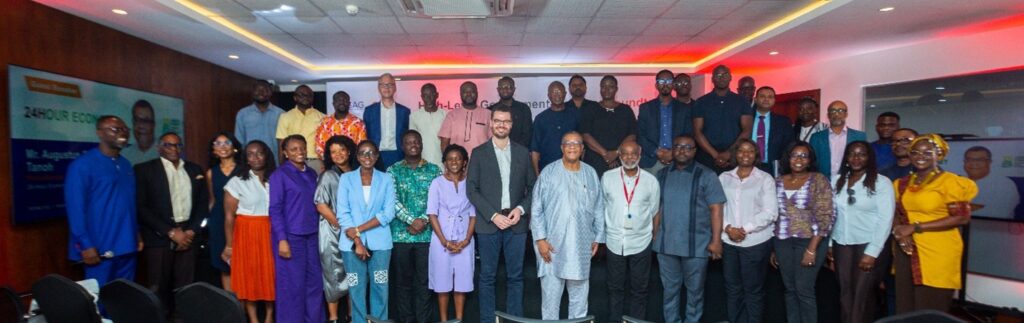
The call was made at the third Government-Industry Roundtable on Ghana’s outsourcing sector, where stakeholders examined how the industry could support the government’s 24-Hour Economy and Accelerated Export Development Programme.
BOSAG estimates that Ghana’s outsourcing industry has already created more than 20,000 jobs, but argues that the country is capturing only a small share of a global outsourcing and business services market valued at about US$1.5 trillion.
Africa currently accounts for roughly 2.8 per cent of that market, highlighting what industry stakeholders see as significant room for Ghana to expand its share through business process outsourcing, digital services and other export-oriented activities.
Taking jobs beyond Accra
A major focus of the discussions was the need to decentralise outsourcing activity.
Industry leaders argued that locating operations in secondary cities could spread employment and investment beyond Accra while allowing companies to tap into pools of young talent that remain underutilised.
As part of that shift, eServices Africa Limited (eSAL) announced plans to establish a delivery centre in Tamale in the fourth quarter of 2026.
The company sees Tamale as a potential base for serving Francophone West Africa and the Sahel, while stakeholders said the development could demonstrate whether outsourcing can become a viable source of formal employment outside Ghana’s traditional commercial centres.
GIZ, which is supporting efforts to pilot outsourcing operations in Tamale, said investments in skills, infrastructure and local business ecosystems would be critical to making secondary cities competitive outsourcing locations.
Infrastructure remains critical
For the sector to scale, participants said Ghana would need more than a large pool of graduates.
Reliable electricity, high-speed internet, suitable office space and a workforce equipped with market-relevant digital and communication skills were identified as essential requirements for attracting international business.
The 24-Hour Economy Authority outlined proposed interventions covering infrastructure, talent development, investment facilitation, energy and technology hubs.
Among them is the planned Ogua Tech Park at the University of Cape Coast, which is expected to include a 3,000-seat business process outsourcing facility, training infrastructure and student accommodation.
Government has also indicated that programmes such as the One Million Coders initiative and the National AI Strategy could provide a stronger skills pipeline for the digital services industry.
From digital skills to actual jobs
The challenge, however, is converting training into sustainable employment.
eSAL said it has trained more than 3,000 young people through its work-readiness programme, with 55 per cent of participants being women and many drawn from underserved communities and people previously excluded from formal employment.
This highlights the wider development opportunity in outsourcing: rather than treating digital training as an end in itself, industry players want skills programmes linked directly to employers and export markets.
Presidential Advisor to the 24-Hour Economy Authority, Augustus Goosie Tanoh, said outsourcing was particularly suited to the government’s economic agenda because companies can serve international markets around the clock without workers having to leave Ghana.
He said the sector could therefore generate foreign exchange while creating employment and supporting economic activity in communities across the country.
A services export strategy
BOSAG has proposed SERVE24, a dedicated services-export component within the 24-Hour Economy framework, to give outsourcing and digital services greater policy attention alongside other export sectors.
The association believes such a framework could help coordinate investment in infrastructure, talent, incentives and international market development while making Ghana more visible to global companies looking for outsourcing destinations.
The deeper economic proposition is that Ghana does not have to export its young workforce to benefit from global demand for talent.
With the right infrastructure and skills, Ghanaian workers can provide customer service, technology, finance, back-office and other professional services to companies abroad while remaining in Ghana.
For the country, that could mean export earnings and formal employment without the physical movement of workers.
The roundtable therefore placed outsourcing within a broader development question: how Ghana can turn its growing youth population and digital skills into productive economic assets, while ensuring that the opportunities created by the 24-Hour Economy extend beyond Accra