
Produce Tomatoes in 90 Days or Agric Ministry Faces Overhaul- FABAG
The Food and Beverages Association of Ghana (FABAG) has issued an ultimatum to the Ministry of Food and Agriculture (MOFA), demanding that the country produce sufficient tomatoes within two to three months or face a complete restructuring of the Ministry.
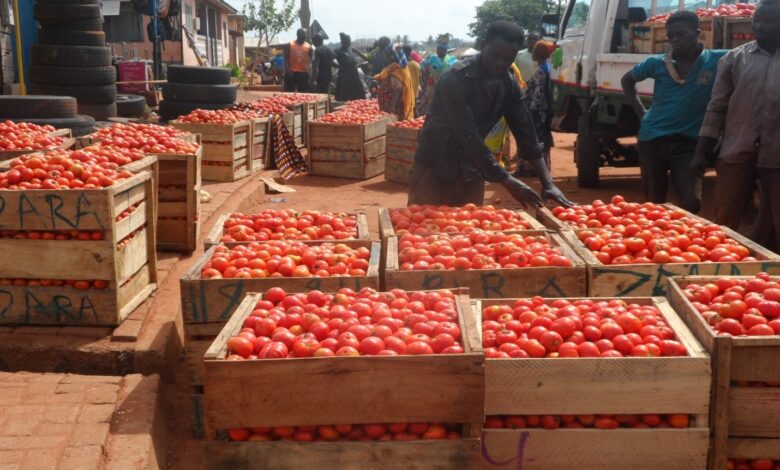
The warning follows a tomato shortage triggered by Burkina Faso’s export ban, which abruptly cut off a major supply source for Ghanaian processors and consumers. FABAG argues that the crisis is not about scarcity but a failure of leadership and policy in a sector central to the country’s food and economic security.
“If the Ministry cannot mobilise Ghana to produce tomatoes within 60 to 90 days, then it has failed its core mandate and has no justification to continue in its current form,” said Rev. John Awuni, Chairman of FABAG.
Tomatoes are a short-cycle crop, ready for harvest within 60 to 90 days under irrigation, meaning Ghana could, in theory, plant and harvest up to three crops annually. FABAG notes that the country already has sufficient resources for rapid production, including irrigation dams at Vea, Tono, Botanga, Kpong, Dawhenya, and Ashiama; agricultural universities and research institutions; extension officers in every district; existing farmers; and a pool of unemployed youth who could be mobilised for commercial farming.
“The problem is not farmers, land, or climate—it is leadership and policy direction,” Awuni stressed.
The association framed the tomato shortage as a national security issue, warning that reliance on imports for a basic food crop exposes Ghana to economic and food insecurity. “Today it is tomatoes; tomorrow, it could be something else. Economic security is national security,” the statement said.
FABAG outlined a series of measures it wants the government to implement immediately:
- Declare a National Tomato Emergency Programme
- Distribute improved tomato seeds nationwide within two weeks
- Provide subsidised fertiliser and agro-chemicals
- Activate all irrigation schemes for dry-season tomato farming
- Mobilise youth groups for commercial tomato cultivation
- Guarantee prices for tomato farmers
- Support greenhouse tomato production
- Revive tomato processing factories
- Provide cold trucks and storage facilities to reduce post-harvest losses
- Set a one-year target for tomato self-sufficiency
Awuni questioned why Ghana continues to maintain a full Ministry, agricultural universities, research institutions, irrigation schemes, and subsidy programmes while still relying on imported tomatoes.
“If within three months the Ministry cannot organise nationwide tomato production under irrigation, the government must seriously consider transforming it into a Production-Focused Agricultural Authority with clear targets and accountability,” he said.
The ultimatum underscores FABAG’s position that the tomato shortage is not merely an agricultural problem but a test of Ghana’s policy coherence, leadership, and national resilience.